

Why Is Soil Bearing Capacity Important for Jack Up Drilling Platform Stability
2026-11-05
When a Jack Up Drilling Platform is deployed offshore, its legs transfer enormous loads to the seabed, making soil bearing capacity the single most critical geotechnical factor governing overall stability. At HAIDING SHIPYARD, every unit is engineered with this reality in mind, because even a perfectly built rig cannot compensate for inadequate seabed support. Understanding how soil conditions interact with leg penetration, preload procedures, and site-specific risk assessment is essential for safe and efficient operations.
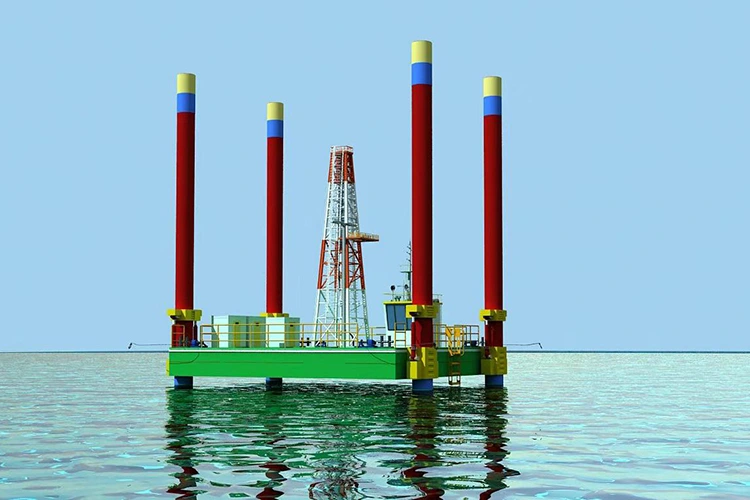
What Soil Bearing Capacity Means for a Jack Up Drilling Platform
Soil bearing capacity refers to the maximum pressure the seabed can withstand before shear failure or excessive settlement occurs. For a Jack Up Drilling Platform, this determines whether the spudcan footings can safely support the combined weight of the hull, legs, equipment, and operational loads. When bearing capacity is insufficient, operators face risks ranging from gradual leg penetration to sudden punch-through failure.
Key Factors Influencing Bearing Capacity
-
Soil type and stratification – Sand, clay, and layered deposits behave very differently under load
-
Spudcan geometry – Footing size and shape directly affect load distribution
-
Preload magnitude – Controlled preloading verifies actual bearing resistance before operations begin
-
Leg penetration depth – Deeper penetration can improve stability but may increase extraction risk
-
Environmental loading – Wave, wind, and current forces add dynamic stress to the foundation
Bearing Capacity by Seabed Condition
| Seabed Condition | Typical Bearing Behavior | Stability Implication |
|---|---|---|
| Dense sand | High bearing capacity, shallow penetration | Generally favorable for Jack Up Drilling Platform operations |
| Soft clay | Low capacity, deep penetration required | Requires careful preload and monitoring |
| Layered sand-over-clay | Sudden capacity change at layer interface | Elevated punch-through risk |
| Carbonate soils | Variable and unpredictable strength | Site-specific geotechnical investigation essential |
The Role of Preloading in Verifying Capacity
Preloading is the primary field method for confirming that actual soil bearing capacity meets design assumptions. By applying loads exceeding anticipated operational weights, operators can verify spudcan penetration behavior and identify potential failure mechanisms before the Jack Up Drilling Platform begins drilling. HAIDING SHIPYARD integrates preload planning into the rig's structural and operational design, helping owners reduce geotechnical uncertainty.
Consequences of Ignoring Bearing Capacity
-
Leg damage from uncontrolled penetration
-
Jacking system overload and premature wear
-
Hull tilt and operational downtime
-
Punch-through incidents with safety and environmental consequences
-
Costly recovery and relocation operations
FAQ
Q: What happens if soil bearing capacity is underestimated for a Jack Up Drilling Platform?
A: Underestimating capacity can lead to uncontrolled leg penetration, punch-through failure, hull tilt, and structural damage to the jacking system. It may also force emergency relocation, causing significant downtime and cost overruns.
Q: How is soil bearing capacity assessed before a Jack Up Drilling Platform is installed?
A: Assessment typically combines geotechnical site investigation, cone penetration testing, borehole sampling, and analytical bearing capacity calculations. Preload testing during installation then verifies actual seabed response against design predictions.
Q: Can a Jack Up Drilling Platform operate in areas with poor bearing capacity?
A: In some cases yes, provided the rig is designed with larger spudcans, deeper penetration capability, and enhanced preload procedures. However, each site must be evaluated individually, and operations may require reduced loading or alternative positioning.
Conclusion
Soil bearing capacity is not a secondary consideration—it is the foundation upon which every Jack Up Drilling Platform operation rests. From preload verification to punch-through risk management, geotechnical competence directly determines safety, schedule, and cost performance. HAIDING SHIPYARD combines rigorous engineering with practical offshore experience to deliver rigs built for demanding seabed conditions.
Contact us today to discuss your Jack Up Drilling Platform requirements and discover how HAIDING SHIPYARD can support your next offshore project with reliable, site-appropriate solutions.