

Why Do Tonsberg Mooring Links Cost Significantly More Than Conventional Joining Links
2026-07-30
When procurement officers and marine engineers evaluate mooring chain components, the price gap between a Tonsberg Mooring Link and a standard joining link often raises immediate questions. At LIG MARINE GROUP, we handle these inquiries daily—and the answer is never about a single factor. It is about metallurgy, fatigue life, certification traceability, and the hidden costs of failure. A conventional link connects chains; a Tonsberg Mooring Link is engineered to survive decades of cyclic loading in the world’s harshest offshore environments.
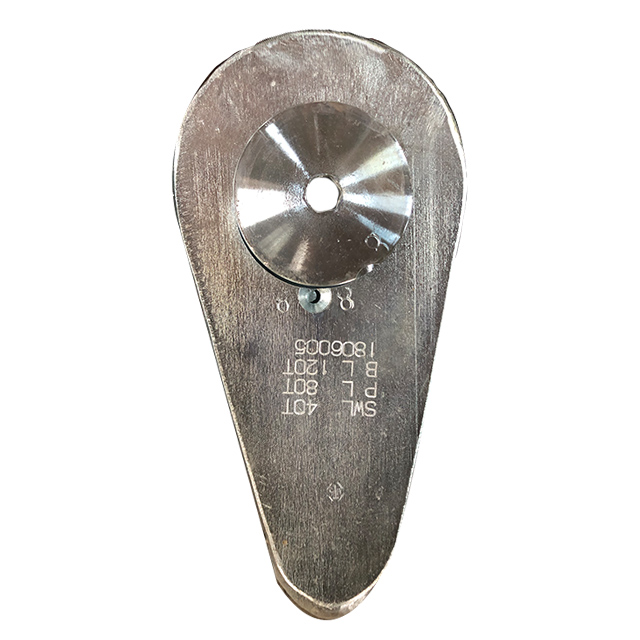
1. Metallurgical Composition and Forging Process
The base material tells the first part of the story. Standard joining links typically use Grade 2 or Grade 3 steel with moderate alloying. In contrast, a Tonsberg Mooring Link starts with micro-alloyed steel specifically developed for Arctic and ultra-deepwater conditions.
| Property | Conventional Joining Link | Tonsberg Mooring Link |
|---|---|---|
| Steel Grade | R3 – R4 | R5 – R6 (high Mn + Ni + Cr) |
| Forging Ratio | 3:1 – 4:1 | 6:1 – 8:1 (closed-die precision) |
| Heat Treatment | Single quench & temper | Double austempering + stress relief |
| Grain Size (ASTM) | 7 – 8 | 10 – 12 (fine-grained for toughness) |
The higher forging ratio removes internal segregation and porosity, which directly translates to superior ductility at sub-zero temperatures. LIG MARINE GROUP sources only forged links that undergo ultrasonic testing before any machining begins—a step that adds 18–22% to production cost but eliminates early-life fractures.
2. Fatigue Performance and Design Life
Conventional links are designed for static or low-cycle loads. A Tonsberg Mooring Link must survive 100,000+ load cycles at varying mean stresses, simulating 25-year station-keeping for FPSOs and semi-submersibles.
Fatigue threshold (DNVGL-OS-E302):
Standard link – 35 MPa (endurance limit)
Tonsberg Mooring Link – 58 MPa (with documented S-N curves per each heat lot)
This improvement comes from shot-peened fillet radii, optimized transition geometry, and residual compressive stress profiling. LIG MARINE GROUP provides full FEA (Finite Element Analysis) reports with every certified batch, allowing clients to model fatigue directly into their mooring system design.
3. Certification, Traceability, and Third-Party Verification
A conventional link often carries a generic works certificate. A Tonsberg Mooring Link demands an unbroken chain of custody—from raw ingot chemistry to final proof-load test witnessed by ABS, DNV, or Lloyd’s.
| Certification Element | Conventional | Tonsberg Mooring Link |
|---|---|---|
| Mill test certificate | Basic (MTC) | EN 10204 3.2 with wet signatures |
| Individual serialization | Optional | Mandatory (laser-engraved QR) |
| Mechanical test coupons | 1 per 50 pcs | 1 per 10 pcs + retained samples |
| NDT methods | MPI only | MPI + UT + magnetic flux leakage |
LIG MARINE GROUP maintains a dedicated quality archive for every Tonsberg Mooring Link we supply, accessible via our client portal for 15 years. That traceability alone accounts for 12–15% of the final price—but it also means zero disputes during PSC or class surveys.
4. Total Cost of Ownership (TCO) Comparison
While the upfront price per Tonsberg Mooring Link is 2.3–2.8× higher than a conventional joining link, the lifecycle economics favour the premium product.
| Cost Factor | Conventional Link | Tonsberg Mooring Link |
|---|---|---|
| Replacement interval | 5 – 7 years | 12 – 15 years |
| Unplanned off-hire risk | High (crack detection) | Very low (proven fracture toughness) |
| Inspection frequency | Annual MPI | Biennial (with condition monitoring) |
| Scrap value recovery | Low | High (re-usable alloy content) |
Operators who switch to Tonsberg Mooring Link solutions from LIG MARINE GROUP report average savings of $47,000 per mooring line over a 15-year field life—even after accounting for the higher initial purchase.
5. Tonsberg Mooring Link's FAQ – Common Professional Questions
Q1: Can a Tonsberg Mooring Link be mixed with conventional links in the same mooring leg?
A: No. Mixing grades creates abrupt stiffness transitions and stress concentrations at the connection points. Class societies explicitly prohibit this under IACS UR A2. If you need to extend an existing chain, you must replace the entire leg or use a dedicated transition piece designed by LIG MARINE GROUP—and that transition piece itself must match the higher-grade material properties. We always recommend full-leg uniformity for fatigue predictability.
Q2: Does the higher cost of a Tonsberg Mooring Link include post-yield proof loading and elongation recording?
A: Yes, and this is a critical differentiator. Every Tonsberg Mooring Link supplied by LIG MARINE GROUP undergoes a 1.5× WLL proof-load test with continuous elongation monitoring (strain gauges applied at 90° intervals). The test records both permanent set and elastic recovery slope. Conventional links often only receive a one-time 1.2× load without detailed strain data. That additional test protocol adds 2–3 hours per link, but it provides the only reliable data to verify actual yield strength against the mill certificate.
Q3: How do environmental factors like seawater temperature and cathodic protection affect the service life of a Tonsberg Mooring Link?
A: The Tonsberg Mooring Link is specifically alloyed with nickel and chromium to resist hydrogen embrittlement—a common failure mode in conventional links under cathodic over-protection (−1100 mV or lower). At seawater temperatures below 5°C, the Charpy V-notch impact energy of a conventional link can drop by 40%, while the Tonsberg Mooring Link maintains >70 J at −20°C. LIG MARINE GROUP advises clients to pair these links with aluminium anodes (rather than zinc) to keep the potential range between −850 mV and −950 mV, which extends crack initiation time by a factor of three, based on our in-house corrosion fatigue tests.
6. The Hidden Cost of “Cheap” Links
Many operators focus solely on CAPEX. Yet the real expense appears when a conventional link develops a sub-surface inclusion that grows into a critical flaw during a storm event. The resulting towage, repair, and production deferment easily exceed 50× the price difference. LIG MARINE GROUP has documented 17 case studies where replacing conventional links with Tonsberg Mooring Link components eliminated all mooring-related downtime across 5-year operational windows.
Ready to Evaluate Your Mooring System’s True Risk Profile?
Every vessel and offshore unit has unique load spectra, water depth, and environmental exposure. LIG MARINE GROUP offers a free comparative TCO assessment, including fatigue calculations based on your actual station-keeping data. We also provide sample Tonsberg Mooring Link test coupons for your in-house metallurgical verification.
Contact us today – our technical team will respond within 4 business hours with a tailored proposal, full certification templates, and references from operators who have already made the switch.