

Why Do Marine Ballast Weights Matter More Than Many Vessel Buyers Expect?
2026-04-10
When I speak with shipbuilders, vessel repair teams, and marine equipment buyers, I often notice the same pattern: they focus heavily on engines, hull structure, or control systems, while balance-related components are treated as secondary. That is exactly where problems often begin. As I looked deeper into practical vessel stability needs, Zunhua Shengjian fanrong Machinery Parts Co., Ltd. gradually came into view as a manufacturer working in this specialized field, and it became clear that well-designed Marine Ballast Weights are not just added mass. They are a key part of how a vessel maintains balance, improves operational steadiness, and supports safer performance in changing marine conditions.
In real procurement work, buyers are not simply purchasing a block of metal. They are trying to solve stability concerns, weight distribution problems, limited installation space, corrosion exposure, fabrication compatibility, and long-term maintenance risk. That is why I see Marine Ballast Weights as a technical purchasing decision rather than a routine commodity order.
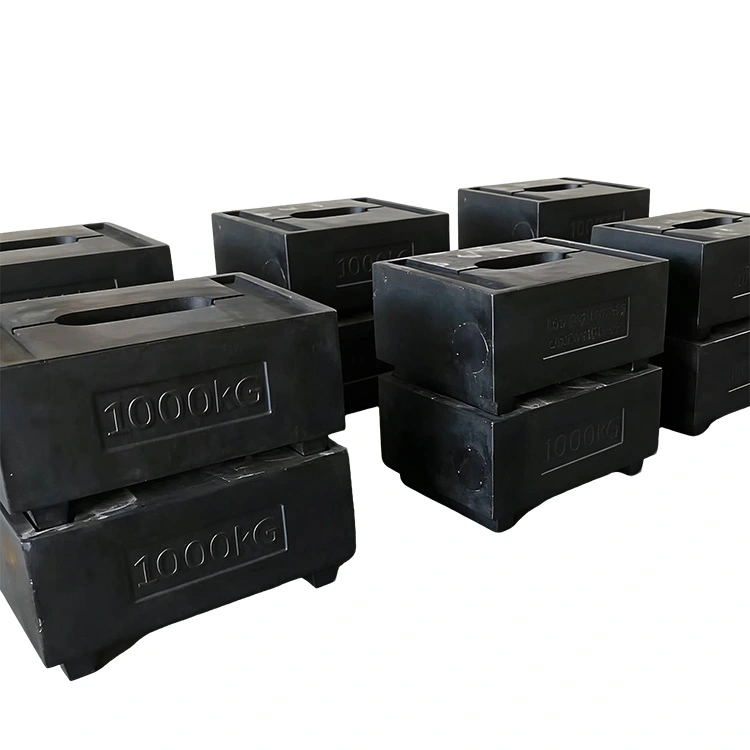
What Problems Do Buyers Usually Face When Choosing Marine Ballast Weights?
Most buyers are not short of product options. What they are short of is confidence. They need to know whether the counterweight will truly match the vessel structure, fit the available installation area, and perform reliably under marine working conditions.
- Unclear weight distribution requirements during early vessel design or retrofitting
- Limited onboard space that demands higher density and smarter shape design
- Concerns about dimensional accuracy and installation compatibility
- Worries about cracking, wear, or premature failure in demanding environments
- Difficulty finding a supplier that can customize according to drawings
- Inconsistent quality control from one production batch to another
- Pressure to control total lifecycle cost instead of chasing low initial pricing
I have found that these concerns become even more important when the ballast solution is intended for fishing vessels, engineering ships, crane vessels, tourism boats, quarrying vessels, or other specialized marine applications. In those cases, Marine Ballast Weights need to match real operating conditions instead of existing only as a line item on a quotation sheet.
How Can The Right Marine Ballast Weights Improve Vessel Performance?
The answer starts with stability. A vessel performs better when its center of gravity and load distribution are controlled with care. Poor balance can reduce efficiency, affect handling, increase structural stress, and create safety concerns during operation. The right ballast solution helps a vessel maintain steadier movement and more predictable behavior.
- It helps optimize overall balance and stability
- It supports more controlled load distribution
- It can reduce excessive roll in certain operating conditions
- It improves equipment steadiness on working vessels
- It supports safer operation for lifting, transport, and onboard handling tasks
- It contributes to more reliable long-term vessel performance
From my perspective, buyers who treat Marine Ballast Weights as an engineered component usually make better long-term purchasing decisions than those who treat them as a generic casting purchase.
Why Does Material Selection Make Such A Big Difference?
Material choice is never a small detail in marine applications. Buyers want weight, strength, durability, and manufacturing consistency all at once. In many marine counterweight projects, cast iron and ductile iron are practical choices because they offer the density and structural characteristics needed for ballast performance while allowing shape customization for different vessel requirements.
I always recommend evaluating the material not only by weight, but also by how it supports casting quality, dimensional control, durability expectations, and cost efficiency over time. A ballast component that looks inexpensive at the quotation stage can become expensive if it introduces fitting issues, quality variation, or replacement needs later.
| Key Factor | Why It Matters | Buyer Concern |
|---|---|---|
| Density | Helps achieve required mass within limited installation space | Can the product deliver enough weight without oversized dimensions? |
| Mechanical Strength | Supports service reliability during transport and operation | Will the part remain durable under real working loads? |
| Casting Stability | Influences dimensional accuracy and batch consistency | Will repeated orders match the original design? |
| Customization Flexibility | Allows production according to vessel drawings and project needs | Can the supplier adapt to my exact dimensions and shape requirements? |
| Cost Performance | Balances technical suitability with budget expectations | Am I paying for real value instead of avoidable risk? |
Which Vessel Types Benefit Most From Customized Marine Ballast Weights?
In my view, customization becomes especially valuable when vessels operate in specialized conditions or require application-specific weight distribution. Standardized solutions may work for basic needs, but many marine projects perform better when the ballast is designed around the actual vessel geometry and operational profile.
- Fishing boats that need dependable balancing support for working conditions at sea
- Passenger vessels that require steady performance and safety-minded design
- Engineering vessels operating with heavy onboard equipment
- Crane vessels that demand support for load-sensitive lifting operations
- Offshore-related equipment platforms that need controlled weight distribution
- Tourism and specialty boats where stability influences both comfort and operation
This is why I believe custom Marine Ballast Weights are often the smarter choice. They can be designed around real installation conditions, target weight goals, and specific equipment layouts instead of forcing the vessel to adapt to a generic product.
What Should Buyers Ask Before Sending An Inquiry?
A good inquiry saves time for both the buyer and the manufacturer. The more clearly a project is defined, the easier it becomes to receive a practical quotation and a realistic production proposal.
- What total weight is required for the application?
- What dimensions or space limitations must the ballast fit?
- Is there a drawing, sketch, or technical reference available?
- What marine environment will the product operate in?
- Does the project require one-time production or recurring batches?
- Are there special needs related to installation holes, mounting interfaces, or geometry?
- What delivery schedule is expected?
When buyers organize this information early, the sourcing process becomes much smoother. For custom Marine Ballast Weights, detailed drawings and technical communication are often the difference between a merely acceptable order and a successful one.
Why Is Custom Production Often Better Than Buying By Price Alone?
I understand why price gets attention first. Procurement teams work under budget pressure, and marine projects often have tight cost controls. But ballast products should never be evaluated by price alone. A lower quotation may hide machining issues, weight tolerance problems, fitting errors, or inconsistent production quality that becomes expensive later.
What I look for instead is total project value. That includes manufacturing capability, drawing-based customization, material suitability, dimensional reliability, production consistency, and communication efficiency. In many cases, the better supplier is not the one offering the cheapest unit cost. It is the one that helps avoid installation headaches, design mismatches, and replacement risk.
| Purchasing Approach | Short-Term Result | Long-Term Impact |
|---|---|---|
| Lowest Price First | Lower initial quote | Higher risk of mismatch, rework, or unstable quality |
| Specification First | Better design fit and clearer technical communication | Lower operational risk and better installation efficiency |
| Lifecycle Value First | Balanced upfront cost and technical suitability | More reliable performance and lower total ownership cost |
How Can A Reliable Manufacturer Support Better Marine Projects?
A capable manufacturer does more than pour metal. It helps translate drawings into practical production. It checks feasibility. It controls process quality. It reduces uncertainty for the buyer. That kind of support matters a lot in marine procurement, especially when the part must fit within a broader vessel design or retrofitting schedule.
From my perspective, a dependable supplier should be able to offer the following:
- Experience with counterweight or ballast-related manufacturing
- Ability to produce according to customer drawings
- Clear communication before production begins
- Consistent quality inspection throughout the process
- Stable batch performance for repeat orders
- Practical support for custom dimensions, shapes, and material choices
These points are exactly why many buyers spend extra time screening suppliers before they commit to custom Marine Ballast Weights. The right manufacturing partner can reduce risk long before the product reaches the vessel.
What Makes A Smart Buying Decision In This Market?
If I had to simplify the buying process, I would say the smartest decision comes from balancing four things at once: technical fit, stable quality, customization capability, and realistic cost control. None of those should be ignored. A product that is heavy enough but poorly fitted is not a good choice. A product that is cheap but dimensionally inconsistent is not a good choice either.
For marine buyers who need dependable performance, I would focus on these priorities:
- Confirm the exact application scenario first
- Define the target weight and installation limitations clearly
- Choose a supplier that understands drawing-based customization
- Verify the manufacturer’s quality control logic
- Evaluate long-term value instead of judging only by price
That is the practical path to better sourcing results. In my experience, the best outcomes happen when Marine Ballast Weights are purchased as a performance solution, not just as a cast component.
Why Should Buyers Act Before Stability Problems Become Expensive?
Marine projects rarely get simpler once a balance issue appears in production, installation, or operation. Delays, modifications, and rework cost time and money. That is why I always suggest dealing with ballast requirements early and working with a supplier that can respond to project drawings and real application needs.
If you are looking for custom-built Marine Ballast Weights for fishing boats, engineering vessels, passenger ships, crane vessels, or other marine applications, now is the right time to start the conversation. Share your drawings, dimensions, required weight, and project details with a qualified manufacturer that understands custom production. If you want a solution tailored to your vessel rather than a generic off-the-shelf guess, contact us today, send your inquiry, and let us help you move your project forward with confidence.