

Why Are Solid Rubber Fenders Essential for Modern Marine Protection?
2026-06-29
Ports, harbors, and offshore structures are constantly exposed to mechanical impact from vessels of different sizes and weights. In such demanding environments, Solid Rubber Fenders play a critical role in absorbing kinetic energy, reducing structural damage, and improving overall operational safety. As global maritime trade continues to grow, the demand for reliable fender systems has increased significantly. Companies like Qingdao Aorunda Rubber Industry Co., Ltd. are actively contributing to the development and supply of high-performance marine rubber solutions designed for long-term durability and protection.
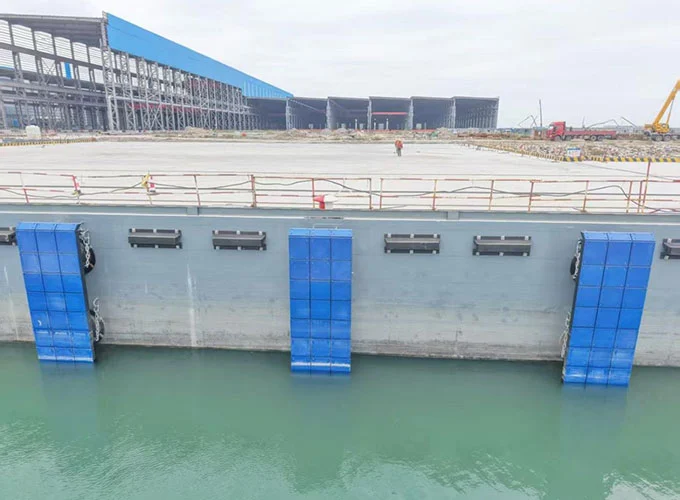
What Are Solid Rubber Fenders?
Solid Rubber Fenders are heavy-duty marine protection devices made from high-density rubber compounds. Unlike pneumatic or foam-filled alternatives, they are fully solid, meaning they do not rely on air pressure or internal filling systems.
They are typically installed on:
- Port docks and wharves
- Ship hulls
- Offshore platforms
- Tugboats and workboats
- Container terminals
Their main function is to absorb impact energy during vessel berthing and prevent direct contact between ships and structures.
Key Functions of Solid Rubber Fenders
The performance of Solid Rubber Fenders is based on their ability to deform under pressure and then return to their original shape. This elasticity ensures repeated use without structural failure.
Main Functions:
- Energy Absorption: Reduces impact force during docking
- Structural Protection: Prevents damage to quay walls and vessels
- Vibration Reduction: Minimizes shock transmission
- Operational Safety: Improves docking accuracy and stability
Why Solid Rubber Fenders Are Important
Marine environments are highly unpredictable. Strong currents, wind pressure, and large vessel sizes create significant docking risks. Solid Rubber Fenders act as a buffer system that ensures safety and efficiency.
Importance Highlights:
- Extends lifespan of port infrastructure
- Reduces maintenance and repair costs
- Enhances safety for cargo handling operations
- Supports heavy-duty maritime logistics
Types and Applications
Different port environments require different fender designs. Below is a simplified classification:
| Type of Solid Rubber Fender | Shape | Common Use |
|---|---|---|
| Cylindrical Fender | Round tube structure | General port docking |
| D Fender | "D" shaped profile | Small to medium vessels |
| Arch Fender | Curved structure | High-energy absorption areas |
| Square Fender | Block design | Heavy-duty quay protection |
Each type is engineered to meet specific berthing conditions and vessel sizes.
Advantages Over Other Fender Systems
Compared with pneumatic or foam-filled fenders, Solid Rubber Fenders offer several distinct advantages:
- No air leakage risk
- Lower maintenance requirements
- Longer service life
- High resistance to weathering and UV exposure
- Better performance in extreme marine conditions
These advantages make them a preferred choice for long-term port infrastructure investments.
Material and Engineering Strength
High-quality Solid Rubber Fenders are manufactured using advanced rubber compounding technology. The material is designed to withstand:
- Saltwater corrosion
- Heavy compression loads
- Temperature fluctuations
- Continuous impact cycles
Qingdao Aorunda Rubber Industry Co., Ltd. focuses on optimizing rubber formulations to improve rebound performance and durability, ensuring stable performance even in harsh maritime environments.
Installation and Maintenance Overview
Proper installation ensures maximum efficiency and safety.
Installation Steps:
- Site measurement and load assessment
- Selection of appropriate fender type
- Steel bolt or anchor fixing system setup
- Alignment and compression testing
Maintenance Tips:
- Regular surface inspection for cracks
- Checking bolt tightness
- Cleaning salt deposits
- Monitoring wear patterns
Performance Comparison Table
| Feature | Solid Rubber Fenders | Pneumatic Fenders | Foam Fenders |
|---|---|---|---|
| Durability | Very High | Medium | High |
| Maintenance | Low | High | Medium |
| Energy Absorption | High | Very High | Medium |
| Cost Efficiency | Long-term cost effective | Higher maintenance cost | Moderate |
This comparison shows why Solid Rubber Fenders remain a stable choice for long-term marine infrastructure planning.
Industry Applications and Future Trends
The use of Solid Rubber Fenders is expanding beyond traditional ports. Today, they are widely used in:
- LNG terminals
- Offshore wind farm bases
- Military naval docks
- Industrial shipping yards
Future trends indicate increasing demand for:
- Eco-friendly rubber materials
- Smart monitoring fender systems
- Custom-engineered high-load designs
Manufacturers such as Qingdao Aorunda Rubber Industry Co., Ltd. are continuously innovating to meet these evolving market needs.
Conclusion
Solid Rubber Fenders are an essential component in modern marine engineering. Their ability to absorb impact energy, protect infrastructure, and ensure safe vessel operations makes them indispensable in global port systems. With advancements in rubber technology and engineering precision, their performance continues to improve, supporting safer and more efficient maritime logistics.
For ports and marine projects seeking durable and cost-effective protection systems, choosing high-quality Solid Rubber Fenders is a long-term investment in safety and efficiency.
If you are looking for reliable marine protection solutions or customized rubber fender systems, Qingdao Aorunda Rubber Industry Co., Ltd. is ready to support your project with professional expertise and high-quality products.
Contact us today to get more information and start your cooperation.