

Which Marine generator Keeps a Vessel Running When Every System Depends on Stable Power?
2026-05-09
When I look at marine power equipment from a buyer’s point of view, I rarely start with the price tag. I start with one simple worry: what happens if the power supply becomes unstable at sea? That is why I pay close attention to companies that understand shipboard working conditions instead of only selling machines on paper. In this area, LIG MARINE GROUP LTD has gradually become a name I notice because its marine product range is built around practical vessel needs, and its Marine generator solutions are closely connected with reliability, installation flexibility, and long-term onboard use.
A vessel does not have the luxury of treating electricity as a secondary issue. Navigation systems, pumps, lighting, communication devices, refrigeration, hydraulic units, deck machinery, and crew living facilities all depend on stable power. A generator that performs well in a warehouse test but struggles under vibration, salt air, temperature changes, or continuous load is not a good choice for marine service. In this article, I want to explain how I evaluate a marine generator, what buyers often overlook, and why a properly selected unit can reduce risk, downtime, and maintenance pressure over the whole service life of a vessel.
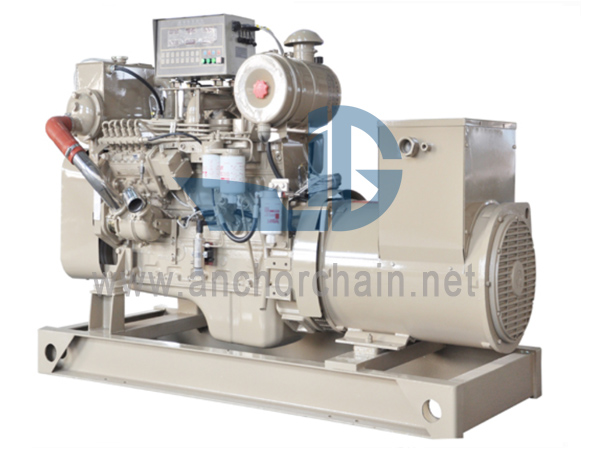
What makes a Marine generator different from a normal industrial generator?
I do not treat a ship generator as a land generator with a different label. Marine working conditions are more demanding, and the generator has to survive a mix of vibration, humidity, salt corrosion, limited installation space, and variable electrical loads. A standard industrial generator may run well in a fixed building, but at sea the machine must remain stable while the vessel rolls, vibrates, and operates in changing weather.
A reliable Marine generator usually needs several qualities that directly answer buyer concerns.
- It should deliver stable voltage and frequency under changing load conditions.
- It should be built with marine-grade materials and protection suitable for humid and salty environments.
- It should support compact installation because engine rooms are often crowded.
- It should be easy to inspect, service, and maintain during routine vessel operation.
- It should match the vessel’s power demand without excessive fuel waste.
- It should work safely with other ship systems such as control panels, alarms, pumps, and emergency circuits.
For me, this difference matters because marine buyers are not only purchasing a piece of equipment. They are purchasing power security. A generator failure at sea can delay schedules, affect safety, damage cargo, and create expensive repair problems. That is why the selection process should be more careful than a simple comparison of rated power and price.
Which Marine generator is suitable for my vessel’s real working load?
The biggest mistake I often see is choosing a generator only according to the highest possible load. That sounds safe, but an oversized generator can waste fuel, run inefficiently, and increase maintenance costs. On the other hand, an undersized generator may suffer from overload, unstable output, and shortened service life. The better approach is to review the vessel’s real electrical demand.
When I evaluate a Marine generator, I usually divide the onboard load into several groups.
| Load type | Common onboard equipment | Why it matters during selection |
|---|---|---|
| Essential navigation load | Radar, GPS, communication equipment, control instruments | These systems require stable power and should not be affected by sudden load fluctuation. |
| Mechanical operation load | Pumps, winches, compressors, hydraulic systems | These loads may create starting current peaks, so the generator must handle impact loads. |
| Living and service load | Lighting, air conditioning, kitchen equipment, refrigeration | These loads affect crew comfort and cargo preservation during long voyages. |
| Emergency or backup load | Emergency lighting, bilge pump, fire pump, alarm system | These systems require dependable power when normal operation is interrupted. |
I prefer to calculate both continuous load and peak load. The continuous load tells me what the generator must support for long running hours, while the peak load tells me whether it can handle sudden motor starts or deck machinery operation. A good supplier should be able to discuss both instead of only showing a catalog model.
How do I judge whether a Marine generator is reliable enough for long voyages?
Reliability is not a slogan. I judge it through design details, engine compatibility, alternator performance, cooling method, control protection, and ease of maintenance. A generator used at sea may run for long periods, so small design weaknesses can become serious after repeated operation.
For a practical buyer, I would focus on these points.
- Stable output because sensitive shipboard equipment cannot tolerate frequent voltage fluctuation.
- Durable structure because marine environments expose equipment to vibration, moisture, and corrosion.
- Cooling performance because engine rooms may become hot and poorly ventilated during operation.
- Fuel efficiency because fuel cost becomes significant when the generator runs for long hours.
- Noise and vibration control because crew comfort and equipment protection both depend on smoother operation.
- Maintenance access because filters, belts, oil points, and inspection panels should be easy to reach.
This is where I see value in working with a supplier that understands marine accessories and ship equipment as a whole. A generator should not be treated as an isolated product. It must fit into the vessel’s operation, available space, power distribution system, and maintenance habits.
What problems can a poor generator choice create after installation?
A low-quality or mismatched generator may look cheaper at the purchasing stage, but the real cost often appears later. I have seen buyers worry about fuel consumption, overheating, hard starting, unstable voltage, excessive vibration, and poor after-sales communication. These problems do not only affect the generator itself. They affect the whole vessel.
Here are the common pain points I would try to avoid before placing an order.
| Buyer pain point | Possible cause | Better purchasing approach |
|---|---|---|
| Unstable voltage during operation | The generator is not matched with changing onboard loads. | Review continuous load, peak load, and motor starting requirements before selection. |
| High fuel consumption | The unit is oversized or works outside its efficient load range. | Select a power range that matches actual operating conditions. |
| Frequent overheating | Cooling design or engine room ventilation is not suitable. | Check cooling method, ambient conditions, and installation layout in advance. |
| Difficult maintenance | The layout leaves little space for inspection and service. | Confirm maintenance access points before confirming the model. |
| Shortened service life | The generator is exposed to vibration, corrosion, or overload for long periods. | Choose marine-oriented construction and operate within recommended limits. |
A dependable Marine generator helps reduce these risks by combining suitable power output, stable electrical performance, and a structure designed for shipboard conditions. That is why I always recommend looking beyond the first quotation and considering the total cost of operation.
Why do marine buyers care about installation space and maintenance access?
Engine room space is rarely generous. Pipes, valves, pumps, cables, tanks, and other machinery often leave limited room for a generator set. If the generator is difficult to install or service, the vessel owner may face longer maintenance time and higher labor cost later.
From my perspective, a practical generator design should allow technicians to inspect major parts without dismantling too many surrounding components. Filters, oil drains, control panels, wiring points, and cooling parts should be arranged in a way that supports routine maintenance. This may sound like a small detail, but it becomes very important after months or years of operation.
I also care about lifting, foundation, vibration isolation, exhaust arrangement, and cable connection. These details help determine whether installation will be smooth or frustrating. A supplier that can discuss such points usually gives me more confidence than one that only sends a product picture and a price.
How can a Marine generator support safer vessel operation?
Safety at sea depends on dependable systems. A generator cannot prevent every operational problem, but it can reduce power-related risks. When navigation devices, bilge pumps, fire systems, lighting, and communication equipment have stable power, the vessel has a stronger safety foundation.
A suitable Marine generator can support safer operation in several ways.
- It helps maintain stable electricity for navigation and communication systems.
- It supports emergency equipment when normal power supply is interrupted.
- It reduces the risk of equipment damage caused by voltage fluctuation.
- It helps maintain lighting and living systems during long operating hours.
- It supports pumps and deck machinery that are important for routine vessel work.
I also look at protective control functions. Alarms and shutdown protection for oil pressure, temperature, overspeed, and abnormal operation help operators respond before a small fault becomes a larger failure. For marine buyers, this kind of protection is not an optional decoration. It is part of responsible vessel management.
What should I compare before choosing a Marine generator supplier?
Choosing the generator itself is only half of the decision. The supplier matters too. A good supplier should help the buyer understand model selection, technical parameters, installation suitability, and long-term spare parts support. This is especially important for overseas buyers who need clear communication before shipment.
When I compare suppliers, I usually check the following points.
| Comparison item | What I look for | Why it affects purchasing confidence |
|---|---|---|
| Product range | Whether the supplier understands marine equipment beyond a single product. | A broader marine background usually helps with practical matching and application advice. |
| Technical communication | Whether the supplier asks about vessel type, load demand, space, and operating conditions. | Good questions often lead to better model selection. |
| Customization ability | Whether the unit can be matched to different power needs and installation requirements. | Marine projects often need more flexibility than standard land applications. |
| Quality control | Whether the supplier pays attention to stable performance and marine-use durability. | Reliable quality helps reduce repair risk after installation. |
| After-sales support | Whether spare parts, documents, and communication support are available. | Long-term support matters when the generator becomes part of daily vessel operation. |
For me, LIG MARINE GROUP LTD fits naturally into this discussion because the company is not only connected with marine generators but also with wider marine equipment supply. That broader product background helps buyers consider the generator as part of a vessel system rather than a stand-alone purchase.
Is fuel efficiency more important than rated power?
Rated power is important, but fuel efficiency often decides whether the purchase remains economical over time. A generator that burns too much fuel can quietly increase daily operating costs. I prefer to choose a model that runs efficiently under the vessel’s normal load range instead of chasing the highest possible power rating.
A properly selected Marine generator should balance output capacity and operating economy. If the vessel usually operates at a moderate load, the generator should not spend most of its time running far below its efficient range. If the vessel frequently starts pumps, compressors, or winches, the generator must also have enough reserve capacity to handle those moments without unstable output.
This is why I do not recommend buying only by kilowatt number. I would rather review the real working pattern. Does the vessel operate near port, offshore, or on long routes? Does it carry refrigerated cargo? Does it rely heavily on deck machinery? Does it need backup power for emergency equipment? The answers will shape a smarter choice.
How do I make a better inquiry for a Marine generator?
A clear inquiry saves time for both buyer and supplier. Instead of only asking for the price of a generator, I would include enough information for accurate selection. This helps the supplier recommend a suitable model and reduces the chance of later changes.
When I prepare an inquiry, I usually include these details.
- Vessel type and main application
- Required rated power or estimated load list
- Voltage and frequency requirements
- Continuous operating hours or working pattern
- Installation space and engine room conditions
- Cooling preference or available cooling arrangement
- Noise, vibration, or emission requirements if applicable
- Destination country and expected documentation needs
This information helps the supplier respond with a more practical proposal. It also shows whether the supplier understands marine project communication. A serious supplier should not rush a buyer into a model before understanding the operating environment.
Why does LIG MARINE GROUP LTD deserve attention from marine equipment buyers?
I pay attention to suppliers that understand practical marine operation, not only catalog presentation. LIG MARINE GROUP LTD works in the marine equipment field and offers solutions connected with vessel accessories and machinery needs. For buyers looking for a Marine generator, that background is useful because generator selection often involves more than power output.
A buyer may need to consider installation, vessel system compatibility, working environment, spare parts, and maintenance planning. When a supplier can communicate around these real issues, the purchasing process becomes more efficient. I also value suppliers that can support different vessel requirements, because marine projects rarely follow one fixed pattern.
From a product advantage point of view, I would summarize the value in three practical directions.
- Application suitability because the generator is considered for shipboard working conditions.
- Operational stability because onboard equipment requires dependable power during continuous use.
- Purchasing efficiency because experienced communication helps buyers select a better-matched model.
These points are more meaningful than exaggerated marketing words. Marine buyers want equipment that can work, fit, last, and be supported. A good generator choice should answer those needs with real technical logic.
Which final checks should I make before ordering a Marine generator?
Before confirming an order, I would not rely only on the product name. I would check the technical details one by one. This is especially important for overseas procurement, where a wrong specification can create delays, extra shipping cost, or installation problems.
| Final check | What to confirm | Buyer benefit |
|---|---|---|
| Power capacity | Rated power, standby power, and expected load range | Prevents overload and avoids unnecessary oversizing |
| Electrical standard | Voltage, frequency, phase, and control configuration | Improves compatibility with onboard systems |
| Installation layout | Dimensions, foundation, lifting space, exhaust direction, service access | Reduces installation risk and later maintenance difficulty |
| Operating environment | Temperature, humidity, ventilation, vibration, and corrosion exposure | Helps select a unit suitable for real marine conditions |
| Documentation and support | Manuals, spare parts information, drawings, and supplier communication | Supports smoother operation after delivery |
This final review makes the purchase more controlled. It also helps the supplier understand the project clearly and provide a more accurate recommendation. In my view, this is the difference between simply buying equipment and building a reliable onboard power solution.
What is my practical conclusion before choosing a Marine generator?
If I were selecting power equipment for a vessel, I would treat the generator as a core safety and operation system. I would not choose based only on the lowest price or the largest rated power. I would look for stable output, marine-ready construction, efficient operation, accessible maintenance, and a supplier that can communicate around real vessel conditions.
A well-selected Marine generator can help keep essential systems running, reduce maintenance stress, improve fuel economy, and support safer operation at sea. For vessel owners, shipyards, marine traders, and project buyers, that value is far more important than a simple catalog comparison.
If you are comparing generator options for a new vessel, replacement project, or marine equipment procurement plan, I recommend sending your vessel type, load requirements, voltage standard, and installation conditions to LIG MARINE GROUP LTD. For a more suitable proposal and clearer product guidance, please leave an inquiry or contact us today.