

Article Summary: An intermediate twistlock is a compact but critical component in container securing systems. Installed between vertically stacked containers, it helps connect the corner castings of adjacent container tiers and limits unwanted movement during handling, storage, road transportation, and marine voyages. However, not every twistlock is suitable for every operating environment. Material quality, dimensional accuracy, left- or right-hand configuration, corrosion resistance, load performance, ease of operation, inspection requirements, and compatibility with the container securing arrangement all deserve careful attention. This guide explains how an intermediate twistlock works, where it is used, what problems it can solve, how to inspect it, and what buyers should consider before placing an order.
Why Intermediate Twistlocks Matter in Container Operations
Container transportation depends on more than the strength of the container itself. Every connection between containers, vessels, chassis, and securing equipment has to perform correctly when the cargo is lifted, stacked, moved, accelerated, braked, or exposed to vibration.
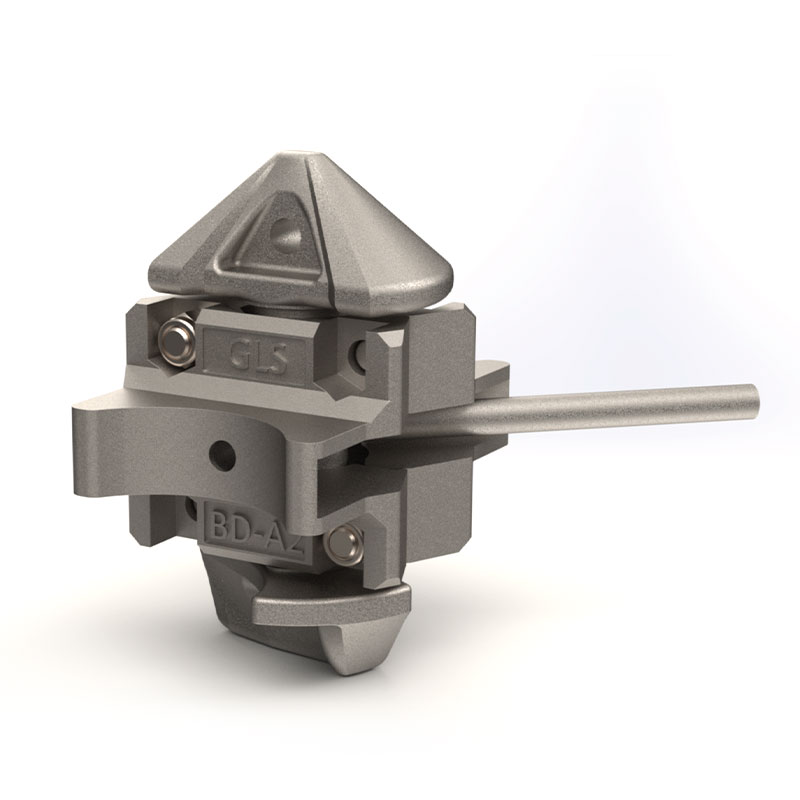
An intermediate twistlock is designed to connect two containers stacked vertically. It sits between the lower and upper container corner castings, creating a mechanical connection that helps maintain the integrity of the stack.
This function becomes particularly important when containers are exposed to repeated movement. At a port terminal, for example, containers may be lifted and repositioned several times. During road transportation, the stack or container assembly may experience vibration and sudden changes in acceleration. At sea, rolling, pitching, vibration, wind, and wave-induced motion can place demanding forces on the container securing arrangement.
How an Intermediate Twistlock Works Between Container Tiers
Standard freight containers are equipped with corner castings designed to interface with compatible handling and securing equipment. The intermediate twistlock is placed between the lower corner casting of one container and the upper corner casting of another.
Once the containers are correctly aligned and positioned, the twistlock engages with the openings in the corner castings. The locking mechanism is then rotated or otherwise operated according to the specific design, creating a connection between the two container tiers.
From Alignment to Locking
- Positioning: The lower and upper containers are brought into the correct alignment.
- Engagement: The twistlock interfaces with the corresponding corner castings.
- Locking: The locking head is turned into its secured position according to the product design.
- Verification: Operators confirm that the locking mechanism has reached the intended position and that there is no visible abnormality.
- Operation: The secured container stack can then proceed to the next stage of handling or transportation.
The exact operating procedure should always follow the manufacturer's instructions and the applicable cargo securing arrangement. The lock should never be forced into position if the container corners, lock head, or supporting structure are misaligned.
Key Intermediate Twistlock Features Buyers Should Examine
When purchasing container securing hardware, buyers sometimes focus heavily on unit price while overlooking the factors that determine long-term performance. A better approach is to evaluate the complete operating requirement.
ChuanGang specializes in container securing products, including intermediate twistlocks and other marine accessories. Its product information identifies intermediate twistlocks as components used to connect upper and lower container layers, with left- and right-hand versions available for different installation requirements.
Where Are Intermediate Twistlocks Commonly Used?
The application of an intermediate twistlock is not limited to one type of facility. Wherever containers are stacked and need to remain properly connected, an appropriate container locking solution can be part of the securing system.
Container Ships
On container vessels, stacks may be exposed to continuous dynamic movement during a voyage. Intermediate connections help maintain the relationship between vertically stacked containers. They form part of a broader securing arrangement that may also include lashing rods, turnbuckles, foundations, and other fittings.
Port and Terminal Yards
Container terminals frequently stack units several tiers high. Reliable locking components can help maintain stack stability during storage and handling operations, especially where repeated lifting and repositioning take place.
Logistics and Intermodal Operations
Intermodal transportation creates changing operating conditions. Containers can move between ship, terminal, rail, and road transportation. Selecting compatible securing equipment helps reduce unnecessary delays caused by poor fit, difficult operation, or premature component replacement.
Specialized Container Handling
Different container types and securing arrangements may introduce additional requirements. Buyers should confirm the container corner geometry, intended load path, operating environment, and securing procedure before assuming that a standard component is suitable.
Which Common Container Securing Problems Can an Intermediate Twistlock Help Address?
The most useful way to evaluate a twistlock is to look at the problems operators are trying to prevent. In practical container handling, several recurring issues can affect efficiency and safety.
| Operational Problem | Possible Cause | What to Check |
|---|---|---|
| Container movement within a stack | Incorrect locking, poor alignment, worn components, or unsuitable securing arrangement | Locking position, corner casting condition, component compatibility |
| Difficulty locking or unlocking | Corrosion, contamination, deformation, or incorrect positioning | Lock body, locking head, operating mechanism, alignment |
| Premature component wear | Excessive loading, improper operation, poor material quality, or unsuitable application | Wear patterns, deformation, operating conditions |
| Frequent replacement | Harsh environment, inadequate surface protection, poor maintenance, or wrong product selection | Corrosion level, product specification, maintenance routine |
| Installation delays | Inconsistent dimensions or difficult manual operation | Product consistency and compatibility with the securing system |
It is important to remember that a twistlock is only one component of a complete cargo securing system. A damaged container corner, unsuitable lashing arrangement, overloaded component, or incorrect operating procedure cannot be corrected simply by installing a new twistlock.
What Should Buyers Check Before Purchasing an Intermediate Twistlock?
A purchasing decision should begin with the actual application rather than a generic product description. Before requesting a quotation, prepare the information that a manufacturer needs to confirm compatibility.
- Container type and relevant corner casting configuration.
- Whether the twistlock will connect upper and lower containers.
- Required left-hand or right-hand configuration.
- Expected operating environment, including marine, coastal, terminal, or inland use.
- Required corrosion protection or surface treatment.
- Expected quantity and purchasing frequency.
- Applicable technical specifications or customer drawings.
- Required inspection, testing, certification, or documentation.
- Packaging and transportation requirements for bulk orders.
If the application involves a specialized container, unusual securing arrangement, or demanding marine environment, technical communication with the manufacturer becomes particularly valuable. A few minutes spent confirming compatibility before purchasing can prevent much larger costs caused by incorrect components later.
Do Not Compare Products by Price Alone
The cheapest component is not necessarily the lowest-cost solution. Consider the total operating cost, including replacement frequency, inspection time, installation difficulty, downtime, logistics, and the consequences of a component not performing as expected.
How Should Intermediate Twistlocks Be Inspected and Maintained?
Regular inspection is one of the simplest ways to identify problems before they become operational failures. The inspection interval should be established according to the equipment manufacturer's instructions, operating conditions, cargo securing procedures, and applicable regulations.
Visual Inspection
- Look for visible cracks or fractures.
- Check for significant deformation of the lock body or locking head.
- Inspect for severe corrosion or loss of material.
- Check whether the operating mechanism moves as intended.
- Look for unusual wear patterns.
- Confirm that the locking position is clearly identifiable.
Cleaning and Corrosion Control
Marine and terminal environments can introduce salt, dirt, moisture, and other contaminants. Keeping locking components clean helps operators identify damage and supports smooth operation. Appropriate corrosion protection should be maintained according to the product specification and manufacturer's recommendations.
Remove Damaged Components From Service
A twistlock showing cracks, severe deformation, unreliable locking action, or other serious damage should not be kept in service simply because the damage appears small. Container securing components are safety-related hardware, so replacement is generally preferable to improvised repair when the component's structural integrity is uncertain.
Intermediate Twistlock vs. Other Container Locking Solutions
Container securing systems include several types of locks and fittings. Understanding their basic roles helps buyers avoid ordering the wrong product.
| Component Type | Typical Function | Main Consideration |
|---|---|---|
| Intermediate Twistlock | Connects vertically stacked containers between tiers | Correct fit, locking reliability, configuration, and material quality |
| Semi-Automatic Twistlock | Facilitates faster connection between containers in suitable applications | Operating mechanism and compatibility with the intended handling process |
| Fully Automatic Twistlock | Supports automated or simplified locking operations | System compatibility and correct automatic engagement |
| Container Mid Lock | Connects adjacent container positions in certain arrangements | Correct application and container configuration |
| Container Cone | Provides positioning or connection between container structures in specific systems | Geometry and intended securing arrangement |
These components should not be treated as interchangeable simply because they all belong to the broader category of container securing hardware. The correct selection depends on where the component is installed and how forces are transferred through the complete securing system.
Why Does Manufacturing Quality Matter for Intermediate Twistlocks?
A container twistlock is a relatively small steel component, but manufacturing consistency matters because the product must repeatedly interact with standardized container corner fittings.
Production quality can affect dimensional consistency, mechanical performance, surface condition, corrosion resistance, and service life. For bulk purchasers, consistency from batch to batch is especially important because operators may use hundreds or thousands of components across multiple locations.
ChuanGang has experience in container lashing fittings and marine accessories, including container twistlocks, intermediate twistlocks, container cones, and other securing products. The company states that its products are manufactured using quality raw materials and inspected through professional production and quality-control processes.
For buyers evaluating a supplier, it is useful to look beyond a product photograph. Ask about manufacturing capability, material specifications, dimensional control, surface treatment, inspection procedures, packaging, delivery capacity, and technical support.
A Practical Supplier Evaluation Checklist
- Can the supplier clearly explain the product's intended application?
- Can the supplier confirm the required configuration?
- Are material and manufacturing details available?
- Can the supplier provide appropriate product documentation?
- Does the supplier have experience with marine and container securing products?
- Can bulk orders be produced consistently?
- Is technical support available when installation or application questions arise?
- Can packaging and delivery requirements be accommodated?
Frequently Asked Questions About Intermediate Twistlocks
An intermediate twistlock is a container securing component used between vertically stacked containers. It engages with the corner castings of adjacent container tiers to help maintain a stable connection.
It is generally installed between the lower corner castings of an upper container and the upper corner castings of the container beneath it. The exact arrangement depends on the cargo securing system.
Yes. Some intermediate twistlock designs are supplied in left-hand and right-hand versions. Buyers should confirm the required configuration before ordering.
No. Compatibility depends on the container corner casting, securing arrangement, component dimensions, load requirements, and operating environment. The correct specification should be confirmed before use.
High-strength steel and other suitable engineered materials are commonly used for container securing hardware. The appropriate material depends on the product design, required mechanical performance, environmental conditions, and applicable specifications.
Severe corrosion can reduce the effective cross-section of a component, interfere with the locking mechanism, and make inspection more difficult. Components exposed to marine or outdoor environments therefore require suitable corrosion protection and regular inspection.
Stop and inspect the component rather than forcing it. Check for contamination, corrosion, deformation, incorrect alignment, or damage. Follow the manufacturer's maintenance instructions and replace the component if its condition is unsafe or uncertain.
Not necessarily. Container securing commonly involves a complete arrangement of locking devices, lashing equipment, foundations, and other fittings. The required components depend on the vessel, container arrangement, cargo securing plan, and applicable requirements.
Provide the container type, required quantity, intended application, left- or right-hand requirement, environmental conditions, technical specifications, surface-treatment requirements, certification or inspection needs, and any drawings or existing component references.
An experienced manufacturer can help confirm compatibility, production specifications, quality requirements, packaging, and delivery details. This is particularly valuable for large orders or applications where incorrect components could create operational delays.
Final Thoughts: Selecting the Right Intermediate Twistlock Starts With the Application
An intermediate twistlock may look like a simple mechanical fitting, but its role in a container stack makes product quality and correct application extremely important. A suitable component needs to match the container corner casting and securing arrangement while providing dependable locking performance under the conditions for which it is designed.
Buyers can make better decisions by considering the complete picture: material quality, dimensional accuracy, configuration, corrosion resistance, operating environment, inspection requirements, supplier capability, and long-term operating costs.
Whether the requirement is for a small replacement order or a large supply program, selecting the right specification before purchase can reduce installation problems, unnecessary replacements, and operational interruptions. A reliable manufacturer should also be able to provide clear product information and practical support throughout the purchasing process.
Looking for a Reliable Intermediate Twistlock Supplier?
If you are sourcing intermediate twistlocks for container terminals, marine transportation, logistics operations, or other container securing applications, ChuanGang can provide professional container securing solutions tailored to your requirements. Share your specifications, quantity, application, and technical needs with the team to discuss a suitable solution.
Contact us today to discuss your intermediate twistlock requirements and find a practical solution for your container securing operation.