

Which G80 Clevis Hook Features Ensure Safe and Reliable Heavy-Duty Lifting?
2026-11-16
Reliable lifting operations begin with the right connection. In chain sling assemblies, a hook is more than a simple attachment point. It directly affects load security, handling efficiency, and the overall performance of lifting equipment. A G80 Clevis Hook is designed to provide a strong and practical connection between Grade 80 lifting chains and loads, making it an important component in industrial lifting and material handling applications.
However, selecting a suitable hook requires more than checking its appearance or nominal size. Buyers and lifting professionals need to understand working load limits, material properties, clevis connections, safety latch designs, dimensional compatibility, and inspection requirements. This guide explains the essential features of a G80 Clevis Hook and provides practical advice for choosing the right product for demanding lifting environments.
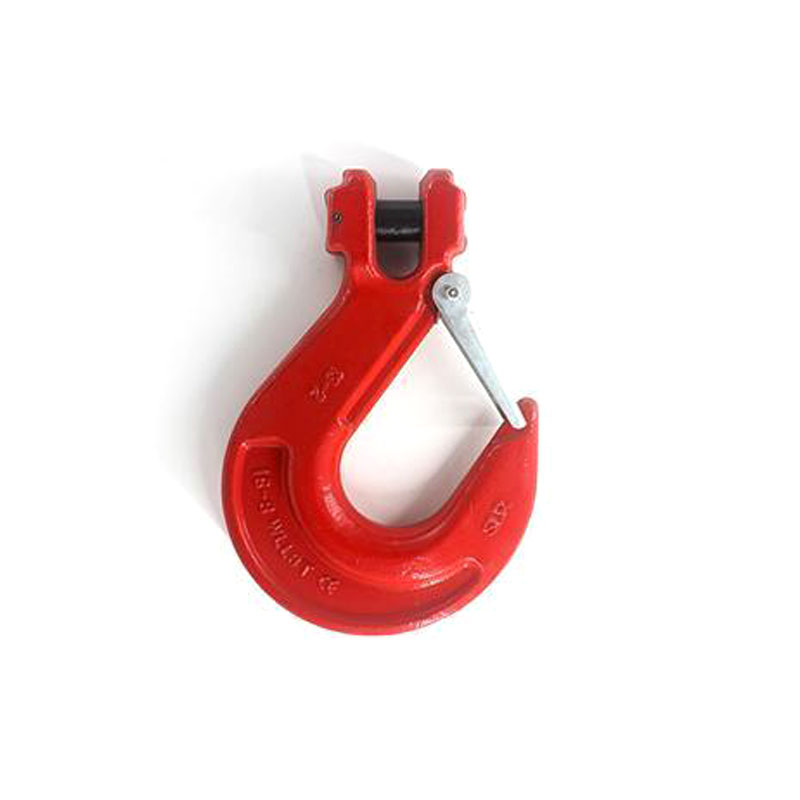
1. Understanding the G80 Clevis Hook
A G80 Clevis Hook is a lifting component designed for use with Grade 80 alloy steel chain assemblies. It features a clevis-style attachment at the upper end and a curved hook body at the lower end. This configuration allows the hook to connect directly to a compatible chain link without requiring a separate connecting link in suitable assembly designs.
The term G80 refers to Grade 80 material classification used in lifting chain systems. These components are engineered for demanding lifting applications where strength, dimensional accuracy, and dependable load handling are essential.
Depending on the intended application, G80 Clevis Hooks are available in different configurations, including:
- Clevis Hook with Safety Latch: Features a spring-loaded or manually operated latch across the hook opening to help prevent accidental disengagement.
- Self-Locking Clevis Hook: Uses a locking mechanism that automatically secures the hook when correctly engaged.
- Clevis Grab Hook: Designed primarily for shortening chain legs or positioning chain links in compatible applications.
- Special Clevis Hook Designs: May include application-specific dimensions, finishes, or connection configurations.
Although these products share a similar attachment structure, their functions are not identical. Buyers should select a hook according to the lifting arrangement and the manufacturer's intended application.
2. How the Clevis Hook Structure Works
The practical advantage of a clevis hook comes from its integrated connection design. Instead of relying on an additional master link or connecting component, the clevis end provides a direct connection to a compatible chain link through a pin or equivalent retaining arrangement.
2.1 Clevis Connection
The upper section generally consists of two parallel attachment plates with a connecting pin. A compatible chain link is positioned between the plates, and the pin secures the connection according to the manufacturer's assembly instructions.
This arrangement offers several practical benefits:
- Reduces the number of separate components in suitable chain sling assemblies.
- Provides a compact connection between the hook and lifting chain.
- Supports convenient assembly and replacement.
- Helps maintain a consistent connection configuration.
2.2 Hook Body
The curved lower section is designed to receive the intended lifting attachment. Its throat opening, bowl profile, and overall geometry influence how the load or lifting point sits inside the hook.
A properly selected hook should allow the load connection to sit naturally in the bowl without forcing the hook tip, side-loading the body, or creating an unstable contact position.
2.3 Retaining Pin
The clevis pin is an important part of the connection system. It must match the specified hook design and be correctly secured against accidental movement or displacement. Improvised pins, incorrect fasteners, or unauthorized modifications can compromise the assembly.
3. Key Materials and Manufacturing Processes
Material selection and manufacturing quality have a direct influence on the mechanical performance of lifting hooks. G80 Clevis Hooks are commonly produced from forged alloy steel, which is selected for its strength and suitability for heat treatment.
3.1 Forged Alloy Steel
Forging shapes heated metal under controlled pressure to create the required component geometry. Compared with manufacturing methods that rely solely on machining or casting, a properly controlled forging process can provide favorable material continuity and mechanical properties for lifting applications.
For industrial buyers, important material considerations include:
- Specified alloy composition and material traceability.
- Consistent forging quality.
- Mechanical properties appropriate to the intended grade.
- Freedom from unacceptable surface and internal defects.
- Compatibility with the specified heat treatment process.
3.2 Quenching and Tempering
Quenching and tempering are commonly used heat treatment processes for forged lifting accessories. Quenching helps develop the required hardened structure, while tempering adjusts the resulting properties to achieve an appropriate balance of strength and toughness.
Correct process control is essential. Inadequate or inconsistent heat treatment can affect mechanical performance and product reliability. Manufacturers should therefore maintain documented production procedures and appropriate quality checks.
3.3 Surface Finishing
Surface finishing helps protect the hook and provides a recognizable appearance. Common options include powder coating and other finishes specified for the intended operating environment.
Buyers should consider moisture exposure, storage conditions, chemical contact, and expected maintenance requirements when choosing a surface treatment. A coating should never be treated as a substitute for proper material quality or inspection.
4. Important Technical Specifications
Choosing a G80 Clevis Hook requires careful evaluation of its technical specifications. A hook that physically fits a chain does not automatically have the correct load capacity or approval for the intended lifting operation.
The following table summarizes the key parameters buyers should review before placing an order.
| Specification | Meaning | Why It Matters |
|---|---|---|
| Grade | Grade 80 lifting accessory classification | Determines the intended chain system compatibility. |
| Material | Forged alloy steel or specified equivalent | Affects strength, toughness, and durability. |
| WLL | Working Load Limit | Defines the permitted rated working capacity. |
| Chain Size | Compatible chain diameter and link dimensions | Ensures proper assembly and connection. |
| Throat Opening | Internal opening of the hook | Determines compatibility with the intended lifting point. |
| Clevis Dimensions | Width, pin diameter, and attachment geometry | Supports correct chain installation. |
| Safety Latch | Latch type and operating mechanism | Helps prevent accidental disengagement. |
| Surface Finish | Powder coating or specified protective finish | Influences corrosion protection and maintenance. |
| Certification | Applicable standards and inspection documentation | Provides evidence of product conformity and testing. |
Understanding Working Load Limit
Working Load Limit (WLL) is one of the most important values on any lifting accessory. It represents the maximum load that the component is rated to handle under the conditions defined by its manufacturer and applicable standards.
WLL should not be confused with breaking load. Breaking load describes a failure-related test or rated value, while WLL is the operational limit that users must follow.
The actual permitted capacity of a complete lifting assembly may also be affected by sling configuration, sling angles, the number of supporting legs, load distribution, and the limitations of other components.
For this reason, buyers should never select a hook based solely on its nominal chain diameter. The rated capacity of the complete lifting arrangement must be assessed by a competent person.
5. Safety Latch and Load Protection
A safety latch is an important feature of many G80 Clevis Hooks. It closes the hook opening after the lifting connection has been positioned, helping reduce the possibility of accidental disengagement when the assembly is not under an unsuitable or abnormal loading condition.
5.1 How a Safety Latch Helps
During lifting operations, movement, vibration, and changes in load position may cause an unsecured attachment to shift toward the hook opening. A correctly functioning latch provides an additional retention barrier.
Common latch designs include:
- Spring-loaded safety latches.
- Heavy-duty hinged latch assemblies.
- Replaceable latch systems on compatible hook models.
- Specialized self-locking mechanisms.
5.2 Safety Latch Limitations
A safety latch should not be used as a load-bearing component. The load must be properly seated in the hook bowl, and the hook must be used within its rated capacity and intended loading direction.
Users should also avoid lifting with a damaged, missing, or incorrectly installed latch. If the latch does not close or operate smoothly, the hook should be removed from service until it has been assessed and repaired or replaced in accordance with the manufacturer's instructions.
6. Common Industrial Applications
G80 Clevis Hooks are used in many industries where Grade 80 chain slings and compatible lifting accessories are required. Their compact connection design makes them useful in both fixed lifting arrangements and equipment that requires regular assembly changes.
6.1 Construction and Infrastructure
Construction projects frequently involve moving steel structures, machinery, concrete components, and other heavy materials. G80 Clevis Hooks can be incorporated into compatible chain sling assemblies for these operations.
6.2 Marine and Port Operations
Ports and marine facilities handle equipment, cargo, machinery, and structural components under demanding operating conditions. Properly specified lifting hooks can form part of the chain sling systems used in these environments.
6.3 Manufacturing and Industrial Workshops
Factories often need to lift machinery components, metal products, production fixtures, and heavy equipment. A suitable clevis hook helps create a practical connection between the lifting chain and the intended attachment point.
6.4 Warehousing and Material Handling
Industrial warehouses use lifting equipment to move heavy materials between storage, loading, and processing areas. Correctly rated chain accessories support organized and controlled material handling.
6.5 Shipbuilding and Heavy Engineering
Shipyards and heavy engineering facilities may require lifting components for large assemblies and structural materials. Product selection should account for the load characteristics, environmental conditions, and specific lifting procedures involved.
7. How to Select the Right G80 Clevis Hook
Choosing the correct hook is not simply a matter of purchasing the largest available model. A suitable product must match the chain system, lifting capacity, connection geometry, and operating environment.
Step 1: Identify the Required WLL
Start by determining the maximum load and the lifting configuration. Consider the number of sling legs, sling angles, load distribution, and any additional factors required by the applicable lifting procedure.
The selected hook must have an appropriate rated capacity for its position in the complete assembly.
Step 2: Confirm Chain Compatibility
Check the chain diameter and link dimensions against the hook manufacturer's compatibility specifications. The clevis opening and pin arrangement must accommodate the intended chain link correctly.
Using an incorrectly sized chain connection may create unwanted movement, poor seating, or mechanical interference.
Step 3: Select the Appropriate Hook Type
Determine whether the application requires a standard clevis sling hook with a safety latch, a self-locking hook, or a grab hook. These designs serve different purposes and should not be treated as interchangeable.
Step 4: Review Material and Manufacturing Quality
Ask about material specifications, forging processes, heat treatment, inspection procedures, and traceability. Consistent production controls are particularly important for components used in overhead lifting.
Step 5: Check Standards and Documentation
Review the applicable product standard, such as EN 1677 where relevant to the product type and market. Confirm the manufacturer's declared conformity and request appropriate test reports or certificates.
Step 6: Consider Environmental Conditions
For outdoor, marine, or industrial environments, consider corrosion exposure, moisture, temperature, and chemical contact. Confirm that the selected finish and maintenance requirements are suitable for the application.
8. G80 Clevis Hook vs. Other Lifting Hooks
Different lifting hook designs are developed to address different connection requirements. Understanding their structural differences helps buyers avoid ordering a component that does not suit the intended lifting arrangement.
| Hook Type | Main Design Feature | Typical Function |
|---|---|---|
| G80 Clevis Hook | Integrated clevis connection | Direct connection to compatible chain links. |
| G80 Eye Hook | Closed eye attachment | Connection through a compatible master link or other specified fitting. |
| G80 Grab Hook | Narrow throat and chain-supporting profile | Chain shortening and adjustment in approved arrangements. |
| G80 Self-Locking Hook | Automatic locking mechanism | Additional retention for compatible lifting applications. |
A clevis hook is often preferred when direct chain attachment and compact assembly are important. An eye hook may be more appropriate when the sling design requires a closed attachment point.
The correct choice depends on the connection system, operating requirements, and manufacturer's product specifications rather than appearance alone.
9. Installation, Inspection, and Maintenance
Even a high-quality lifting hook requires correct installation and routine inspection. Wear, deformation, corrosion, and incorrect assembly can reduce the reliability of a lifting system over time.
9.1 Installation Guidelines
- Verify that the hook grade and WLL match the intended lifting system.
- Check chain dimensions and clevis compatibility before assembly.
- Use the specified clevis pin and retaining components.
- Ensure the chain link is correctly positioned between the clevis plates.
- Confirm that the retaining mechanism is properly secured.
- Check that the safety latch operates correctly where fitted.
- Ensure the load sits correctly in the hook bowl.
9.2 Inspection Points
Before use, inspect the hook for signs of damage or deterioration. Inspection should be performed according to the applicable regulations, manufacturer recommendations, and the conditions of use.
Important inspection points include:
- Cracks: Look for visible cracks, especially around highly stressed areas.
- Deformation: Check for twisting, bending, or abnormal opening of the hook throat.
- Wear: Examine the hook bowl, throat, pin, and connection surfaces.
- Corrosion: Look for rust or material deterioration that may affect structural integrity.
- Latch condition: Check the spring, hinge, closing action, and retaining function.
- Markings: Confirm that identification and capacity markings remain legible.
9.3 Maintenance Recommendations
Keep lifting hooks clean and store them in suitable conditions when not in use. Avoid unauthorized welding, heating, grinding, or mechanical modifications because these operations can alter the material properties or structural integrity.
Any hook showing damage, abnormal wear, or uncertain operating condition should be removed from service and assessed by a competent person. Repair or replacement should follow the manufacturer's approved procedures.
10. Common Purchasing Mistakes to Avoid
Industrial buyers sometimes focus too heavily on price and delivery time while overlooking technical details that influence product suitability. The following mistakes can create unnecessary procurement and operational risks.
10.1 Selecting by Chain Diameter Alone
Matching the chain diameter is important, but it does not establish the correct WLL, clevis geometry, or complete assembly compatibility. Buyers should review all relevant specifications.
10.2 Ignoring the Applicable Standard
Different markets and product categories may require different technical standards. Confirm the exact standard applicable to the requested product rather than relying on a general statement such as G80.
10.3 Overlooking Product Traceability
Traceability markings and supporting documentation help buyers identify products and verify relevant manufacturing information. Missing or unclear identification can make quality management more difficult.
10.4 Choosing an Inappropriate Latch Design
A standard safety latch and a self-locking mechanism have different functions. Select the design according to the lifting procedure and operational requirements.
10.5 Comparing Quotations Without Comparing Specifications
Two hooks may look similar but differ in material, heat treatment, WLL, dimensions, testing, and documentation. A fair quotation comparison should evaluate these factors alongside price and delivery time.
11. Why Manufacturing Quality Matters
For distributors, lifting equipment manufacturers, and industrial procurement companies, choosing a dependable manufacturer is an important part of maintaining consistent product quality.
A reliable supplier should be able to explain the technical characteristics of its G80 Clevis Hooks and provide clear product information for purchasing evaluation.
What Buyers Should Look for in a Manufacturer
- Manufacturing capability: Experience with forged lifting accessories and related chain fittings.
- Material control: Appropriate material selection and traceability procedures.
- Process consistency: Controlled forging and heat treatment operations.
- Quality inspection: Suitable dimensional, visual, and mechanical testing procedures.
- Product documentation: Clear specifications, markings, and relevant inspection records.
- Supply capability: Stable production arrangements and practical order support.
- Technical communication: The ability to clarify specifications and respond to product-related questions.
Qingdao ChuanGang Marine Accessory Co., Ltd. focuses on marine and lifting-related accessory products. For buyers sourcing G80 Clevis Hooks and related hardware, discussing the intended application, required dimensions, and technical specifications with the supplier is a practical starting point.
Rather than choosing a product based only on its external appearance, professional buyers should evaluate the complete technical specification and confirm that the product is suitable for the intended lifting system.
12. Frequently Asked Questions
Q1: What does G80 mean on a clevis hook?
G80 refers to Grade 80, a classification associated with alloy steel lifting chains and compatible lifting accessories. A G80 Clevis Hook is designed for use in suitable Grade 80 lifting systems, subject to the manufacturer's specifications and applicable standards.
Q2: What material is commonly used for G80 Clevis Hooks?
Forged alloy steel is commonly used because it can provide the mechanical properties required for lifting applications when the material and heat treatment are properly controlled.
Q3: What is the difference between a clevis hook and an eye hook?
A clevis hook features a forked attachment with a pin, allowing direct connection to a compatible chain link. An eye hook has a closed attachment point and generally connects through a suitable master link or other specified fitting.
Q4: Does every G80 Clevis Hook come with a safety latch?
No. Some models include a safety latch, while others use different configurations, including self-locking mechanisms or specialized designs. Buyers should confirm the exact product configuration before ordering.
Q5: How do I determine the correct WLL?
Determine the maximum load and evaluate the complete lifting arrangement, including sling configuration, leg angles, load distribution, and component ratings. A competent person should verify the selection according to the applicable lifting requirements.
Q6: Can a G80 Clevis Hook be used with a Grade 100 chain?
Compatibility should never be assumed based only on physical fit. A Grade 80 hook must not automatically be used in a Grade 100 lifting assembly. Use components approved for the intended system and follow the manufacturer's compatibility guidance.
Q7: Which standards are relevant to G80 Clevis Hooks?
EN 1677 is a relevant European standard series covering forged steel components for chain slings. The applicable part depends on the hook design and component category. Other markets may have additional requirements. Always confirm the specific product's declared conformity.
Q8: How often should G80 Clevis Hooks be inspected?
Inspection frequency depends on applicable regulations, manufacturer recommendations, usage intensity, and operating conditions. Users should perform pre-use checks and arrange periodic inspections by competent personnel. More demanding conditions may require more frequent inspection.
Q9: What information should I provide when requesting a quotation?
Provide the required chain diameter, WLL, hook configuration, dimensions, applicable standard, surface finish, order quantity, and any documentation requirements. Drawings or product photographs can also help clarify special requirements.
Q10: Why is forging important for lifting hooks?
Controlled forging can provide favorable material continuity and mechanical properties for lifting components. Combined with appropriate heat treatment and quality inspection, it helps manufacturers produce hooks suitable for demanding applications.
Looking for a Reliable G80 Clevis Hook Supplier?
Choosing the right lifting accessory is essential for dependable chain sling performance. Whether you are a lifting equipment distributor, marine equipment purchaser, industrial supplier, or project contractor, having the right product specifications makes procurement easier and more efficient.
Qingdao ChuanGang Marine Accessory Co., Ltd. welcomes inquiries from international buyers looking for lifting and marine accessory solutions.
Contact us today to discuss your G80 Clevis Hook requirements, including product specifications, dimensions, technical details, and bulk purchasing needs. Our team is ready to help you identify a suitable solution for your business.
Contact Us Today