
What technologies are used to track and monitor navigation buoys remotely
2026-02-03
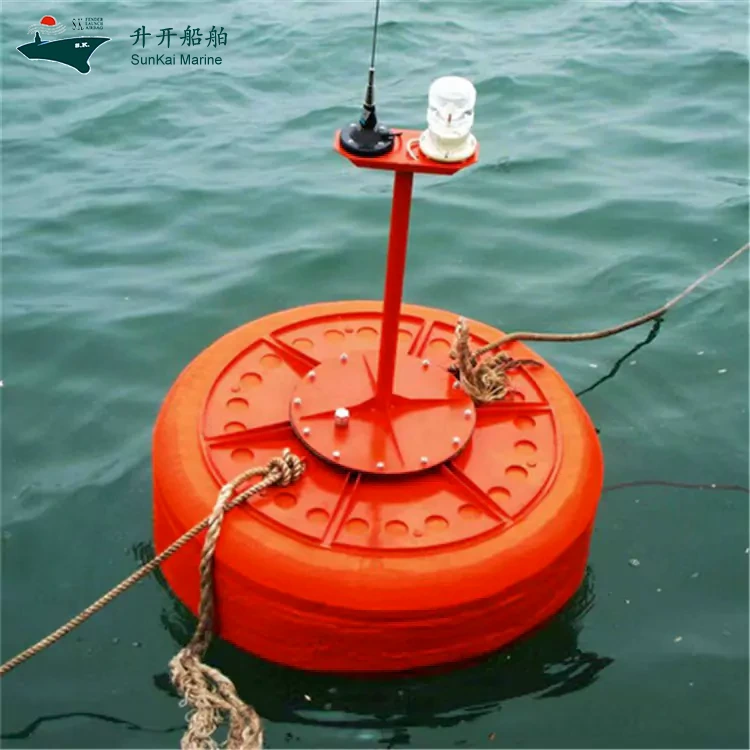
In the vast and dynamic marine environment, the humble Navigation Buoy is a critical sentinel for safety. Ensuring these assets are functioning correctly and on station is a complex task that relies heavily on remote tracking and monitoring technologies. At SunKai, we specialize in integrating these advanced systems to deliver reliability and precision for maritime authorities and operators. Modern remote monitoring hinges on a suite of technologies that provide real-time data and operational assurance.
Key Technologies for Remote Buoy Monitoring
The remote oversight of a Navigation Buoy utilizes a layered technological approach:
-
Geopositioning Systems: Primarily GPS (Global Positioning System) is the cornerstone. A GPS receiver onboard the buoy constantly calculates its exact latitude and longitude. This data is crucial for detecting if a buoy has dragged its anchor or gone adrift.
-
Data Telemetry: This is the communication backbone that transmits the buoy's data to shore. Common systems include:
-
Satellite Communications (e.g., Iridium, Inmarsat): Provide global, all-weather coverage far offshore.
-
Cellular Networks (3G/4G/5G): A cost-effective solution for buoys within coastal range.
-
Radio Frequency (RF) Links: Used for shorter-range, point-to-point networks.
-
-
Onboard Sensors: These transform a simple buoy into a smart maritime platform. A typical monitoring suite includes:
-
Status Sensors: For battery voltage, solar charge current, and internal humidity.
-
Environmental Sensors: For weather (wind, air pressure) and oceanographic data (water temperature, salinity).
-
AIS Transponders: Automatically broadcast the buoy's position, identity, and status to nearby vessels and traffic centers.
-
-
Central Monitoring Software: Platforms like those developed by SunKai aggregate all incoming data. They provide intuitive dashboards, alert operators to predefined anomalies (e.g., low battery, off-station), and enable historical data analysis.
Typical Monitoring Parameters Table
| Parameter Category | Specific Metrics Monitored | Purpose of Monitoring |
|---|---|---|
| Position & Status | GPS Coordinates, Anchor Tension | Confirm on-station status, detect drift. |
| Power Integrity | Battery Voltage, Solar Input | Ensure continuous operation of lights and sensors. |
| System Health | Light Function, LED Status, Internal Temperature | Verify primary aid to navigation is working. |
| Environmental Data | Sea Temperature, Wave Height (if equipped) | Collect valuable data for scientific and safety models. |
Navigation Buoy FAQ
What happens if a navigation buoy moves from its assigned position?
The onboard GPS detects the movement instantly. An automatic "off-station" alert is immediately sent via telemetry to the control center. Authorities can then issue navigational warnings to mariners and dispatch a service vessel to rectify the situation, all coordinated through monitoring platforms like those from SunKai.
How are navigation buoys powered for continuous remote monitoring?
Modern Navigation Buoy platforms are predominantly powered by hybrid renewable systems. They primarily use solar panels coupled with high-capacity, low-discharge batteries. For locations with limited sunlight, supplemental wind turbines or thermoelectric generators may be integrated, with SunKai engineers designing systems for optimal energy balance year-round.
Can remote monitoring predict when a buoy needs maintenance?
Absolutely. Predictive maintenance is a key benefit. By continuously analyzing trends in battery performance, solar charge cycles, and component health, the system can forecast a potential failure weeks in advance. This allows for scheduled, cost-effective repairs instead of emergency responses, maximizing uptime.
Ensure Your Maritime Safety with Precision Monitoring
The seamless integration of GPS, robust telemetry, and intelligent sensors has revolutionized Navigation Buoy management, shifting from reactive to proactive operations. This technological leap enhances maritime safety, reduces operational costs, and unlocks valuable environmental insights. SunKai is at the forefront of designing and deploying these integrated remote monitoring solutions. If you are looking to enhance the reliability and intelligence of your aid-to-navigation network, our team of experts is ready to assist.
Contact us today to discuss a custom remote monitoring solution for your critical maritime assets.