

What Size Outboard Engine Do I Need for an Aluminum Hull RIB Boat
2026-08-12
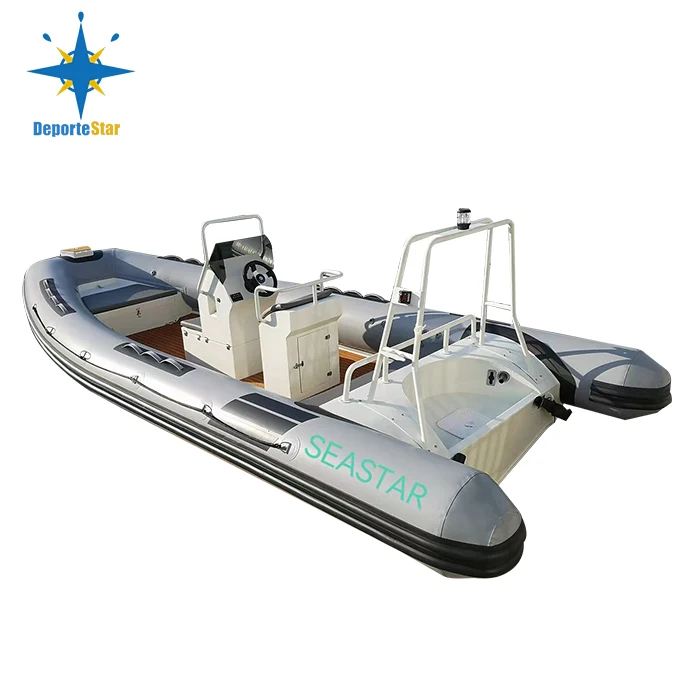
Choosing the correct outboard motor for your Rib Boat Aluminum Hull is not a decision to take lightly. Unlike fiberglass or wooden hulls, an aluminum hull has distinct weight characteristics, buoyancy profiles, and structural responses to thrust. Many boaters overestimate horsepower and end up with a stern-heavy, poorly performing vessel, while others underestimate and struggle to plane or fight currents. This guide walks through the engineering logic, load calculations, and real-world performance data to help you match the right engine to your Rib Boat Aluminum Hull, with trusted steering and control solutions from Seastar ensuring every horsepower reaches the water efficiently.
The Core Formula: Horsepower Per Foot and Per Pound
Industry standards suggest a baseline of 25–40 HP per meter of hull length for planing hulls, but aluminum construction alters this rule. A Rib Boat Aluminum Hull is lighter than fiberglass, so it requires less power to achieve plane—but it also sits higher on the water, making it more susceptible to wind drift and requiring precise trim control.
| Hull Length (ft) | Light Load (HP) | Average Load (HP) | Heavy Load (HP) | Recommended Seastar Steering System |
|---|---|---|---|---|
| 10–12 ft | 15–20 | 25 | 30 | Seastar BayStar Hydraulic |
| 13–15 ft | 30–40 | 50 | 60 | Seastar ProSeries Mechanical |
| 16–18 ft | 50–60 | 75 | 90 | Seastar Helm Pump + Cylinder Kit |
| 19–21 ft | 75–90 | 115 | 150 | Seastar Twin-Engine Ready System |
Note: These figures assume a standard 15" transom height and an average hull deadrise of 18–22 degrees.
Critical Load Factors That Change Your Calculation
The Rib Boat Aluminum Hull behaves differently under load because aluminum does not absorb vibration like composite materials. Every additional passenger, fuel can, or tackle box directly affects the hull's planing angle. Use this step-by-step method:
-
Weigh your fully rigged hull (including fuel, battery, anchor, and safety gear).
-
Add the maximum expected passenger weight (use 185 lbs per person as a conservative average).
-
Divide total weight by the hull length in feet – if the result exceeds 110 lbs/ft, you need the upper HP range from the table above.
-
Factor in water conditions – for coastal or open-water use, add 15% more HP to maintain headway in chop.
A properly sized engine combined with Seastar hydraulic steering eliminates torque steer, a common issue on lighter aluminum hulls where engine feedback can overwhelm mechanical systems.
Propeller Pitch and Gear Ratio – The Missing Variables
Horsepower alone does not tell the full story. A Rib Boat Aluminum Hull with a 60 HP engine and a 13" pitch prop will perform entirely differently than the same engine with a 17" pitch. For aluminum hulls, which tend to have less wetted surface area, a lower pitch (higher RPM) often yields better hole-shot and mid-range cruising.
| Engine HP | Recommended Prop Pitch | Gear Ratio | Typical Top Speed (knots) |
|---|---|---|---|
| 25–40 | 11"–13" | 2.15:1 | 18–22 |
| 50–70 | 13"–15" | 2.33:1 | 24–28 |
| 75–115 | 15"–17" | 2.00:1 | 30–36 |
| 130–150 | 17"–19" | 1.85:1 | 38–42 |
Seastar offers tilt and trim kits that allow fine adjustment of the engine angle, compensating for the lighter bow of an aluminum hull and reducing porpoising at speed.
Transom Capacity and Structural Integrity
Every Rib Boat Aluminum Hull carries a USCG capacity plate. This plate states the maximum horsepower and total weight. Exceeding this rating is not only illegal but also dangerous—aluminum transoms can flex and crack under excessive torque. Always cross-reference the plate with the engine's shaft length. A long-shaft engine on a short-shaft transom will cause cavitation and poor steering response, even with a premium Seastar system installed.
Frequently Asked Questions About Rib Boat Aluminum Hull Engine Sizing
Q: Can I use a smaller engine than recommended if I only use my Rib Boat Aluminum Hull on calm lakes?
A: Yes, but with conditions. A Rib Boat Aluminum Hull can operate with 20–30% less than the maximum rated HP on flat, protected waters, provided you reduce passenger count and fuel load. However, going too small (e.g., 15 HP on a 16-foot hull) will keep you in displacement mode, never reaching plane, which actually increases fuel consumption per nautical mile due to prolonged bow-high running. Additionally, smaller engines lack the alternator output needed to power electronics, so you may need a separate battery setup. For lake use, we recommend staying within 10 HP of the lower range in our table to maintain safe maneuvering margin.
Q: How does saltwater corrosion affect engine selection for an aluminum hull RIB?
A: Saltwater changes everything. A Rib Boat Aluminum Hull is already susceptible to galvanic corrosion where the engine bracket meets the transom. You must select an outboard with a stainless steel propeller shaft and sacrificial anodes rated for seawater. More importantly, saltwater requires more horsepower to achieve the same speed as freshwater because of higher density and increased drag on the tubes. We recommend adding 10–15% to your calculated HP for coastal use. Also, install a Seastar corrosion-resistant hydraulic helm to avoid steering seizure, a common failure point on salt-exposed mechanical cables. Regular flushing and anode replacement become non-negotiable with any engine choice.
Q: Does adding a second battery or heavy fishing gear change my engine size requirement?
A: Absolutely. Every 100 lbs of extra gear on a Rib Boat Aluminum Hull reduces your effective planing speed by roughly 0.5–0.7 knots and increases the required throttle setting by 8–10%. If you plan to carry livewells, downriggers, or a trolling motor with an AGM battery bank, move up to the next engine tier in our sizing table. For example, a 16-foot hull that would normally take a 60 HP engine becomes a 75 HP candidate when you add 300 lbs of permanent fishing equipment. In such cases, pair the larger engine with Seastar ProSeries steering, which provides greater feedback damping and reduces fatigue during long trolling sessions. Always re-prop after adding permanent weight—a drop of 1" in pitch often restores optimal RPM range.
Real-World Performance Expectation
With the correct engine, a Rib Boat Aluminum Hull should achieve:
-
Plane time: under 4 seconds (light load) to 7 seconds (full load)
-
Cruising RPM: 4,000–4,500 for best fuel economy
-
WOT RPM: within 200 RPM of the manufacturer's recommended maximum
If your engine cannot reach the upper half of its WOT range, you are over-propped. If it exceeds WOT easily, you are under-propped and risking engine damage. Seastar tachometers and trim gauges provide the real-time data needed to make these adjustments with confidence.
Final Recommendation by Use Case
| Use Case | Length Range | Recommended HP | Steering from Seastar |
|---|---|---|---|
| Tender / Dinghy | 10–12 ft | 25 HP | BayStar Kit |
| Family Leisure | 14–16 ft | 50–60 HP | Helm Pump + Cylinder |
| Fishing / Diving | 16–18 ft | 75–90 HP | ProSeries Hydraulic |
| Coastal Patrol | 19–21 ft | 115–150 HP | Twin-Engine Ready |
Contact Us
Selecting the outboard for your Rib Boat Aluminum Hull involves more than matching numbers—it requires understanding your unique water conditions, load habits, and performance expectations. The Seastar team works directly with hull manufacturers and dealers to provide customized steering and control packages that maximize every engine's output while ensuring safety and longevity. Reach out to our technical support group with your hull plate details and typical load profile, and we will send you a tailored engine recommendation with compatible Seastar components. Contact us today for a free consultation and let us help you get the most from your Rib Boat Aluminum Hull—because the right power deserves the right control.