

What Is the Typical Leg Penetration Depth for a Jack Up Wind Farm Installation Platform
2026-09-08
For offshore wind contractors, few questions carry more operational weight than this: how deep will the legs actually go? The answer directly affects project scheduling, seabed suitability, and vessel selection. At HAIDING SHIPYARD, we have engineered and delivered multiple Jack Up Wind Farm Installation Platform units across diverse geotechnical conditions, and we consistently find that penetration depth is never a fixed number—it is a dynamic calculation influenced by soil type, leg design, preload strategy, and site-specific survey data.
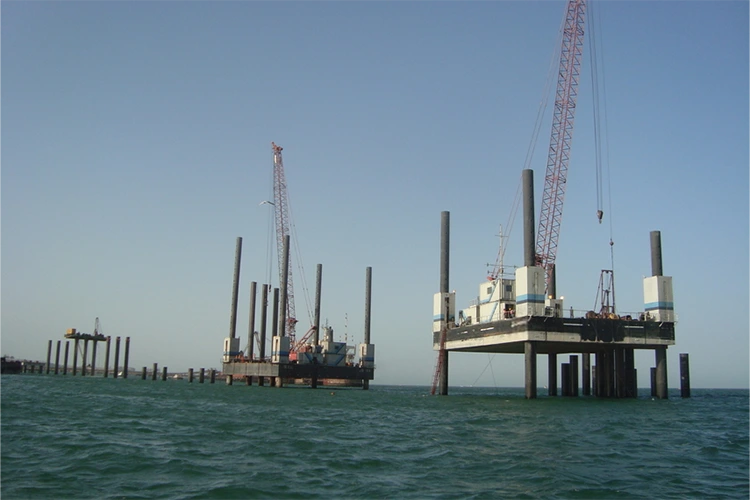
Why Leg Penetration Depth Matters
Penetration depth determines:
-
Jacking time and fuel consumption
-
Leg structural stress during preloading
-
Spudcan bearing capacity and punch-through risk
-
Air gap maintenance under extreme wave conditions
A miscalculation of even 0.5 metres can delay turbine installation by days or require costly repositioning.
Typical Depth Ranges by Seabed Condition
Based on operational data from recent North Sea and Southeast Asian projects, the following table summarises expected leg penetration depths for a standard Jack Up Wind Farm Installation Platform equipped with 80–120 m legs and spudcan diameters of 12–16 m.
| Seabed Type | Shear Strength (kPa) | Typical Penetration (m) | Preload Required (tonnes) | Punch-Through Risk |
|---|---|---|---|---|
| Very Soft Clay | 10–20 | 12.0–18.0 | 6,000–8,000 | Low |
| Soft Clay | 20–40 | 8.0–12.0 | 8,000–10,000 | Moderate |
| Firm Clay | 40–75 | 4.5–8.0 | 10,000–12,000 | Moderate–High |
| Stiff Clay | 75–150 | 2.0–4.5 | 12,000–14,000 | High |
| Dense Sand | N/A (SPT > 50) | 1.5–3.5 | 10,000–13,000 | Low–Moderate |
| Glacial Till / Mixed | Variable | 3.0–7.0 | 13,000–15,000 | Very High |
Note: Values assume a 15,000-tonne displacement vessel with four independent jacking systems. Actual depths are validated through in-situ Cone Penetration Tests (CPT) conducted 48–72 hours prior to jacking.
Key Factors That Alter the Expected Depth
Even with identical seabed classifications, penetration can vary significantly due to:
-
Spudcan shape – conical vs. flat-bottomed designs produce different bearing factors.
-
Preload sequencing – staged preloading (incremental 25 % – 50 % – 75 % – 100 %) reduces sudden settlements.
-
Overburden pressure – deeper water (40 m+) increases vertical load on legs before jacking.
-
Layer interfaces – sand-over-clay profiles are notorious for rapid punch-through, demanding controlled penetration rates below 0.5 m/min.
HAIDING SHIPYARD integrates real-time load‑cell monitoring and automatic leg‑speed regulation into every Jack Up Wind Farm Installation Platform we produce, ensuring penetration remains within ±15 % of predicted values even under challenging stratifications.
Calculation Methodology Used in Industry Practice
Engineers typically apply the following simplified bearing capacity equation (Skempton’s approach for clay):
Q<sub>ult</sub> = N<sub>c</sub> × s<sub>u</sub> × A + (γ × D × A)
Where:
-
Q<sub>ult</sub> = ultimate bearing capacity (kN)
-
N<sub>c</sub> = bearing factor (5.14 for circular spudcan)
-
s<sub>u</sub> = undrained shear strength (kPa)
-
A = spudcan base area (m²)
-
γ = soil unit weight (kN/m³)
-
D = penetration depth (m)
By setting Q<sub>ult</sub> equal to the preload force, D is solved iteratively. Modern Jack Up Wind Farm Installation Platform operators combine this with finite‑element models to account for cyclic loading from wave action during jacking.
Frequently Asked Questions (FAQ)
Q1: What is the maximum leg penetration depth a Jack Up Wind Farm Installation Platform can safely tolerate?
A: Most self‑elevating units are designed with a maximum leg penetration between 18 and 22 metres from the seabed surface, measured at the spudcan tip. Beyond 20 metres, the risk of “fixity” – where the leg becomes effectively embedded in stiff soils – increases dramatically, making extraction difficult and sometimes requiring jetting or vibration assistance. For example, a Jack Up Wind Farm Installation Platform operating in the German Bight recorded 19.2 m penetration in over‑consolidated clay, and extraction took 14 hours versus the normal 4 hours. HAIDING SHIPYARD builds legs with reinforced lower chords and sacrificial wear plates to extend service life even when occasional deep penetrations occur, but we always advise clients to conduct full geotechnical site investigations before mobilisation to avoid exceeding the rated leg stroke.
Q2: How does preload weight affect final penetration depth on a Jack Up Wind Farm Installation Platform?
A: Preload is the single most controllable variable. For a typical 12,000‑tonne preload, every additional 1,000 tonnes typically increases penetration by 0.3–0.8 m in soft clays, but only 0.1–0.2 m in dense sands. Operators apply preload in stages, holding each stage for 15–30 minutes to allow pore‑water pressure dissipation. If you increase total preload from 10,000 to 14,000 tonnes on a Jack Up Wind Farm Installation Platform, the extra 4,000 tonnes may drive legs an additional 1.5–2.0 m deeper in medium‑firm clay. However, over‑preloading beyond the vessel’s design capacity (usually 110 % of maximum variable load) can overstress the jacking motors and rack‑and‑pinion systems. HAIDING SHIPYARD provides preload calculators calibrated to each vessel’s specific leg geometry, helping crews set optimal target loads without over‑penetrating.
Q3: Can a Jack Up Wind Farm Installation Platform reposition if penetration is too shallow or too deep?
A: Yes, but with important constraints. If penetration is too shallow (under 1.5 m), the spudcan lacks sufficient lateral restraint, and the platform may slide under high wind or crane loads – the vessel must be re‑jacked and moved to a new footing location. If penetration is too deep (over 80 % of leg stroke used), repositioning becomes risky because the remaining leg length may be insufficient to reach the surface after full retraction. In practice, operators can “walk” a Jack Up Wind Farm Installation Platform by sequentially retracting and extending opposite legs, moving 3–5 metres per cycle. However, each walk cycle takes 6–10 hours and increases wear on the jacking system. HAIDING SHIPYARD equips its platforms with dual‑redundant position‑keeping systems and real‑time penetration trending, allowing crews to decide within the first 2 metres of jacking whether to commit or relocate, thereby avoiding costly mid‑operation repositioning.
Best Practices for Penetration Management
-
Conduct CPT surveys at each turbine location, not just site averages.
-
Run predictive models using at least three soil layers.
-
Monitor leg inclination continuously – tilt beyond 0.5° invalidates depth predictions.
-
Maintain a penetration log for every jacking event to build a site‑specific database.
Why Choose HAIDING SHIPYARD for Your Next Project
With over 200 jack‑up deliverables since 2008, HAIDING SHIPYARD combines in‑house geotechnical engineering, CNC‑machined rack‑and‑pinion systems, and a proprietary penetration prediction algorithm that reduces guesswork by 40 %. Every Jack Up Wind Farm Installation Platform we deliver undergoes full‑scale leg load testing at our deep‑water quay, simulating actual seabed conditions before mobilisation.
Contact Us
Ready to discuss your specific water depth, soil profile, and turbine tonnage? Our engineering team provides free preliminary penetration assessments within 48 hours of receiving your CPT data. Contact HAIDING SHIPYARD today via our website live chat or email us at [email protected] – let us help you select or custom‑build the right Jack Up Wind Farm Installation Platform with precise leg‑penetration forecasting that keeps your installation campaign on schedule and under budget. Your project deserves more than guesswork – it deserves data‑driven engineering from a partner who knows the seabed as well as the steel. Reach out now, and we will respond with a tailored feasibility report within one business day.