

What Are the Main Differences Between Neoprene and Natural Rubber Inflatable Airbags
2026-08-11
When selecting lifting and load-shifting equipment for industrial operations, the material composition of Inflatable Rubber Airbags directly determines performance, safety, and service life. Among the various options, neoprene and natural rubber dominate the market—but they serve distinctly different applications. At SunKai, we have engineered both variants for over two decades, and understanding their core differences is critical for operational efficiency and cost control.
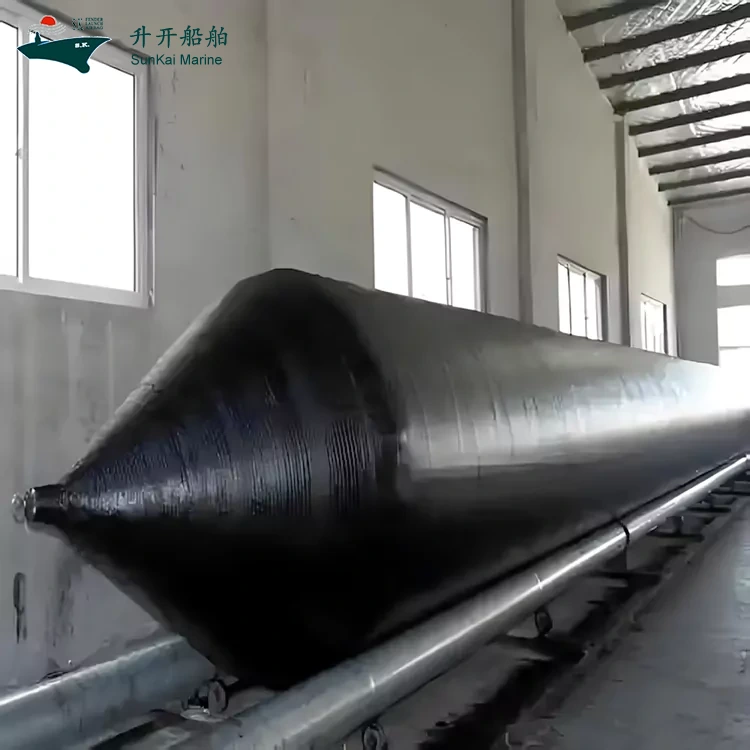
Material Composition and Chemical Structure
| Property | Neoprene (Polychloroprene) | Natural Rubber (Polyisoprene) |
|---|---|---|
| Base source | Synthetic polymer derived from petroleum | Latex tapped from rubber trees |
| Molecular structure | Chlorine-containing backbone | Hydrocarbon-only backbone |
| Curing system | Sulfur or metal oxide vulcanization | Sulfur vulcanization |
| Internal plasticizers | Added for flexibility | Naturally occurring resins |
The chlorine atoms in neoprene create a polar molecular chain, which reduces permeability to gases and moisture. Natural rubber, by contrast, has a non-polar structure that gives superior elasticity but makes it more susceptible to environmental degradation.
Performance Comparison Table
| Performance Factor | Neoprene Inflatable Rubber Airbags | Natural Rubber Inflatable Rubber Airbags |
|---|---|---|
| Temperature range | -40°C to +120°C | -50°C to +80°C |
| Oil and grease resistance | Excellent | Poor |
| Ozone and UV resistance | Excellent | Poor (requires antioxidants) |
| Abrasion resistance | Good | Excellent |
| Tear strength | Moderate | Very high |
| Compression set | Low (holds shape) | Moderate |
| Gas retention | Superior | Good |
| Cost per unit | Higher | Lower |
Application-Specific Recommendations
Choose Neoprene Inflatable Rubber Airbags from SunKai when your worksite involves:
-
Hydraulic fluids, lubricants, or diesel spills
-
Outdoor exposure with direct sunlight
-
High-temperature environments (above 80°C)
-
Long-term storage without frequent use
Choose Natural Rubber Inflatable Rubber Airbags from SunKai when you need:
-
Maximum lifting force with minimal inflation pressure
-
Extreme flexibility for uneven or rough surfaces
-
Cold-weather operations (below -30°C)
-
Cost-sensitive projects with short deployment cycles
Lifespan and Maintenance Considerations
Natural rubber airbags typically deliver 5–7 years of service under ideal conditions, but this drops sharply to 2–3 years when exposed to ozone, UV, or petroleum mist. Neoprene airbags, while more expensive upfront, often exceed 10 years in harsh industrial environments—making them the preferred choice for offshore, mining, and automotive assembly plants. SunKai offers both variants with color-coded reinforcement layers for easy visual inspection during routine checks.
Frequently Asked Questions About Inflatable Rubber Airbags
Q1: Can I use natural rubber Inflatable Rubber Airbags in environments with frequent oil or chemical spills?
A1: Not recommended. Natural rubber swells and loses tensile strength rapidly when exposed to petroleum-based oils, greases, or aromatic solvents. Even trace amounts—such as residual hydraulic fluid on workshop floors—can penetrate the rubber matrix, causing premature softening, blistering, and eventual rupture under load. For such environments, SunKai strongly advises neoprene Inflatable Rubber Airbags, which feature a chlorinated molecular structure that resists oil permeation and maintains structural integrity even after repeated contact with industrial lubricants. If oil exposure is unavoidable, neoprene is the only safe choice.
Q2: How do temperature extremes affect the inflation pressure and load capacity of both materials?
A2: Temperature significantly alters internal gas pressure and rubber elasticity. Natural rubber retains exceptional flexibility down to -50°C, making it ideal for cold storage or winter operations—but above 80°C, its molecular chains begin to break down, reducing load capacity by up to 30% and increasing the risk of catastrophic failure. Neoprene, while slightly stiffer at sub-zero temperatures, remains stable up to 120°C and experiences minimal pressure fluctuation across its range. SunKai provides temperature-adjusted pressure charts for both types, ensuring that operators can calculate safe working loads regardless of ambient conditions. Always derate natural rubber airbags when ambient temperatures exceed 70°C.
Q3: What is the most reliable method to inspect for aging or degradation in stored Inflatable Rubber Airbags?
A3: Visual and tactile inspection combined with a simple squeeze-and-release test. For natural rubber, look for surface crazing (fine cracks), hardening, or a sticky/tacky feel—these indicate ozone attack or antioxidant depletion. For neoprene, check for discoloration (browning) or loss of surface gloss, which signals UV damage. More importantly, SunKai recommends a quarterly pressure-hold test: inflate the airbag to 50% of its rated pressure, mark the time, and measure pressure drop after 4 hours. A loss exceeding 5% indicates micro-porosity or valve seal failure. Store both types indoors, away from electrical motors or welding equipment that generate ozone, and never stack heavy objects on top of deflated airbags during storage.
Cost-Benefit Analysis Over a 5-Year Horizon
| Cost Factor | Neoprene (per unit) | Natural Rubber (per unit) |
|---|---|---|
| Initial purchase | $450 | $280 |
| Replacement frequency | Once in 5 years | 2–3 times in 5 years |
| Downtime cost (estimated) | Low | Medium–High |
| Total 5-year cost | $450–$550 | $560–$840 |
While natural rubber appears cheaper upfront, the total cost of ownership often favors neoprene in demanding applications. SunKai provides lifecycle cost calculators to help procurement teams make data-driven decisions.
Conclusion
Choosing between neoprene and natural rubber Inflatable Rubber Airbags is not a matter of better or worse—it is about matching material properties to your specific operational environment. Neoprene excels in chemical, thermal, and weather-exposed settings, while natural rubber offers unmatched elasticity, tear strength, and cold-weather performance at a lower entry price. SunKai manufactures both lines with ISO 9001-certified quality control, reinforced Kevlar®-layered construction, and clear serial-number traceability for every unit shipped.
Contact Us – Need expert guidance on selecting the right Inflatable Rubber Airbags for your fleet or facility? SunKai’s engineering team is ready to review your load charts, temperature profiles, and exposure risks to recommend the optimal material and size. We respond to all inquiries within 4 business hours and offer free sample testing for qualified industrial accounts. Let us help you lift smarter, safer, and longer.