

What Are the Common Failure Points of an Underwater Salvage Airbag System
2026-11-16
Lift failures during salvage operations rarely stem from a single catastrophic event—they are usually the cumulative result of overlooked stress points in an Underwater Salvage Airbag System. At SunKai, we have supported commercial salvage teams across harbor, offshore, and inland waterway recoveries, and the patterns we see are remarkably consistent. Understanding where these systems fail is the first step toward building a safer, more predictable lift plan.
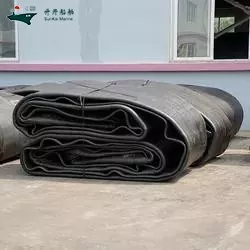
The Six Most Common Failure Points
Based on field data and post-incident reviews, the majority of Underwater Salvage Airbag System failures cluster around the following areas:
-
Improper inflation sequencing – Inflating bags out of order creates unbalanced loads and point-loading on individual bags, leading to seam rupture.
-
Exceeding rated lift capacity – Dynamic water movement and bottom suction can push effective load well beyond static weight estimates.
-
Rigging and attachment errors – Incorrect sling angles, worn shackles, or poorly positioned lift points concentrate force on bag hardware.
-
Material degradation from UV and saltwater exposure – Stored bags that are not inspected for coating cracks and fabric fatigue lose burst strength silently.
-
Depth-related buoyancy miscalculation – Air volume compresses at depth; teams that ignore this over-inflate at the surface and lose control during ascent.
-
Valve and manifold leaks – Small leaks during a lift cause uncontrolled ascent and loss of positional control.
Failure Point Reference Table
| Failure Point | Typical Root Cause | Early Warning Sign | SunKai Mitigation |
|---|---|---|---|
| Seam rupture | Over-inflation / unbalanced load | Visible bulging at seams | Pressure-relief valves, lift planning support |
| Hardware failure | Worn shackles, wrong sling angle | Corrosion, deformation | Rated hardware, rigging guides |
| Material fatigue | UV/saltwater degradation | Surface cracking, stiffness | Coated fabrics, inspection schedules |
| Buoyancy miscalculation | Ignoring depth compensation | Unexpected ascent speed | Depth-lift calculation charts |
| Valve leakage | Debris, seal wear | Slow pressure loss | Service kits, pre-dive checks |
| Anchor point failure | Weak lift points on wreck | Stress marks on hull | Load assessment recommendations |
Reducing Risk Through Design and Practice
A well-engineered Underwater Salvage Airbag System from SunKai addresses these failure points at the source—through reinforced seams, reliable pressure-relief valves, and materials tested for repeated saltwater cycles. Equally important is disciplined pre-dive inspection, depth-compensated lift calculations, and proper rigging by trained personnel. When design and procedure work together, failure points become manageable checkpoints rather than hidden hazards.
FAQ
Q: How often should an Underwater Salvage Airbag System be inspected?
A: Inspect before every deployment and perform a full documented inspection quarterly, including seam checks, valve testing, and pressure-holding tests; replace any bag showing coating cracks or hardware corrosion.
Q: Can an Underwater Salvage Airbag System be reused after a failed lift?
A: Only after a full inspection and pressure test; any bag involved in a seam rupture or uncontrolled ascent should be quarantined and evaluated by the manufacturer before returning to service.
Q: What is the most common cause of Underwater Salvage Airbag System failure in deep water?
A: Depth-related buoyancy miscalculation—failing to account for air compression at depth leads to over-inflation and loss of ascent control, making depth-compensated lift planning essential.
Q: Does SunKai provide lift capacity calculations for its Underwater Salvage Airbag System?
A: Yes, SunKai provides depth-compensated lift calculation charts and technical support to help teams match bag capacity to actual salvage loads.
Ready to make your next recovery safer and more predictable? Contact us at SunKai today for expert guidance on selecting and deploying the right Underwater Salvage Airbag System for your operation.