

What Are the Common Failure Modes of an Intermediate Twistlock in Container Handling
2026-09-02
In modern port and intermodal operations, the Intermediate Twistlock is a critical load-securing component that bridges the gap between standard corner castings and spreader engagement points. While often overshadowed by primary twistlocks, the Intermediate Twistlock plays an equally vital role in tandem lifts and non-standard container configurations. At ChuanGang, we have analyzed thousands of field incidents and maintenance logs to identify the most recurrent failure patterns. Understanding these failure modes is not just about uptime—it is about preventing dropped loads, crane damage, and personnel injuries. This blog breaks down the top failure mechanisms, their root causes, and actionable countermeasures, all grounded in real-world engineering data.
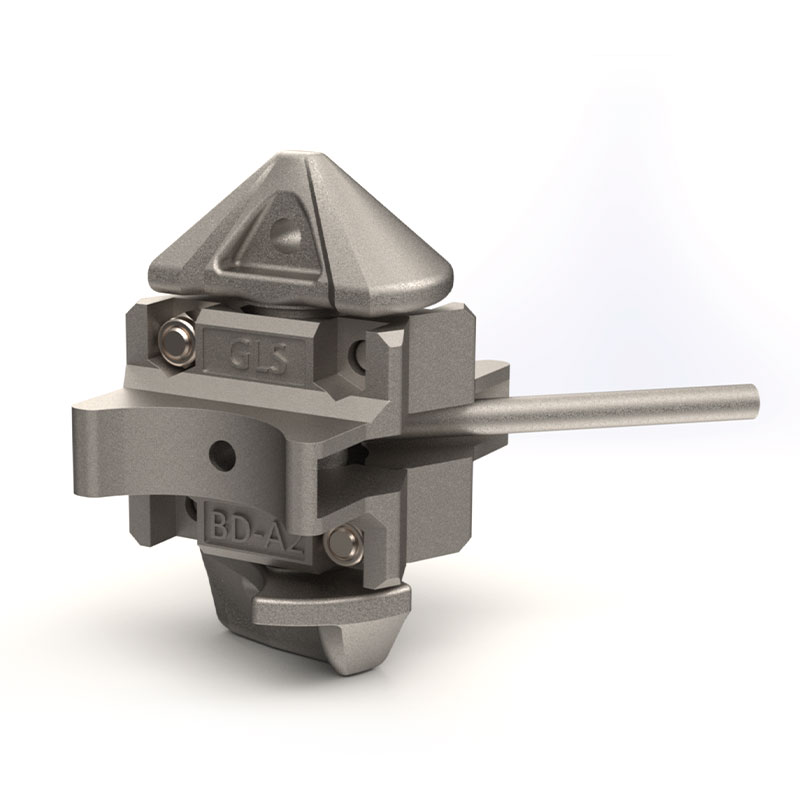
1. Mechanical Wear and Deformation
The most frequent failure mode is progressive wear on the locking cone and bearing surfaces. Over repeated engagement cycles, the Intermediate Twistlock experiences abrasive friction against container corner castings, especially when misaligned during pickup. This wear reduces the effective locking area, increasing localized stress.
| Wear Indicator | Acceptable Limit | Critical Limit (Replace) |
|---|---|---|
| Cone diameter reduction | < 1.5 mm | ≥ 2.5 mm |
| Flank surface pitting depth | < 0.5 mm | ≥ 1.0 mm |
| Rotation arm play (angular) | < 2° | ≥ 5° |
Deformation typically occurs when operators attempt to lift overloaded or off-center containers. A bent Intermediate Twistlock shaft can cause uneven load distribution, leading to secondary failures in the spreader's hydraulic system. ChuanGang recommends weekly visual inspections with go/no-go gauges to catch wear before it reaches critical thresholds.
2. Corrosion and Environmental Degradation
Container terminals operate in saline, humid, or chemically aggressive environments. The Intermediate Twistlock is particularly vulnerable at the pivot pins and spring housing. Corrosion not only weakens structural integrity but also impairs the rotational mechanism, causing sluggish or incomplete locking.
| Corrosion Type | Typical Location | Accelerating Factor |
|---|---|---|
| Uniform surface rust | Exposed cone and shaft | High humidity + salt spray |
| Pitting corrosion | Threaded adjustment points | Chloride penetration |
| Galvanic corrosion | Dissimilar metal interfaces (steel-aluminum) | Lack of dielectric coating |
ChuanGang’s field data shows that corrosion-related failures spike during monsoon seasons. To mitigate this, we advise applying anti-seize compound on all threaded parts and using zinc-nickel plated Intermediate Twistlock components for coastal operations. Regular lubrication intervals should be shortened from 30 days to 14 days in high-corrosion zones.
3. Hydraulic and Pneumatic Actuation Failures
For automated or semi-automatic spreaders, the Intermediate Twistlock relies on hydraulic cylinders or pneumatic pistons to rotate the locking mechanism. Common actuation failures include:
-
Seal leakage – causing pressure drop and slow rotation.
-
Contaminated fluid – blocking fine orifices in the control valve.
-
Sensor misalignment – sending false "locked" signals to the crane PLC.
These failures are insidious because they often present as intermittent faults. A ChuanGang maintenance team recently diagnosed a case where a sticky pilot valve caused a 3-second delay in twistlock engagement—enough to misalign with the container's corner casting. We recommend quarterly oil sampling and annual calibration of position sensors for every Intermediate Twistlock equipped with active actuation.
4. Fatigue Cracking at Weld Joints and Base Flanges
The base flange where the Intermediate Twistlock mounts to the spreader beam undergoes cyclic bending stresses. Over 50,000–100,000 lifting cycles, microscopic cracks initiate at weld toe regions. Without dye-penetrant or magnetic-particle inspection, these cracks grow subcritically until sudden fracture occurs.
ChuanGang’s engineering standard mandates NDT (non-destructive testing) every 6 months for high-utilization units. We have observed that cracks most often originate at the 4 o'clock and 8 o'clock positions relative to the load axis—a pattern consistent with torsional vibration during ship-to-shore crane traversing.
5. Operator-Induced Misalignment and Shock Loading
Human factors contribute to nearly 30% of Intermediate Twistlock failures. Common scenarios include:
-
Engaging the twistlock while the spreader is still moving laterally.
-
Lowering the spreader too fast, causing impact loading on the cone tip.
-
Ignoring audible "click" confirmation and relying solely on visual checks.
These actions flatten the cone tip, distort the locking indicator pin, and sometimes shear the rotation stop. ChuanGang provides on-site operator training programs that include real-time load-cell feedback, helping drivers develop a "soft-touch" engagement habit. A simple rule we promote: engage at ≤0.5 m/min vertical speed and zero slew rate.
Intermediate Twistlock FAQ – Common Questions from Terminal Engineers
Q1: How can I tell if my Intermediate Twistlock is worn beyond safe limits without specialized tools?
A1: A practical field method is the "marker test." Clean the cone surface and apply a thin layer of machinist's blue or white marker. Insert the Intermediate Twistlock into a known-good corner casting and rotate it 90°. Withdraw it and examine the contact pattern. If the blue is wiped off over less than 60% of the cone's circumference, or if wear shows as a narrow band rather than a full ring, the twistlock has developed ovality or taper wear. This indicates that the effective load-bearing area has dropped below 75% of the original design, and replacement should be scheduled within the next 500 cycles. For precise measurement, ChuanGang offers a digital caliper template that directly reads remaining wall thickness in under 30 seconds.
Q2: What is the maximum allowable play in the rotation mechanism of an Intermediate Twistlock, and how does it affect safety?
A2: The maximum total angular backlash between the actuating shaft and the locking cone is 4 degrees for manually operated units and 2.5 degrees for hydraulically actuated versions, per ISO 11662-1 guidelines. Excessive play (above 5 degrees) causes the Intermediate Twistlock to "hunt" during engagement, meaning the cone may not align with the corner casting's oval hole on the first attempt. This leads to repeated retry cycles, which in turn heats up the hydraulic fluid and wears the actuating spline. More critically, excessive play reduces the twistlock's ability to maintain a positive lock under dynamic sway, increasing the risk of unexpected release during high-speed trolley travel. ChuanGang recommends replacing the rotation bushing and thrust washer whenever play exceeds 3.5 degrees as a preventive measure.
Q3: Can I mix different brands of Intermediate Twistlocks on the same spreader, and what risks are involved?
A3: While physically possible, mixing brands is strongly discouraged unless the components are certified to identical dimensional and metallurgical standards. Even a 1 mm difference in cone height or a 2° variation in rotation angle can cause uneven load sharing across four twistlocks. In a tandem 40-foot lift, this imbalance can shift up to 15% of the total weight onto one Intermediate Twistlock, exceeding its safe working load and accelerating fatigue. Furthermore, different steel grades (e.g., 42CrMo4 vs. EN24) have different yield strengths and thermal expansion rates, which can lead to seizure during hot weather operations. If you must use mixed units, ChuanGang advises conducting a full load-cell calibration test across all four corner positions and re-certifying the spreader assembly. For consistency and traceability, we always recommend using a single-brand matched set.
Preventive Maintenance Summary Table
| Failure Mode | Primary Inspection Method | Recommended Interval | ChuanGang Solution |
|---|---|---|---|
| Wear/Deformation | Go/no-go gauge + caliper | Weekly | Hardened Cr-Mo steel upgrade |
| Corrosion | Visual + mag-particle test | Monthly | Zinc-nickel + epoxy coating |
| Actuation leakage | Pressure decay test | Quarterly | Sealed cartridge valve retrofit |
| Fatigue cracking | Dye penetrant | Bi-annual | Weld-post stress relief |
| Misalignment damage | Engagement speed log | Daily training | Operator HMI feedback system |
Conclusion
The Intermediate Twistlock is not a "fit-and-forget" component. Its failure modes are predictable, measurable, and preventable with the right inspection regime, environmental protection, and operator discipline. By adopting the data-driven strategies outlined above, terminals can reduce unplanned downtime by up to 40% and extend twistlock service life from 3 to 5 years. ChuanGang has been engineering high-durability container handling components for over two decades, and our failure analysis database is one of the industry's most comprehensive.
Contact Us
Have a specific Intermediate Twistlock challenge at your terminal? Reach out to ChuanGang’s engineering support team for a free failure risk assessment. We offer on-site audits, customized lubrication schedules, and rapid replacement parts with 48-hour global dispatch. Email us at [email protected] or fill out the contact form on our website—our experts respond within 4 business hours. Your uptime is our priority. Let’s secure your lifts together.