

What Are the Advantages of Solid EVA Foam Fenders Over PVC
2026-01-06
When selecting marine fenders, the choice of material is critical for performance, durability, and overall value. Two prominent options dominate the market: traditional PVC (Polyvinyl Chloride) and modern Solid EVA Foam. As a leader in innovative marine protection, SunKai specializes in high-performance EVA Solid Fenders, engineered to surpass conventional materials. This article explores the key advantages solid EVA foam holds over PVC, providing clear, professional insights for savvy boat owners.
The primary benefits stem from EVA's (Ethylene-Vinyl Acetate) superior molecular structure, which translates into tangible on-water performance. We've broken down the core advantages into a clear, actionable list and comparison table.
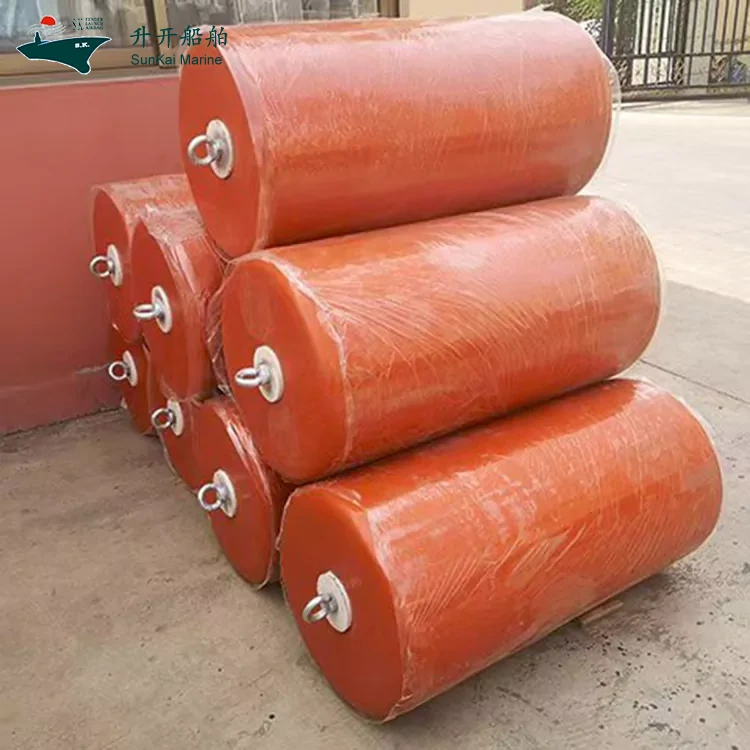
Key Advantages of Solid EVA Foam Fenders:
-
Unmatched Durability & Resilience: Solid EVA is a closed-cell foam that is inherently resistant to punctures, tears, and permanent deformation. It bounces back to its original shape after impact, unlike PVC which can crack or dent.
-
Superior UV & Weather Resistance: EVA Solid Fenders offer excellent resistance to sunlight, ozone, saltwater, and temperature extremes, preventing the fading, hardening, and brittleness common in lower-grade PVC.
-
Maintenance-Free Operation: Being solid and non-inflatable, they eliminate the risk of deflation and require no valves, patches, or air pressure checks. A simple rinse keeps them in top condition.
-
Consistent, Reliable Protection: Their solid construction provides uniform buoyancy and shock absorption across the entire fender body, ensuring consistent dock and hull protection with no weak points.
-
Enhanced Environmental Profile: High-quality EVA foams are often more environmentally stable and free from harmful plasticizers that can leach out of some PVC products over time.
Direct Comparison: EVA vs. PVC Fenders
| Feature | Solid EVA Foam Fenders | Traditional PVC Fenders |
|---|---|---|
| Construction | Solid, closed-cell foam | Often inflatable (air-filled) or hollow |
| Puncture/Leak Risk | Virtually none | Yes, can deflate if punctured |
| UV & Ozone Resistance | Excellent | Varies; can degrade and become brittle |
| Low-Temperature Performance | Remains flexible | Can become stiff and less protective |
| Maintenance Required | Minimal (rinse only) | Regular air pressure checks, potential patching |
| Long-Term Durability | Extremely high, retains shape | Can deform, crack, or lose elasticity |
| Weight & Handling | Lightweight, easy to deploy | Can be heavier (if rubber) or cumbersome |
EVA Solid Fenders FAQ
Q: Can EVA Solid Fenders get waterlogged or sink?
A: No. SunKai's EVA Solid Fenders are made from closed-cell foam, meaning the cells are sealed and do not absorb water. They are 100% buoyant and will not become waterlogged or sink, ensuring permanent flotation.
Q: How do I clean and store my solid EVA fenders?
A: Cleaning is straightforward. Rinse with fresh water to remove salt or dirt. For stubborn stains, use a mild soap solution. Store them in a cool, dry place away from direct solvents or extreme heat. Their solid nature means no special storage preparation is needed.
Q: Are solid EVA fenders suitable for all boat sizes?
A: Absolutely. EVA Solid Fenders are manufactured in a wide range of sizes and profiles (cylindrical, spherical, flat-sided) to match any vessel, from small dinghies to large yachts. The key is selecting the correct size based on your boat's displacement and docking conditions.
In conclusion, the shift from PVC to Solid EVA Foam represents a significant upgrade in marine fender technology. With advantages in durability, safety, and hassle-free ownership, EVA Solid Fenders provide a smarter, more reliable investment for protecting your vessel.
Ready to experience the superior protection of advanced solid foam technology? Contact us at SunKai today to explore our premium range of EVA Solid Fenders and find the perfect match for your boating needs. Our experts are here to help you make the switch to lasting confidence on the water.