

How Sectional Jack Up Barge Improves Offshore Construction Efficiency?
2026-03-17
Abstract
Sectional Jack Up Barge systems have become a critical solution in offshore engineering, marine construction, and nearshore infrastructure projects. Designed for flexibility, stability, and cost efficiency, these modular platforms address common operational challenges such as transportation limitations, site adaptability, and heavy-load handling. This article provides a comprehensive explanation of how sectional jack up barges function, their structural components, advantages, application scenarios, and key selection considerations. It is intended to help project owners, contractors, and engineers make informed decisions when choosing marine equipment for demanding environments.
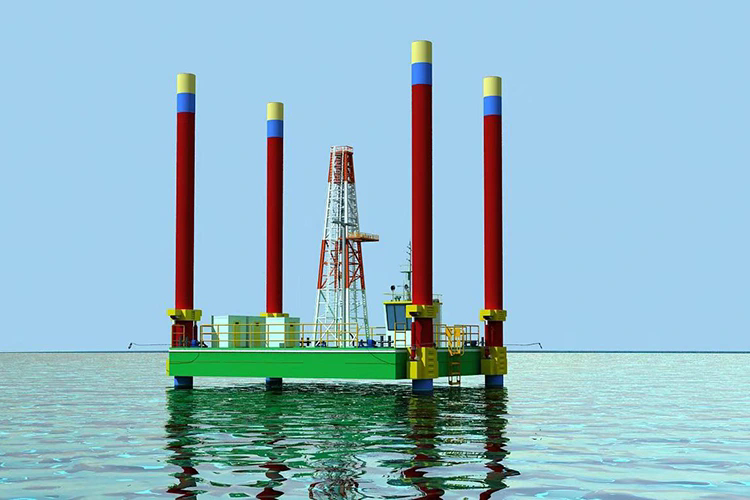
Table of Contents
- Outline
- What Is a Sectional Jack Up Barge?
- How Does a Sectional Jack Up Barge Work?
- Key Structural Components
- Advantages of Sectional Design
- Main Application Scenarios
- How to Choose the Right Barge
- Typical Technical Parameters
- FAQ
- Conclusion
Outline
- Definition and industry background
- Operational mechanism
- Structural breakdown
- Performance advantages
- Real-world applications
- Procurement considerations
- Technical data overview
- Common questions
What Is a Sectional Jack Up Barge?
A Sectional Jack Up Barge is a modular offshore platform composed of multiple prefabricated sections that can be assembled on-site to form a complete working platform. Unlike traditional monolithic barges, this system allows flexible transportation and rapid deployment in restricted or shallow-water environments.
The barge is equipped with hydraulic or mechanical jacking systems that elevate the platform above the water surface by lowering legs to the seabed. This creates a stable, non-floating working condition, which is essential for precision construction tasks such as piling, lifting, and drilling.
How Does a Sectional Jack Up Barge Work?
The operational principle of a sectional jack up barge involves three main stages: transportation, assembly, and elevation.
- Transportation: Individual modules are transported via trucks or smaller vessels to the project site.
- Assembly: Sections are connected using high-strength locking systems to form a unified deck.
- Jacking Operation: Legs are lowered to the seabed, and the platform is lifted above water level using synchronized jacking systems.
Once elevated, the barge remains unaffected by waves and tides, providing a highly stable working platform comparable to land-based construction conditions.
Key Structural Components
- Modular Deck Sections: Steel pontoons forming the main working surface.
- Spud Legs: Vertical supports that anchor the barge to the seabed.
- Jacking System: Hydraulic or electric system for lifting operations.
- Connection Mechanisms: Pins or bolts ensuring structural integrity between modules.
- Power System: Diesel generators or electric units supplying energy.
Advantages of Sectional Design
The sectional configuration provides several operational and economic advantages:
- Flexible Transportation: Easily transported in containers or by road.
- Rapid Deployment: Quick assembly reduces project lead time.
- Scalability: Platform size can be adjusted based on project requirements.
- Cost Efficiency: Lower logistics and mobilization costs compared to fixed barges.
- Adaptability: Suitable for remote or shallow water locations.
Main Application Scenarios
Sectional jack up barges are widely used in various marine and offshore projects:
- Bridge construction and maintenance
- Offshore wind farm installation
- Port and harbor engineering
- Oil and gas exploration support
- Pipeline laying and dredging operations
How to Choose the Right Barge
Selecting the appropriate sectional jack up barge requires careful evaluation of project-specific factors:
- Load Capacity: Determine maximum equipment and material weight.
- Water Depth: Ensure leg length meets seabed conditions.
- Environmental Conditions: Consider wave height, wind speed, and currents.
- Deck Area Requirements: Match platform size to operational needs.
- Mobility Needs: Evaluate frequency of relocation.
Typical Technical Parameters
| Parameter | Typical Range |
| Deck Size | 100 m² – 1000 m² (expandable) |
| Load Capacity | 50 – 500 tons |
| Leg Length | 15 – 60 meters |
| Jacking Speed | 0.3 – 1.0 m/min |
| Material | Marine-grade steel |
| Assembly Time | 1 – 3 days |
FAQ
Q1: What makes sectional jack up barges different from traditional barges?
A: The modular structure allows easier transport and flexible configuration, making them ideal for projects with logistical constraints.
Q2: Are sectional barges suitable for deep water operations?
A: They are typically designed for shallow to moderate depths, but customized leg extensions can expand their operational range.
Q3: How long does it take to assemble a sectional jack up barge?
A: Depending on size and site conditions, assembly usually takes between one and three days.
Q4: What industries benefit most from this equipment?
A: Marine construction, renewable energy, oil and gas, and infrastructure development sectors widely use these barges.
Conclusion
Sectional Jack Up Barges represent a highly efficient and adaptable solution for modern offshore construction challenges. Their modular design, combined with reliable jacking systems, ensures both operational stability and logistical flexibility. These features significantly reduce downtime, improve safety, and optimize project costs.
As a professional manufacturer, Shandong Haiding Shipbuilding Co., Ltd. provides advanced sectional jack up barge solutions tailored to diverse engineering requirements. With a strong focus on quality, customization, and technical support, the company continues to support global marine construction projects.
If you are planning an offshore or nearshore project and require a reliable platform solution, contact us today to receive detailed specifications, expert consultation, and competitive quotations tailored to your needs.