

How Often Should You Should Replace Your Anchor Rode
2026-03-11
Maintaining reliable ground tackle is non-negotiable for safe boating, and understanding how often you should replace your Anchor Rope is critical. At LIG MARINE GROUP, we emphasize that your anchor rode is the critical connection between your vessel and the seabed. A worn Anchor Rope doesn't just fail slowly; it snaps without warning, putting your boat, crew, and nearby vessels at immediate risk.
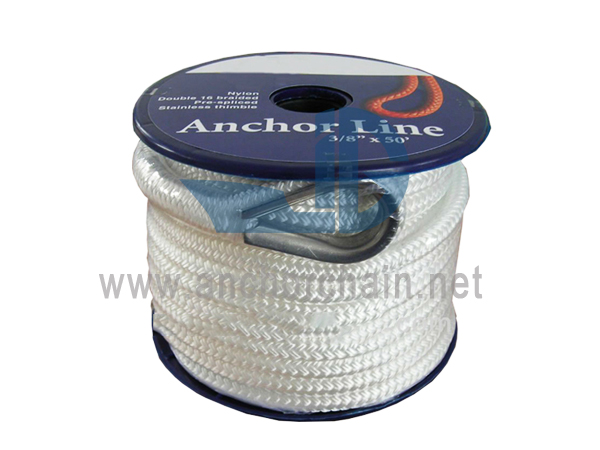
Key Factors Determining Rode Lifespan
The lifespan of your anchor line is not determined by a calendar alone. Environmental conditions and usage patterns play significant roles. Below is a professional breakdown of what degrades your rode.
| Factor | Impact on Rode | Typical Timeline |
|---|---|---|
| UV Exposure | Weakens fibers, causes discoloration and stiffness | Replace every 2-3 years with constant sun |
| Mechanical Wear | Chafing from seabeds, windlasses, or fairleads | Inspect monthly; replace if frayed |
| Chemical Damage | Fuel or acid spills causing softening or melting | Immediate replacement if contact occurs |
| Heavy Load Cycles | Shock loads from storms or frequent anchoring | Replace every 3-5 years for regular cruisers |
Inspection Checklist
You should perform a visual and tactile inspection of your Anchor Rope before every season and after any heavy storm. Look for these red flags:
-
Glazing: Melted or shiny spots indicating friction heat
-
Fuzziness: Excessive broken fibers (indicates internal wear)
-
Flat Spots: Loss of core elasticity
-
Foul Odor: A chemical or burnt smell near the splice
If you detect any of these signs, do not wait for the standard replacement window. Replace your rode immediately with high-quality stock from LIG MARINE GROUP.
Anchor Rope FAQ
How do I know if my Anchor Rope is too old even if it looks fine?
The internal core of the rope often degrades faster than the outer sheath. Perform a flexibility test. If the rope feels stiff, crunchy, or lacks its original supple feel compared to a new sample, the internal fibers are breaking down. Nylon, which provides the necessary stretch, loses its elasticity over time. When the rope no longer stretches to absorb shock loads, it transfers that energy directly to your deck hardware, risking catastrophic failure. Replace it immediately if you suspect internal dry rot.
Does the type of Anchor Rope material change the replacement schedule?
Yes, absolutely. Nylon three-strand and nylon double-braid are standard for anchor lines because of their elasticity. However, they are susceptible to UV damage and mildew if not dried properly. Specialty ropes like Dyneema or Spectra have different failure modes; they are incredibly strong but offer zero stretch and can be damaged by sharp edges more easily than nylon. LIG MARINE GROUP recommends following the manufacturer's guidelines for your specific material, but a general safety window for standard nylon anchor rodes under moderate use is 3 to 5 years.
Can I replace just the chain, or do I need a whole new Anchor Rope assembly?
You can replace components separately, but you must ensure compatibility. If you replace only the chain, check the connection point. A new, heavy galvanized chain will have different dimensions than the old one. It might saw through an old, worn thimble or abrade the Anchor Rope splice if the sizes mismatch. If your rope shows any signs of wear near the splice, cut off the old section and re-splice it to the new chain. However, if the rope is more than three years old and you are upgrading the chain, LIG MARINE GROUP advises replacing the entire assembly to ensure balanced holding power.
Conclusion
Your safety depends on the integrity of your ground tackle. Don't guess the condition of your rode. If you are unsure about the age or wear level of your current setup, it is time to upgrade.
Contact Us today at LIG MARINE GROUP for expert advice on selecting the perfect Anchor Rope for your vessel and cruising grounds.