

How Is a Jack Up Working Platform Transported and Installed at an Offshore Wind Farm Site
2026-11-11
Moving a Jack Up Working Platform from quayside to turbine location is a logistics operation that demands engineering precision, weather windows, and class-approved procedures. At HAIDING SHIPYARD, every unit is delivered with a transport and installation philosophy built into the design — from leg guidance systems to pre-engineered sea-fastening points. This guide breaks down the real sequence of moving and installing a Jack Up Working Platform at an offshore wind farm site.
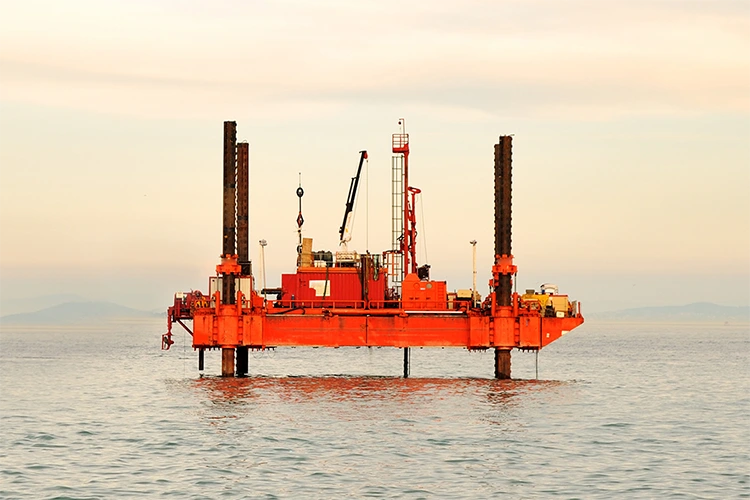
Phase 1: Load-Out and Sea Fastening
Before the unit leaves the yard, the Jack Up Working Platform is either dry-towed on a heavy transport vessel (HTV) or wet-towed as a floating hull. The choice depends on distance, leg length, and sea state.
| Transport Method | Typical Use Case | Key Advantage | Key Constraint |
|---|---|---|---|
| Dry tow on HTV | Long ocean passages (>1,000 nm) | Lower hull fatigue, faster transit | High mobilization cost |
| Wet tow | Short regional moves (<300 nm) | Lower cost, faster setup | Weather-sensitive, leg stowage limits |
| Self-float / heavy lift | Yard-to-field delivery | Minimal third-party assets | Requires deepwater quay |
Sea fastening is engineered to absorb accelerations defined by the transport route. HAIDING SHIPYARD supplies a sea-fastening plan verified against DNV or ABS towage rules, including leg-locking arrangements and hull stress monitoring points.
Phase 2: Positioning at the Wind Farm Site
On arrival, the Jack Up Working Platform is positioned by anchor handling tugs or DP-assisted vessels. Positioning accuracy matters because the jacking system must land within the pre-surveyed footprint.
-
Pre-installation survey confirms seabed geology, scour protection, and leg penetration risk.
-
Jack-up legs are lowered to seabed contact with load monitored per leg.
-
Pre-loading applies a test load (typically 1.2–1.5× design leg load) to prove bearing capacity.
-
Hull is elevated to the required air gap above the highest astronomical tide.
Phase 3: Elevation and Verification
Once pre-load is accepted, the Jack Up Working Platform elevates to working height. Verification covers leg penetration records, rack phase alignment, and hydraulic system pressure logs. All records feed the installation report required by the marine warranty surveyor.
Phase 4: Interface with Wind Farm Operations
At an offshore wind site, the platform becomes a stable base for turbine components, crew transfer, or installation tooling. Clearance to turbine foundations, cable routes, and exclusion zones is checked before jacking begins. HAIDING SHIPYARD supports clients with site-specific jacking procedures that account for turbine spacing and vessel approach corridors.
Frequently Asked Questions
Q: How long does it take to transport and install a Jack Up Working Platform at an offshore wind farm site?
A: A short regional wet tow plus positioning, pre-loading, and elevation typically takes 3–7 days in favorable weather; long-haul dry tow adds 2–4 weeks of transit and mobilization time.
Q: What weather limits apply during jacking operations for a Jack Up Working Platform?
A: Most operators set a significant wave height limit of 0.5–1.0 m during leg lowering and pre-loading, with stricter limits during final elevation; exact thresholds come from the unit's operational manual and class-approved procedures.
Q: Can a Jack Up Working Platform be installed over scour protection or existing cable routes?
A: Yes, but only after a site survey confirms leg positions avoid cable routes and scour protection is assessed for leg penetration; bridging or mat systems may be required to distribute load.
Contact Us
Planning a Jack Up Working Platform deployment for your offshore wind project? Contact HAIDING SHIPYARD today for transport engineering, sea-fastening plans, and site-specific jacking procedures tailored to your wind farm location.