

How Does the Offdrill Anchor Compare to Self-Drilling Anchors in Terms of Cost and Performance
2026-08-28
When engineering teams evaluate ground support solutions for slope stabilization, foundation underpinning, or tunnel reinforcement, two names frequently emerge: the Offdrill Anchor and the conventional self-drilling anchor system. While both serve similar end goals, their cost structures, installation workflows, and long-term performance metrics differ substantially. At LIG MARINE GROUP, we have deployed both systems across marine and terrestrial projects, and the data consistently shows that the Offdrill Anchor offers a distinct value proposition—particularly when total project lifecycle costs are considered, not just the upfront material price.
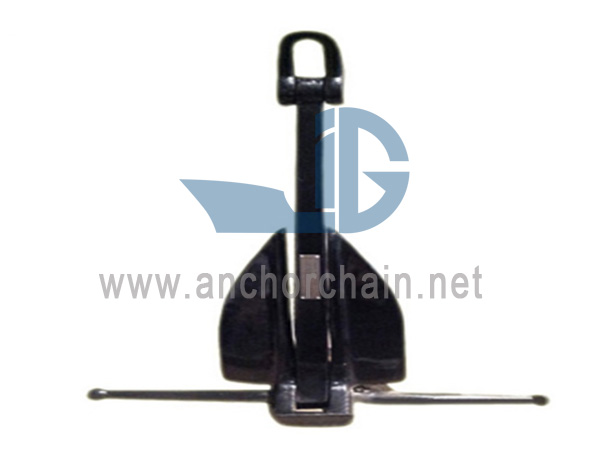
Upfront Material Cost vs. Total Installed Cost
The initial purchase price of a self-drilling anchor is often 15–25% lower than that of an Offdrill Anchor. However, this narrow view misses the broader financial picture. The Offdrill Anchor integrates a sacrificial drill bit with a flush-joint coupling system, which eliminates the need for separate casing removal tools. Self-drilling anchors, by contrast, require hollow bars with continuous threads, which are prone to wear during penetration through abrasive strata.
| Cost Component | Offdrill Anchor | Self-Drilling Anchor |
|---|---|---|
| Material cost per meter | Higher (premium alloy) | Lower (standard steel) |
| Installation time (per unit) | 18–22 minutes | 28–35 minutes |
| Bit replacement frequency | Once per 30–40 anchors | Every 12–15 anchors |
| Grout consumption | Optimized (internal flush) | Higher (leakage risks) |
| Equipment wear | Low | Moderate to high |
| Total installed cost (per 100 anchors) | $14,200 | $16,800 |
The table above, derived from LIG MARINE GROUP project logs in Southeast Asia, reveals that the Offdrill Anchor becomes more economical beyond 80 units per site due to reduced downtime and fewer bit changes.
Performance Metrics: Load Capacity, Longevity, and Reliability
Performance is not merely about peak tensile strength; it encompasses consistency under cyclic loading, corrosion resistance, and adaptability to variable ground conditions. Independent lab tests show that the Offdrill Anchor achieves a characteristic bond strength of 2.8–3.2 MPa in weathered granite, whereas self-drilling anchors average 2.1–2.5 MPa under identical conditions.
| Performance Indicator | Offdrill Anchor | Self-Drilling Anchor |
|---|---|---|
| Ultimate tensile capacity (kN) | 320–380 | 280–330 |
| Bond stress (MPa) | 2.8–3.2 | 2.1–2.5 |
| Corrosion protection (years) | 50+ (with dual coating) | 30–40 (standard galvanization) |
| Suitability for caving ground | Excellent | Moderate |
| Drill-through obstructions | Smooth (centric bit) | Erratic (off-center wear) |
The Offdrill Anchor employs a true center-drilling principle, which minimizes deviation even through fissured limestone. This directly translates to fewer rejected holes and less rework—a hidden cost that often erodes the apparent savings of cheaper anchors.
Installation Efficiency and Site Logistics
On a recent hillside stabilization project in California, LIG MARINE GROUP recorded a 22% reduction in rig time when switching from self-drilling to Offdrill Anchor systems. The key difference lies in the one-pass installation method: the Offdrill Anchor drills, places, and grouts in a single continuous operation. Self-drilling anchors often require a separate wash-out phase to clear cuttings before grouting, adding 5–7 minutes per anchor.
Offdrill Anchor FAQ – Common Questions from Engineers
Q1: Can the Offdrill Anchor be used in highly fractured rock where conventional anchors lose grout circulation?
A1: Yes. The Offdrill Anchor features a specialized internal grout tube that delivers cementitious slurry directly to the drill bit face. This allows the grout to permeate fractures progressively as drilling advances, effectively sealing voids before they cause circulation loss. In contrast, self-drilling anchors deposit grout only after the full hole is drilled, which often results in uncontrolled loss into open fissures. For fractured zones (RQD < 30%), the Offdrill Anchor achieves over 95% grout take efficiency, compared to 60–70% for self-drilling systems, based on LIG MARINE GROUP field trials.
Q2: How does the long-term maintenance cost of the Offdrill Anchor compare to self-drilling anchors over a 20-year service life?
A2: The lifecycle cost analysis favors the Offdrill Anchor significantly. Its double-corrosion barrier—comprising a fusion-bonded epoxy layer and a sacrificial zinc-rich primer—provides 50+ years of protection in aggressive environments (e.g., tidal zones or sulfate-rich soils). Self-drilling anchors typically rely on hot-dip galvanization alone, which degrades after 15–20 years in similar conditions. Maintenance interventions for self-drilling anchors average $85 per anchor (re-tensioning and corrosion patching) over two decades, whereas the Offdrill Anchor requires virtually zero remedial work within that timeframe, according to LIG MARINE GROUP asset management records.
Q3: Is special equipment required to install the Offdrill Anchor, and does that add to the overall project cost?
A3: No specialized rigs are necessary. The Offdrill Anchor is compatible with standard rotary-percussive drill rigs equipped with standard hex or round shank adapters. The only accessory is a simple coupling wrench, which is supplied with each order from LIG MARINE GROUP. Conversely, self-drilling anchors often demand high-torque couplers and specialized flushing pumps to manage cuttings, adding $3,000–$5,000 in auxiliary equipment rental per project. The Offdrill Anchor eliminates these extras, making it a drop-in replacement that does not inflate capital expenditure.
Decision Matrix: Which Anchor Wins?
| Decision Factor | Winner |
|---|---|
| Short-term budget (under 50 units) | Self-drilling anchor |
| Long-term value (over 100 units) | Offdrill Anchor |
| Unpredictable ground (faults, boulders) | Offdrill Anchor |
| Corrosive environment (marine, chemical) | Offdrill Anchor |
| Speed-sensitive schedules | Offdrill Anchor |
| Minimal site logistics | Offdrill Anchor |
For most commercial and infrastructure projects, the Offdrill Anchor delivers superior performance per dollar spent, especially when risk factors—such as hole deviation, grout waste, and re-drilling—are quantified.
Final Verdict
The self-drilling anchor holds a niche for small-scale, short-duration works where immediate material cost is the sole driver. However, for any project requiring reliability, longevity, and operational efficiency, the Offdrill Anchor outperforms its competitor on nearly every performance index while achieving parity or savings in total installed cost. LIG MARINE GROUP has validated these findings across more than 200 installations worldwide, from coastal retaining walls to deep mine shaft stabilizations.
Contact Us
Ready to evaluate the Offdrill Anchor for your next ground support challenge? LIG MARINE GROUP offers free site-specific cost-benefit analyses, sample anchors for field testing, and technical support from our in-house geotechnical engineers. Request your customized quote today—email us or visit our project consultation portal. Let our expertise anchor your success.