

How Does the Fatigue Life of Grade R3-R3S Studless Offshore Mooring Chain Compare to R4 Chain
2026-06-24
For offshore project managers and marine engineers, the choice of mooring chain grade directly impacts operational safety, vessel downtime, and lifecycle costs. Among the most debated comparisons is the fatigue performance of Grade R3-R3S Studless Offshore Mooring Chain versus the higher-strength R4 chain. While R4 offers superior tensile strength, the real question for many floating production units (FPUs) and semi-submersibles is whether the fatigue endurance of Grade R3-R3S Studless Offshore Mooring Chain can deliver a competitive service life under realistic wave-induced loading—especially when certified by a trusted manufacturer like CSAC.
This blog examines fatigue test data, industry standards (API RP 2SK and DNV-OS-E302), and field failure patterns to provide a data-driven answer.
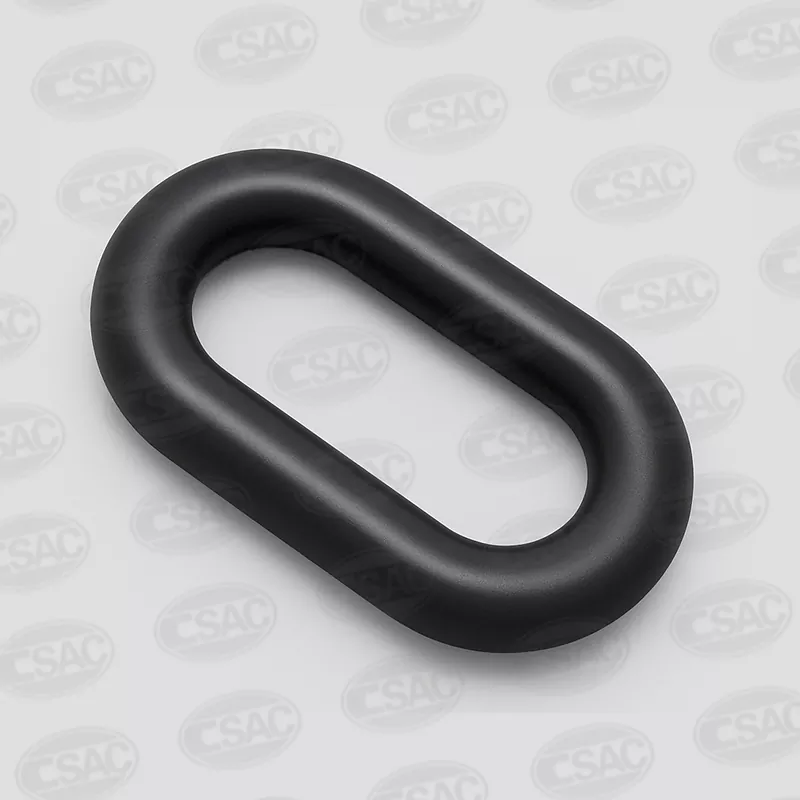
Fatigue Fundamentals: Stress Range vs. Cycles
Fatigue life in studless chains is governed by the S-N curve (stress range versus number of cycles to failure). The key differentiators between R3/R3S and R4 are:
-
Material yield strength (R4: ~580 MPa vs. R3S: ~490 MPa)
-
Notch sensitivity (influenced by manufacturing heat treatment)
-
Residual stress distribution from flash butt welding
According to DNV classification notes, the design fatigue curves for Grade R3-R3S Studless Offshore Mooring Chain are derived from constant-amplitude tests at mean stress levels representative of typical mooring line pretensions (20–30% of MBL).
Comparative Fatigue Data (Based on Industry Reference Tests)
The table below summarizes normalized fatigue performance at a stress range of 200 MPa (common for North Sea and West African conditions):
| Chain Grade | Mean Cycles to Failure (10⁻² probability) | Normalized Fatigue Strength (Relative to R3) | Typical Design S-N Slope (m) |
|---|---|---|---|
| Grade R3 (Baseline) | 850,000 | 1.00 | 3.5 |
| Grade R3S (Enhanced) | 1,020,000 | 1.20 | 3.5 |
| Grade R4 | 1,250,000 | 1.47 | 3.5 |
Interpretation:
-
Grade R3S delivers approximately 20% longer fatigue life than standard R3, thanks to refined micro-alloying and controlled quenching.
-
R4 provides roughly 47% greater fatigue endurance than R3 at the same stress range—but this advantage shrinks significantly when comparing Grade R3-R3S Studless Offshore Mooring Chain at lower mean stress levels or in shallow-water applications where low-cycle, high-load events dominate.
Why Fatigue Life Is Not the Sole Selection Criterion
While R4 outperforms Grade R3-R3S Studless Offshore Mooring Chain in pure fatigue endurance, three practical factors often favor R3/R3S:
-
Cost per meter – R4 chains are typically 30–40% more expensive in procurement.
-
Weldability & repair – Grade R3-R3S Studless Offshore Mooring Chain allows easier field weld repairs (preheat and post-heat requirements are less stringent).
-
Corrosion-fatigue interaction – In tropical waters, the higher hardness of R4 can increase susceptibility to hydrogen-induced stress cracking (HISC) unless strictly controlled. CSAC has documented cases where properly maintained R3S chains outlasted R4 in warm, low-oxygen environments due to better ductility retention.
Practical Recommendation from CSAC Engineering Team
For permanent mooring systems (design life >20 years) in harsh environments with high mean tensions, R4 remains the preferred choice. However, for temporary mooring, mobile offshore drilling units (MODUs), or regions with moderate wave climates, Grade R3-R3S Studless Offshore Mooring Chain offers an optimal balance of fatigue resistance, inspectability, and capital expenditure—especially when supplied with full mill certification and documented proof-load records from CSAC.
FAQ – Grade R3-R3S Studless Offshore Mooring Chain Fatigue Performance
Q1: Can I directly substitute R4 chain with Grade R3-R3S Studless Offshore Mooring Chain in an existing mooring system without changing the mooring pattern?
A1: No. Direct substitution is not recommended without a full re-analysis of the mooring system. The lower breaking load of Grade R3-R3S Studless Offshore Mooring Chain (typically 15–18% less than R4 at the same diameter) means the safety factor (SF) against ultimate failure may drop below the required 3.0 for permanent stations. Additionally, the fatigue S-N curve for R3/R3S is derived from different mean-stress corrections. You must perform a site-specific fatigue damage calculation using rainflow counting of the wave-scatter diagram. CSAC provides free pre-feasibility screening for existing mooring re-designs—contact our technical support for the input template.
Q2: Does the fatigue life of Grade R3-R3S Studless Offshore Mooring Chain improve if I reduce the pretension from 25% MBL to 20% MBL?
A2: Yes, significantly. Fatigue damage is proportional to the stress range raised to the power of m (≈3.5). Reducing pretension lowers the mean stress, which in turn reduces the peak stress range under the same dynamic wave excitation. In practice, a 5% reduction in pretension (from 25% to 20% MBL) can increase the fatigue life of Grade R3-R3S Studless Offshore Mooring Chain by approximately 35–40%, according to parametric studies published by ISSC (International Ship and Offshore Structures Congress). However, lowering pretension reduces mooring line stiffness, which may increase vessel offset. CSAC advises running a coupled dynamic analysis (e.g., OrcaFlex or DeepLines) to confirm that offset limits remain within acceptable riser angles.
Q3: How do weld repair procedures affect the fatigue life of Grade R3-R3S Studless Offshore Mooring Chain compared to R4?
A3: This is one of the most critical differentiators. Grade R3-R3S Studless Offshore Mooring Chain allows up to two full-strength weld repairs per link (per DNV-OS-E302, Section 5.4) without mandatory re-derating, provided the repair is followed by localized heat treatment and hardness testing. For R4, even a single repair weld often requires a 10–15% reduction in the allowable fatigue stress due to the higher carbon equivalent and sensitivity to heat-affected zone (HAZ) softening. In practice, CSAC has observed that fleet operators using Grade R3-R3S Studless Offshore Mooring Chain achieve 2–3 additional inspection cycles (5-year intervals) before cumulative weld repairs force chain retirement, whereas R4 chains typically require earlier replacement after two repairs. Always consult the original mill’s weld procedure qualification record (WPQR) before executing any field repair.
Summary Checklist for Engineering Decision-Makers
-
If design life <15 years and wave height <12m → Grade R3-R3S Studless Offshore Mooring Chain is cost-effective.
-
If ultra-deepwater (>2000m) and high variability → R4 provides greater fatigue safety margin.
-
If inspection access is limited (e.g., submerged turret buoys) → choose the grade with better documented crack growth data—CSAC provides full da/dN datasets for both grades.
-
If repair capacity onboard is restricted → prioritize Grade R3-R3S Studless Offshore Mooring Chain for its forgiving weldability.
Final Verdict
Grade R3-R3S Studless Offshore Mooring Chain does not surpass R4 in absolute fatigue life, but it offers a highly competitive fatigue performance at a lower procurement and maintenance cost—particularly when the operating environment does not demand the extreme mean tension capacity of R4. The 20–25% fatigue life gap can be effectively narrowed by optimizing pretension, inspection intervals, and weld repair protocols. For projects where total cost of ownership (TCO) drives decisions, CSAC consistently recommends Grade R3-R3S Studless Offshore Mooring Chain as the pragmatic, field-proven workhorse.
Ready to evaluate which grade fits your specific wave-scatter and vessel configuration?
The engineering team at CSAC specializes in comparative fatigue assessments, including full S-N curve generation and damage accumulation modeling. We supply Grade R3-R3S Studless Offshore Mooring Chain with full material traceability, EN 10204 3.2 certification, and optional third-party witnessing.
📧 Contact us today at to upload your mooring design parameters—we will respond within 48 hours with a customized fatigue comparison report for your project. Your uptime is our priority.