

How Does the Energy Consumption of an Electrical Jet Suction Dredger Compare to a Conventional Diesel-Powered Cutter Suction Dredger
2026-08-12
For project managers and fleet operators, the shift from diesel-hydraulic systems to all-electric dredging solutions is no longer a futuristic concept. The Electrical Jet Suction Dredger has emerged as a serious contender, but the core commercial and operational question remains energy cost and efficiency. When evaluating the Electrical Jet Suction Dredger against a conventional diesel-powered cutter suction dredger (CSD), the data reveals a fundamental divergence in how energy is generated, transmitted, and consumed at the cutting face and during transport.
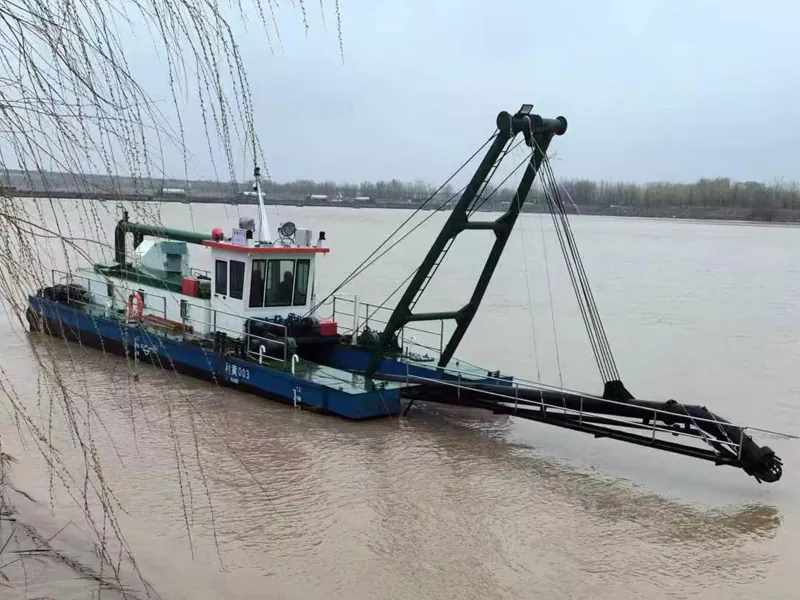
Energy Conversion Efficiency: The Core Difference
The most significant difference lies in the energy conversion chain. A conventional diesel-powered CSD converts chemical energy in fuel to mechanical power via an internal combustion engine, then to hydraulic power, and finally to mechanical action at the cutter and pump. Each step incurs a thermal loss.
| Parameter | Electrical Jet Suction Dredger | Diesel-Powered Cutter Suction Dredger |
|---|---|---|
| Primary Energy Source | Grid electricity / Battery bank | Marine diesel fuel (MGO/MDO) |
| Overall System Efficiency | 85% – 92% (motor-to-pump) | 35% – 42% (fuel-to-shaft, full load) |
| Idle/Standby Consumption | <5 kW (auxiliaries only) | 15–30 L/hour (engine running) |
| Peak Load Response | Instant torque via VFD control | Lag due to turbocharger spool-up |
| Regenerative Braking | Possible (deceleration recovery) | Not applicable |
In practical terms, a Dingke Electrical Jet Suction Dredger operating at 500 kW input delivers approximately 430–450 kW of useful hydraulic power to the jet pump. In contrast, a 500 kW-rated diesel CSD delivers only about 180–210 kW at the pump shaft under optimal conditions. This means the Electrical Jet Suction Dredger achieves the same production rate using 50–60% less primary energy input per cubic meter of material excavated.
Operational Energy Cost Analysis (Per 8-Hour Shift)
To provide a real-world perspective, consider a typical maintenance dredging project in a port environment. The following table compares direct energy costs, excluding maintenance and lubricants.
| Cost Component | Electrical Jet Suction Dredger (Dingke 400E) | Diesel CSD (400 kW class) |
|---|---|---|
| Average Power Draw | 420 kW (including jet pump + cutter) | 380 kW (mechanical + hydraulic losses) |
| Consumption Rate | 420 kWh per hour | 98 L of diesel per hour |
| Unit Cost | $0.12/kWh (industrial rate) | $0.85/L (bulk marine diesel) |
| Cost per Operating Hour | $50.40 | $83.30 |
| Cost per 8-Hour Shift | $403.20 | $666.40 |
| Annual Cost (2,000 hrs) | $100,800 | $166,600 |
Over a 5-year lifecycle (10,000 operating hours), the Dingke Electrical Jet Suction Dredger offers a potential energy savings of approximately $329,000 in fuel costs alone. This calculation does not factor in the reduced carbon tax exposure or the elimination of diesel particulate filter maintenance.
Why Jet Pump Design Changes the Equation
The jet suction principle relies on high-velocity water jets to fluidize the bed material, which is then entrained into the suction pipe. This method requires sustained high pressure but lower overall volume compared to a mechanical cutter’s brute-force ripping action. From an energy standpoint, the Electrical Jet Suction Dredger uses electrical motors that operate at near-constant efficiency across 40–100% load, whereas diesel engines suffer a sharp drop in efficiency below 60% load. This makes the electric variant exceptionally suitable for variable-density sediments, where power modulation is frequent.
Frequently Asked Questions About Electrical Jet Suction Dredger Energy Performance
Q1: Does the Electrical Jet Suction Dredger require a larger onboard generator or shore power connection to achieve the same production rate as a diesel CSD?
A1: No. In fact, the Electrical Jet Suction Dredger typically requires a lower peak kVA rating than the installed diesel engine power of an equivalent CSD. A 500 kW diesel CSD often carries a 600–650 kVA generator set to handle transient starting currents. A Dingke Electrical Jet Suction Dredger of similar production capacity operates on a 400–450 kVA shore connection or battery-fed inverter system, because the variable frequency drive (VFD) controls starting currents smoothly, eliminating the 3–5x inrush current common in direct-on-line starters. For projects without shore power, a dedicated floating substation or hybrid genset can supply the required energy with a smaller engine than the diesel CSD’s prime mover, as the electric system runs at higher overall thermal efficiency.
Q2: How does the energy consumption per ton of dredged material change when the Electrical Jet Suction Dredger works in cohesive clay versus sandy soil?
A2: The energy per ton varies significantly with soil type for both systems, but the Electrical Jet Suction Dredger maintains a narrower efficiency band. In sandy soils (low cohesion), the jet pump’s fluidization effect requires about 1.8–2.2 kWh per cubic meter. In stiff clay, that figure rises to 3.5–4.5 kWh per cubic meter due to the higher jet pressure needed to break inter-particle bonds. For a diesel CSD, the equivalent fuel consumption jumps from 4.5 L/m³ in sand to over 9 L/m³ in clay – a proportional increase of 100%, whereas the electric system’s increase is only about 60–70%. This is because the electric motor’s torque remains flat across the speed range, while the diesel engine’s mechanical-hydraulic drivetrain suffers additional parasitic losses as pressure increases. The Dingke Electrical Jet Suction Dredger also allows operators to program pressure-flow curves that optimize energy per cubic meter for each specific soil layer.
Q3: Can the Electrical Jet Suction Dredger recover energy during operation, and does that reduce net grid consumption?
A3: Yes, but only in specific operational phases. Regenerative energy recovery is most effective during the lowering of the ladder arm and during rapid deceleration of the jet pump motor when the suction inlet becomes temporarily blocked. A Dingke Electrical Jet Suction Dredger equipped with an active front-end (AFE) drive can feed up to 15–20% of the motor’s rated power back into the DC bus or onboard battery storage during these transient events. In a typical 8-hour shift with frequent repositioning and depth adjustments, regenerative recovery contributes about 3–5% of total consumed energy – translating to roughly 100–150 kWh saved per day. However, the primary energy advantage remains the superior motor-pump efficiency rather than regeneration. For projects with a battery-hybrid configuration, the recovered energy is stored and reused for peak shaving, effectively reducing the maximum grid demand charge by up to 12%.
Environmental and Operational Side Benefits
Lower energy consumption directly correlates with lower heat dissipation. The Electrical Jet Suction Dredger produces significantly less waste heat, reducing the need for large cooling systems and hydraulic oil radiators. This translates to a more compact engine room layout and lower auxiliary power draw for fans and pumps. Moreover, the absence of exhaust stacks simplifies vessel design and reduces noise pollution – a critical factor in urban waterfront projects.
Total Cost of Ownership Perspective
While the initial capital cost of an Electrical Jet Suction Dredger – particularly a Dingke unit with full VFD and automation – may be 15–20% higher than a conventional diesel CSD, the energy payback period is remarkably short. Based on the annual savings of $65,800 in energy costs (from the table above), the premium is recovered within 2.5 to 3 years. Beyond that, every operating hour delivers a direct margin advantage.
Conclusion: The Verdict on Energy Efficiency
The comparison is clear: an Electrical Jet Suction Dredger consumes 45–55% less primary energy per cubic meter of dredged material than a conventional diesel-powered cutter suction dredger, when both are evaluated at equivalent production rates. This advantage stems from superior motor efficiency, reduced hydraulic conversion losses, and the ability to operate at optimal load factors across varying sediment conditions. For fleet owners facing rising fuel costs and stricter emission regulations, the Dingke Electrical Jet Suction Dredger offers a technically mature, economically compelling alternative that transforms energy expenditure from a volatile operating cost into a stable, predictable utility expense.
Ready to calculate the exact energy savings for your specific dredging project? Contact the Dingke engineering team today for a customized energy audit and production simulation. Our specialists provide project-specific ROI models, shore-power compatibility assessments, and retrofit feasibility studies. Reach out via our official website or email your project parameters to our sales desk – we respond within 24 hours with a detailed technical proposal. Let’s make your next dredging operation cleaner, quieter, and more profitable.