

How Does Manufacturing Quality Control Impact the Performance of Stud Link Mooring Chain
2026-03-20
In the maritime and offshore industries, the integrity of a vessel or platform is only as strong as its anchor point. When discussing station-keeping for FPSOs, semi-submersibles, or floating wind turbines, the Stud Link Offshore Mooring Chain is the critical component that ensures safety and operational continuity. However, the performance of this chain is not solely determined by its steel grade or size; it is dictated by the rigor of its manufacturing quality control. At Zhoushan Zhongnan, we understand that precision in production translates directly to reliability in the field. From the chemistry of the raw material to the final proof load test, every micron matters. Poor quality control can lead to micro-cracks, inconsistent mechanical properties, and premature fatigue failure, which in a deepwater environment can be catastrophic. This article explores how stringent manufacturing protocols directly enhance the longevity and strength of your mooring systems.
The Direct Link Between QC and Mechanical Properties
Quality control in the production of Stud Link Offshore Mooring Chain is not just about inspection; it is about process control. When a manufacturer like Zhoushan Zhongnan adheres to international standards such as those from DNV, ABS, or BV, we ensure that the chain’s microstructure is uniform. This uniformity prevents weak points that could buckle under extreme tension.
Here is how specific QC stages impact performance:
| Manufacturing Stage | Quality Control Measure | Impact on Performance |
|---|---|---|
| Steel Billet Selection | Spectrometric analysis to verify alloy composition. | Ensures hardenability and resistance to Hydrogen Induced Cracking (HIC). |
| Flash Butt Welding | Real-time monitoring of welding parameters (temperature, pressure). | Precludes lack of fusion defects; ensures the weld is stronger than the parent metal. |
| Heat Treatment (Quenching & Tempering) | Precise furnace temperature profiling and soak time recording. | Achieves the target yield strength and toughness across the entire link. |
| Proof Load Testing | Computer-monitored hydraulic tensile testing to 70%+ of breaking load. | Validates structural integrity; sets the mating surfaces (stud and link) for long-term service. |
The "Stud" Factor: Why Precision Matters
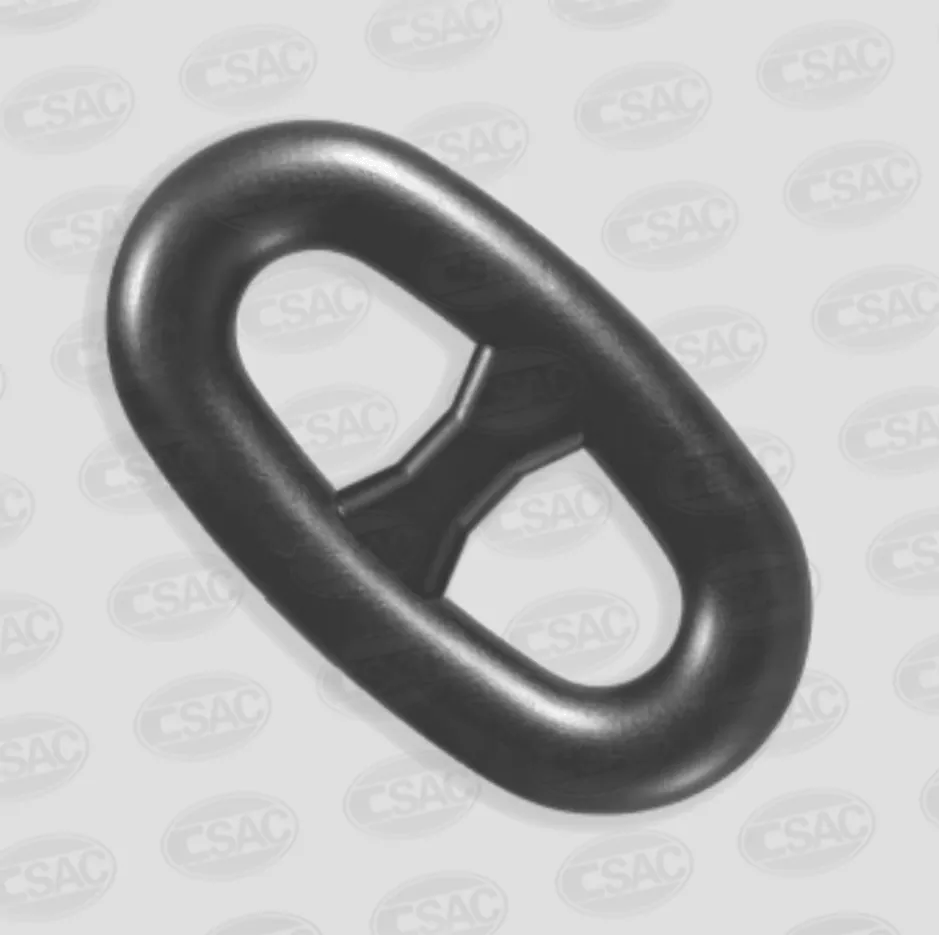
The defining feature of a Stud Link Offshore Mooring Chain is the cross-member or "stud." This component is often misunderstood as merely a weight addition, but its primary function is to limit the elongation of the link under load and prevent kinking.
If manufacturing quality control is lax, the stud may not fit correctly. A loose stud can rotate, wearing down the inside of the link and reducing the cross-sectional area. Conversely, if the stud is misaligned during the pressing process, it creates stress concentrations. Through precise control, Zhoushan Zhongnan ensures the stud is seated perfectly, maintaining the geometric integrity of the chain. This geometric stability is vital for reducing bending moments on the link crowns, thereby extending the fatigue life significantly.
Statistical Process Control in Serial Production
Mooring chains are not one-off items; they are produced in lengths that can stretch for kilometers. Consistency across thousands of links is impossible without Statistical Process Control (SPC). Effective manufacturing quality control utilizes SPC to monitor variations in diameter, length, and ovality.
For Zhoushan Zhongnan, investing in automated ultrasonic testing (AUT) and dimensional checks means that every single link meets the required specifications. If a trend toward the tolerance limit is detected, the process is adjusted immediately. This proactive approach ensures that the final Stud Link Offshore Mooring Chain assembly has uniform load distribution. A chain with high variation in link length will experience peak loads on the tightest links, leading to premature failure. Uniformity ensures that the load is shared equally across the entire mooring line.
FAQ: Stud Link Offshore Mooring Chain
To further clarify the importance of manufacturing standards, here are answers to some frequently asked questions regarding Stud Link Offshore Mooring Chain.
What is the most critical defect to look for in a Stud Link Offshore Mooring Chain during manufacturing?
The most critical defect is lack of fusion at the weld line or surface discontinuities like laps and folds. During the flash butt welding process, if the parameters are incorrect, the two ends of the link bar may not fully fuse together. This creates a "cold weld" that looks fine externally but has a planar internal flaw. Under service loads, this flaw acts as a stress raiser and can propagate rapidly, leading to brittle fracture. Reputable manufacturers use ultrasonic and magnetic particle inspection to detect these sub-surface anomalies before the chain leaves the factory floor.
How does the stud actually improve the performance of the mooring chain?
The stud serves two primary mechanical functions. First, it acts as a spacer to prevent the chain from "locking up" or "over-elongating" when subjected to tension. By limiting the movement of the link sides, the stud reduces the bending stress at the crown (the curved ends). Second, it controls the chain's articulation. When a standard link chain bends, the stud contacts the adjacent link, creating a controlled pivot point. This reduces friction and wear between links, which is essential for maintaining the chain's diameter and strength over decades of service in the ocean.
Can poor quality control be detected after the chain is installed offshore?
Yes, but it is much more difficult and expensive. Poor quality control often manifests as "anomalous wear" or "premature fatigue cracks" during in-service inspections. For example, if the hardness across the link surface is inconsistent due to poor heat treatment, you will see accelerated corrosion or "pitting" in the softer zones during ROV inspections. Furthermore, if the studs were not pressed correctly, they may fall out during operation. Detecting these issues offshore requires costly diver or ROV intervention and unscheduled downtime, which is why investing in high manufacturing quality from Zhoushan Zhongnan is a critical risk management decision.
Conclusion
The performance of a Stud Link Offshore Mooring Chain is a direct reflection of the manufacturing philosophy behind it. By prioritizing advanced testing methods and strict adherence to冶金urgical processes, Zhoushan Zhongnan delivers products that offer superior fatigue resistance and structural reliability. In an industry where failure is not an option, compromising on manufacturing quality control is a risk no operator can afford.
Ready to secure your asset with chains that meet the highest global standards? Contact us today to discuss your project specifications and receive a comprehensive quote from Zhoushan Zhongnan.