

How Does Excavation Self-elevating Platform Improve Offshore Construction Efficiency?
2026-06-17
Article Summary
The Excavation Self-elevating Platform is a specialized offshore engineering structure designed to support excavation, dredging, foundation treatment, and marine construction tasks in shallow to medium-depth waters. By integrating self-elevating legs, stable working decks, and heavy-load capacity systems, it provides a safe and stable operational environment even under complex marine conditions. This article explains its working principle, applications, technical advantages, and selection considerations, helping project planners and engineering contractors understand how to maximize efficiency and safety in offshore excavation projects.
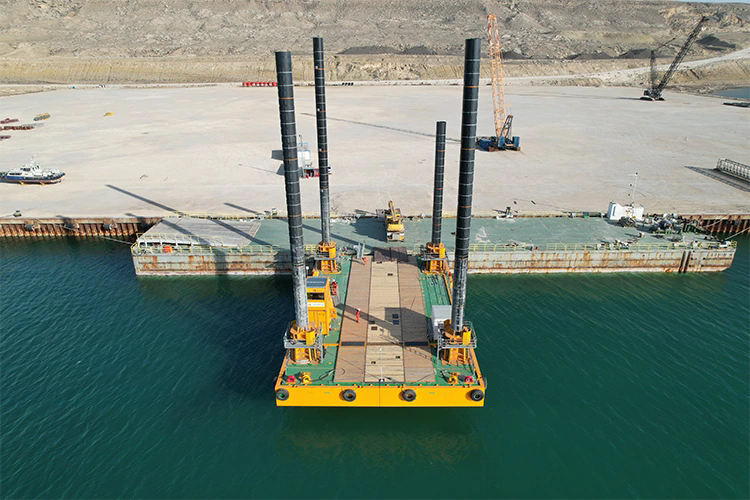
Table of Contents
- 1. Overview of Excavation Self-elevating Platform
- 2. Working Principle and Structural Design
- 3. Key Applications in Offshore Engineering
- 4. Technical Advantages and Performance Benefits
- 5. Comparison with Traditional Marine Excavation Methods
- 6. Key Factors for Equipment Selection
- 7. Operation and Maintenance Considerations
- 8. Frequently Asked Questions
1. Overview of Excavation Self-elevating Platform
The Excavation Self-elevating Platform is a modular offshore working system engineered to perform excavation and construction tasks in unstable marine environments. Unlike floating barges that rely on buoyancy stability, this platform uses a leg-based elevation system to lift the working deck above the water surface, creating a rigid and vibration-resistant operation base.
This type of platform is widely used in coastal engineering, harbor development, offshore foundation preparation, and dredging support operations. It is especially valuable in projects where precise excavation depth and positioning accuracy are required under challenging hydrological conditions.
2. Working Principle and Structural Design
The core principle of the Excavation Self-elevating Platform is based on mechanical jacking systems that raise the platform deck along vertical legs anchored to the seabed. Once the legs penetrate and stabilize on the seabed, hydraulic or mechanical jacks lift the hull above the water surface.
- Hull Structure: Acts as the main operational base carrying machinery and personnel.
- Leg System: Typically composed of high-strength steel columns capable of penetrating seabed soil.
- Jack Mechanism: Hydraulic systems ensure controlled elevation and descent.
- Excavation Equipment Integration: Supports excavators, dredging pumps, and soil handling systems.
This configuration significantly reduces wave impact, allowing excavation operations to maintain high precision even in tidal or mildly rough waters.
3. Key Applications in Offshore Engineering
The Excavation Self-elevating Platform is a versatile solution used across multiple marine engineering scenarios. Its adaptability makes it suitable for both temporary and long-term construction projects.
- Harbor and port foundation excavation
- Offshore pipeline trenching and burial
- Coastal land reclamation projects
- Bridge pier foundation preparation
- Marine dredging and sediment removal
- Artificial island construction support
These applications require high positional stability, which is a key advantage of self-elevating systems compared to floating platforms.
4. Technical Advantages and Performance Benefits
The Excavation Self-elevating Platform offers multiple engineering advantages that directly improve productivity and safety in marine environments.
| Feature | Benefit |
|---|---|
| High Stability | Eliminates wave-induced movement for precise excavation control |
| Strong Load Capacity | Supports heavy machinery such as excavators and dredging systems |
| Self-elevating Design | Adjusts working height according to water depth and tide changes |
| Operational Safety | Reduces risk associated with unstable floating conditions |
| Modular Construction | Easier transportation, assembly, and maintenance |
These advantages collectively lead to reduced downtime, improved operational accuracy, and lower long-term project costs.
5. Comparison with Traditional Marine Excavation Methods
Traditional excavation methods often rely on floating dredgers or land-based machinery extended into water areas. However, these approaches have limitations in stability and precision.
- Floating Barges: Affected by waves and currents, reducing excavation accuracy.
- Land Extension Methods: Limited reach and require complex temporary structures.
- Self-elevating Platform: Combines offshore reach with land-like stability.
By eliminating water-induced motion, the self-elevating system provides a controlled environment similar to onshore excavation conditions.
6. Key Factors for Equipment Selection
Selecting the right Excavation Self-elevating Platform requires careful evaluation of project conditions and technical requirements.
- Water Depth Range: Determines leg length and structural capacity.
- Soil Conditions: Affects leg penetration stability and anchoring performance.
- Load Requirements: Based on machinery and material weight.
- Environmental Conditions: Wave height, current speed, and weather variability.
- Project Duration: Influences durability and maintenance planning.
Proper configuration ensures optimal performance and reduces operational risks during construction phases.
7. Operation and Maintenance Considerations
To ensure long-term reliability, structured maintenance and operational protocols must be implemented.
- Regular inspection of hydraulic jacking systems
- Corrosion protection for marine steel structures
- Monitoring of leg alignment and seabed penetration stability
- Scheduled lubrication of mechanical components
- Safety checks before and after elevation cycles
Consistent maintenance not only extends service life but also enhances safety during high-load excavation operations.
8. Frequently Asked Questions
Q1: What water depth is suitable for an Excavation Self-elevating Platform?
It is generally suitable for shallow to medium-depth waters, depending on the leg length and structural configuration.
Q2: Can it operate in rough sea conditions?
Yes, once elevated, the platform minimizes wave impact, allowing stable operation in moderate sea states.
Q3: What types of equipment can be installed?
Excavators, dredging pumps, cranes, and other heavy marine construction machinery can be integrated.
Q4: How is mobility achieved?
The platform is typically towed to the site and then positioned and elevated using its jacking system.
Q5: What is the main advantage over floating dredgers?
Superior stability and precision due to elimination of wave-induced motion.
Conclusion
The Excavation Self-elevating Platform represents a significant advancement in offshore engineering technology. By combining structural stability, operational flexibility, and heavy-load capacity, it enables efficient and precise execution of complex marine excavation tasks. Its adaptability across different environmental conditions makes it an essential asset for modern coastal and offshore construction projects.
High-performance engineering solutions such as this are developed and supported by experienced manufacturers, including Shandong Haiding Shipbuilding Co., Ltd., ensuring reliable quality and project adaptability across global markets.
For detailed specifications, customized configurations, and professional engineering support, contact us to discuss your project requirements and receive tailored solutions designed to maximize operational efficiency and safety.