

How Does an Inland River Tugboat Improve Efficient and Reliable Waterway Operations?
2026-08-24
Article Summary: An inland river tugboat is a specialized work vessel designed to move barges, assist commercial vessels, support port operations, and respond to emergencies in rivers, canals, and other restricted waterways. Unlike ocean-going vessels, inland tugboats must balance towing power with shallow draft, compact dimensions, maneuverability, fuel efficiency, and dependable propulsion. This article explains how to select and operate an inland river tugboat, what technical features matter most, how to reduce operating risks, and how a properly configured vessel can improve the productivity of inland waterway fleets. It also examines practical considerations such as propulsion, hull construction, control systems, maintenance, customization, and after-sales support.
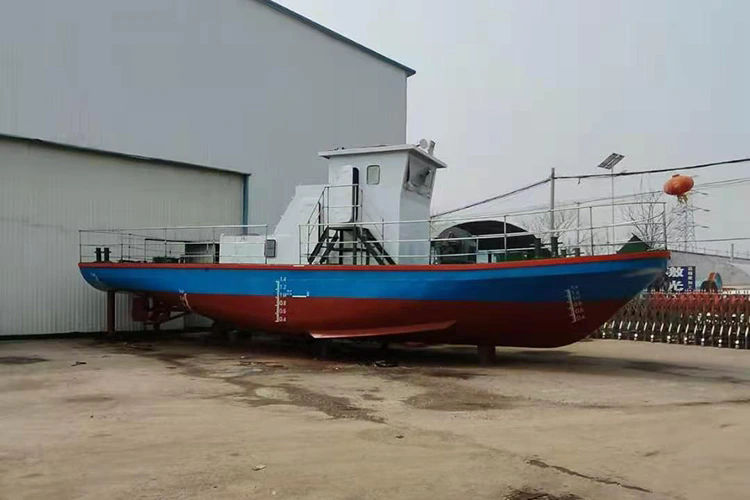
Table of Contents
- Article Outline
- What Is an Inland River Tugboat?
- What Challenges Must an Inland River Tugboat Solve?
- How Should an Inland River Tugboat Be Designed?
- How Does Propulsion Affect Tugboat Performance?
- How Can Towing Performance Be Improved?
- How Does Maneuverability Improve Inland Navigation?
- How Does Hull Construction Affect Reliability?
- How Can Operators Control Operating Costs?
- Where Can an Inland River Tugboat Be Used?
- How Should Buyers Select an Inland River Tugboat?
- How Can Maintenance Reduce Downtime?
- Why Consider HAIDING SHIPYARD?
- Frequently Asked Questions
- Conclusion
Article Outline
- Understand the operating characteristics of inland waterways.
- Match draft, hull dimensions, propulsion, and power to actual working conditions.
- Prioritize maneuverability when operating in narrow or shallow channels.
- Evaluate towing performance according to barge size and operating tasks.
- Consider fuel consumption, maintenance access, spare parts, and lifecycle costs.
- Choose a shipyard capable of providing customization and long-term technical support.
What Is an Inland River Tugboat?
An Inland River Tugboat is a purpose-built vessel used to tow, push, position, escort, or assist other vessels and floating equipment on rivers, canals, lakes, and other inland waterways. Its primary role is to provide controlled propulsion and maneuvering power where conventional cargo vessels may not have sufficient thrust or handling capability.
Inland waterway transportation presents a different set of requirements from offshore or ocean navigation. A river can become narrow, shallow, congested, or unpredictable. Water levels may change seasonally, currents can vary considerably, and bridges, locks, bends, terminals, and other infrastructure may limit available maneuvering space.
For this reason, an effective inland tugboat cannot simply be a smaller version of an ocean-going tug. Its dimensions, draft, propulsion arrangement, hull form, control system, deck layout, and power output should be developed around the actual waterway and working assignment.
HAIDING SHIPYARD develops inland river tugboat solutions with attention to shallow-water navigation, towing operations, port assistance, and emergency applications. Its product approach combines vessel construction experience with configuration options intended for different inland operating environments.
What Challenges Must an Inland River Tugboat Solve?
The biggest mistake in tugboat selection is focusing only on engine horsepower. Power is important, but useful performance comes from the interaction of the propulsion system, hull design, draft, propeller or azimuthing arrangement, control system, towing equipment, and operating environment.
Common inland-waterway challenges include:
- Limited water depth: A deep-draft vessel may be unable to reach important operating areas during low-water periods.
- Narrow channels: Limited turning space increases the importance of responsive steering and propulsion.
- Changing currents: Variable current conditions can significantly affect towing and positioning.
- Frequent maneuvering: Port and terminal operations may require repeated acceleration, deceleration, turning, and reverse movements.
- Long operating cycles: Commercial fleets need equipment capable of working reliably for extended periods.
- Maintenance limitations: Unexpected engine or propulsion failures can interrupt the entire barge operation.
- Different cargo configurations: The tug may need to handle different barge sizes and towing arrangements.
A successful vessel design therefore starts with the operating profile rather than selecting a standard specification first.
How Should an Inland River Tugboat Be Designed?
The design process should begin with a clear understanding of where and how the vessel will operate. Important variables include water depth, channel width, current speed, expected tow size, required towing force, navigation restrictions, working hours, and local regulatory requirements.
| Design Factor | Why It Matters | Key Consideration |
|---|---|---|
| Draft | Determines access to shallow waterways | Match draft to minimum seasonal water depth |
| Hull | Influences durability and stability | Consider river conditions and impact exposure |
| Propulsion | Determines thrust and maneuverability | Select the system according to operating tasks |
| Control System | Improves response and handling precision | Prioritize reliable and intuitive control |
| Towing Equipment | Transfers propulsion force to the tow | Match equipment to expected towing loads |
| Maintenance Access | Affects downtime and service cost | Provide practical access to critical components |
For example, a tug operating primarily on a shallow canal may need a substantially different configuration from one working at a deep-water river port. Designing around the actual operating profile helps prevent excessive investment in unsuitable equipment.
How Does Propulsion Affect Tugboat Performance?
Propulsion is one of the most important systems on an inland tugboat because the vessel must generate controlled thrust rather than simply achieve high cruising speed. Towing and pushing operations often require strong low-speed performance, rapid changes in thrust direction, and accurate positioning.
Azimuthing propulsion systems, including Z-drive configurations, can be particularly useful where maneuverability is critical. Because the thrust direction can be adjusted, the vessel can respond effectively during turning, docking, barge positioning, and restricted-channel operations.
The correct propulsion configuration should be evaluated according to:
- Required towing force.
- Maximum and typical operating draft.
- Channel width and turning requirements.
- Expected current conditions.
- Barge dimensions and loading conditions.
- Fuel consumption targets.
- Maintenance and spare-parts availability.
More engine power is not automatically better. Oversized propulsion can increase acquisition cost, fuel consumption, maintenance requirements, and installation complexity without providing meaningful benefits for a vessel operating below its available capacity.
How Can Towing Performance Be Improved?
Towing performance depends on more than engine output. The tug must convert available engine power into useful bollard pull while maintaining stability and controllability.
Operators should consider the following factors:
- Engine output: Provides the basic energy required for propulsion.
- Propulsion efficiency: Determines how effectively engine power becomes thrust.
- Hull resistance: Excessive resistance reduces available performance.
- Tug-to-barge matching: The tug must be appropriate for the dimensions and loading of the tow.
- Towing arrangement: Correct connection geometry helps maintain control.
- Stability: The vessel should remain stable while generating and transmitting towing forces.
- Operator control: Precise throttle and steering response can improve real-world towing efficiency.
For demanding operations, buyers should request performance information based on the intended operating condition instead of relying solely on nominal engine horsepower.
How Does Maneuverability Improve Inland Navigation?
Maneuverability is particularly important in inland waterways because the vessel may have only a limited distance in which to change direction or stop. A tug may also need to move a large barge through a bend, align a vessel with a berth, or assist another vessel during docking.
A maneuverable inland tugboat can provide several operational advantages:
- More precise barge positioning.
- Reduced turning space requirements.
- Better control during berthing and unberthing.
- Improved response when navigating bends and narrow channels.
- More effective emergency intervention.
- Reduced dependence on lengthy maneuvering runs.
Propulsion arrangement and hull geometry should therefore be considered together. A powerful engine cannot compensate for a poorly matched vessel configuration.
How Does Hull Construction Affect Reliability?
The hull is exposed continuously to water pressure, impact risks, vibration, loading forces, and operational wear. Inland waterways may also contain floating debris, shallow sections, underwater obstacles, or heavily trafficked areas where minor contact is possible.
For this reason, hull construction should emphasize structural integrity and suitability for the intended environment. High-strength steel can provide a practical balance between structural performance, durability, and manufacturability when appropriately engineered.
An anti-grounding-oriented hull configuration can also be valuable in shallow-water operations. However, hull protection should not be considered separately from draft. The vessel still needs sufficient clearance for its operating environment.
Construction quality should also include attention to welding, structural reinforcement, watertight integrity, machinery foundations, vibration control, and corrosion protection. These details have a direct effect on service life and maintenance requirements.
How Can Operators Control Operating Costs?
For commercial fleet operators, the purchase price is only one part of the total cost of ownership. Fuel, crew, maintenance, spare parts, downtime, and unexpected repairs can significantly affect profitability over the vessel's service life.
A practical cost-control strategy includes:
- Choose appropriate power: Avoid selecting excessive propulsion capacity that is rarely used.
- Optimize operating speed: Use operating practices appropriate for the tow and waterway.
- Monitor engine condition: Prevent small mechanical issues from developing into major failures.
- Maintain propulsion equipment: Regular inspection helps preserve thrust and maneuverability.
- Use planned maintenance: Schedule service during predictable operating windows.
- Keep critical spare parts available: Shorter repair times can reduce operational disruption.
- Train operators: Skilled handling can reduce unnecessary engine loading and improve vessel control.
Lifecycle economics should be considered during the initial specification stage rather than after the vessel has entered service.
Where Can an Inland River Tugboat Be Used?
The versatility of an inland river tugboat makes it useful across multiple waterborne industries. Its exact configuration should be adapted to the specific duty cycle.
| Application | Typical Requirement |
|---|---|
| Barge Towing | Reliable continuous thrust and strong towing capability |
| River Freight | Efficient long-duration operation |
| Port Assistance | High maneuverability and precise low-speed control |
| Barge Positioning | Accurate thrust direction and responsive controls |
| Waterway Engineering | Durability and adaptable deck arrangements |
| Emergency Rescue | Fast response, maneuverability, and dependable propulsion |
| Water Conservancy Projects | Adaptation to restricted and variable water conditions |
Some fleets may also benefit from customization such as increased propulsion power, specialized working equipment, reinforced structures, or configurations suitable for colder operating environments.
How Should Buyers Select an Inland River Tugboat?
Before purchasing an inland river tugboat, buyers should prepare a technical requirement document based on real operating conditions. This prevents the procurement process from becoming a simple comparison of vessel price and engine horsepower.
A useful purchasing checklist includes:
- What rivers, canals, lakes, or ports will the tug operate in?
- What is the minimum expected water depth?
- What is the maximum barge size and displacement?
- What towing force is required?
- How frequently will the vessel maneuver in restricted areas?
- Will the vessel operate continuously or intermittently?
- What classification or local regulatory requirements apply?
- What propulsion system best fits the operating profile?
- What spare-parts support is available?
- Can the shipyard provide customization?
- What warranty and after-sales service are included?
Certification and documentation should also be reviewed before purchase. HAIDING SHIPYARD states that its inland river tugboat series has undergone CCS inland-waterway vessel certification, while core propulsion-related components are supported by a stated warranty program and after-sales service. Buyers should confirm the exact certification scope, warranty terms, and applicable standards for their specific vessel and destination market.
How Can Maintenance Reduce Downtime?
Maintenance is critical because an inland tugboat often supports an entire transportation chain. If the tug becomes unavailable, barges may remain idle, cargo schedules can be delayed, and port operations may be disrupted.
A practical maintenance program should cover:
- Engine oil, filters, cooling systems, and fuel systems.
- Propulsion and steering equipment.
- Electrical systems and batteries.
- PLC and control equipment.
- Hull structure and underwater components.
- Bilge and pumping systems.
- Navigation and communication equipment.
- Towing hooks, winches, lines, and related equipment.
- Corrosion protection and coating condition.
Inspection frequency should be based on manufacturer recommendations, operating hours, environmental conditions, and applicable regulations. Critical components should receive additional attention when the vessel operates in abrasive, shallow, highly trafficked, or debris-prone waterways.
Access to original replacement parts can also influence downtime. A supplier with an established service network can make troubleshooting and component replacement more manageable, especially for fleets operating far from the shipyard.
Why Consider HAIDING SHIPYARD?
HAIDING SHIPYARD, operated by Shandong Haiding Shipbuilding Co., Ltd., focuses on shipbuilding and inland waterway equipment. Its inland river tugboat solutions are developed around operating conditions that can include shallow waters, narrow channels, variable currents, barge towing, port assistance, and emergency response.
The company's published product information describes inland tugboat configurations incorporating shallow-draft optimization, Z-drive azimuth propulsion, high-strength Q345 steel construction, and integrated PLC control. The stated product range includes towing forces of approximately 20 to 80 tons and a draft of up to 1.2 meters or less for the referenced configuration. Actual specifications should be confirmed according to the selected vessel design and project requirements.
HAIDING SHIPYARD also describes customization options such as propulsion upgrades and ice-breaking structural configurations. This type of customization can be important when a standard vessel cannot fully satisfy a customer's waterway restrictions, tow requirements, climate, or operational schedule.
Another important consideration is support after delivery. A tugboat is a long-term operational asset, so technical assistance, spare-parts availability, maintenance guidance, and responsive service can be as important as the initial vessel specification.
For buyers evaluating an inland river tugboat, the best approach is to provide the shipyard with detailed information about the waterway, tow, working schedule, required towing force, draft limitation, environmental conditions, and applicable certification requirements. This allows the vessel configuration to be developed around the actual project rather than relying on a generic specification.
Frequently Asked Questions
What Is the Main Purpose of an Inland River Tugboat?
The primary purpose is to provide controlled propulsion and maneuvering assistance for barges, floating equipment, and other vessels operating on inland waterways. It can support towing, pushing, docking, positioning, port operations, engineering work, and emergency response.
Why Is Shallow Draft Important for an Inland River Tugboat?
Many rivers and canals experience significant variations in water level. A shallow-draft tug can access areas that may be unsuitable for deeper vessels, improving operational flexibility and reducing restrictions during low-water conditions.
Is an Inland River Tugboat Suitable for Port Operations?
Yes. A properly configured inland tugboat can assist with vessel berthing, unberthing, barge positioning, and other low-speed maneuvering tasks. High maneuverability is especially valuable where space is limited.
How Much Towing Force Does an Inland River Tugboat Need?
The required towing force depends on barge size, displacement, waterway conditions, current, wind, tow configuration, and operating procedures. It is better to calculate the required performance from the actual tow and route than to select a tug based only on engine horsepower.
Can an Inland River Tugboat Be Customized?
Yes. Depending on the shipyard and project, customization may include propulsion capacity, hull reinforcement, working equipment, accommodation arrangements, control systems, and special environmental configurations. HAIDING SHIPYARD provides customization options for specific inland waterway requirements.
What Should Be Checked Before Buying an Inland River Tugboat?
Buyers should evaluate draft, hull structure, propulsion, towing performance, maneuverability, fuel efficiency, control systems, certification, safety equipment, maintenance access, spare-parts support, warranty terms, and after-sales service.
How Can Operators Extend the Service Life of a Tugboat?
Regular preventive maintenance, proper engine operation, propulsion inspections, hull and coating maintenance, timely replacement of worn components, and accurate operating records can all contribute to longer service life and more predictable maintenance costs.
Conclusion
An inland river tugboat must do more than generate propulsion. It must deliver reliable thrust while remaining maneuverable, economical, durable, and suitable for the physical limitations of inland waterways. Shallow draft, propulsion selection, towing capability, hull construction, control response, maintenance accessibility, and after-sales support all contribute to real-world performance.
For fleet owners, port operators, waterway contractors, and engineering organizations, the most reliable purchasing strategy is to begin with the operating environment and work backward toward the vessel specification. A tug designed around actual channel depth, tow size, current conditions, maneuvering requirements, and operating hours is more likely to deliver consistent productivity throughout its service life.
HAIDING SHIPYARD provides inland river tugboat solutions designed for demanding inland waterway applications, with configurable propulsion, shallow-water capability, towing performance, and service support. If you are planning a new inland transportation, towing, port-assistance, or waterway engineering project, contact us to discuss your vessel requirements and obtain a suitable inland river tugboat solution.