

How Does a Tugboat Work Alongside a Dredger in Shallow Waters?
2026-10-19
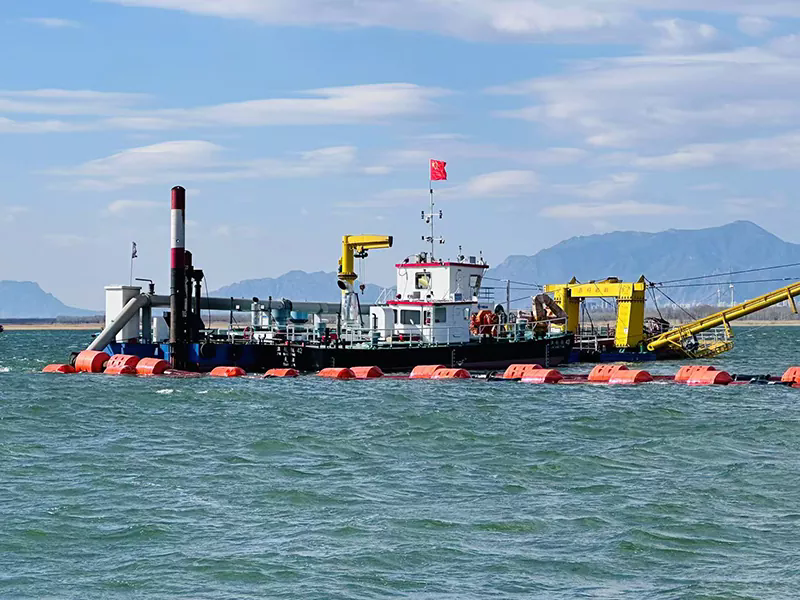
A dredging project manager reviews the site survey for a land reclamation project in a coastal lagoon. The water depth at low tide is 2.8 meters. The cutter suction dredger has a draft of 1.8 meters. The Tugboat that will assist with the pipeline positioning and the anchor handling has a draft of 2.4 meters. The manager realizes that the tugboat can only operate during a 4-hour window around high tide. The project schedule must be built around this window. This is the reality of shallow water dredging support. The tugboat is not just a towing vessel. It is a positioning tool, an anchor handler, and a safety standby vessel. Its effectiveness depends on matching its draft and maneuverability to the water depth. This guide explains how a tugboat works alongside a dredger in shallow waters.
1. Why Does Draft Matter More Than Bollard Pull in Shallow Water?
The bollard pull is the maximum pulling force the Tugboat can generate. In deep water, a higher bollard pull is always better. In shallow water, the draft determines whether the tugboat can access the work area at all. A tugboat with a high bollard pull but a deep draft may be unable to reach the dredger during low tide. The table below shows the relationship between draft, water depth, and under-keel clearance.
| Draft (m) | Water depth (m) | Under-keel clearance (m) | Operational status |
| 1.8 | 2.8 | 1.0 | Safe for all tides |
| 2.2 | 2.8 | 0.6 | Safe at mid to high tide |
| 2.4 | 2.8 | 0.4 | High tide only |
| 2.6 | 2.8 | 0.2 | Marginal; risk of grounding |
| 2.8 | 2.8 | 0.0 | Grounding; not operational |
In our factory, we design Tugboat units with shallow draft hulls for inland and coastal dredging support. The hull shape is optimized to provide a draft of 1.5 to 2.0 meters while maintaining a bollard pull of 20 to 40 tons. Qingzhou City Dingke Dredger Equipment Co., Ltd. has been manufacturing dredging support vessels for over 12 years. We provide the draft and bollard pull specifications for each model so that the project manager can plan the tide window.
2. What Pushing Methods Are Used in Shallow Water Dredging Support?
There are three methods for a Tugboat to assist a dredger in shallow water: pushing, pulling, and holding. Pushing is used to move the dredger or the pipeline into position. The tugboat pushes against the dredger's hull with its bow or its side. Pulling is used to tow the dredger or the pipeline float. The tugboat uses its winch and towline. Holding is used to maintain the position of the dredger while it works. The tugboat uses its anchor or its dynamic positioning system. The table below compares the methods for shallow water applications.
| Method | Typical use | Draft requirement | Maneuverability requirement |
| Pushing (bow-to-stern) | Positioning the dredger | Moderate | High (thrusters) |
| Pushing (side-to-side) | Holding position in current | Low | High (thrusters) |
| Pulling (towline) | Moving pipeline floats | Moderate | Moderate |
| Holding (anchor) | Staying in position during work | Low | Low (anchor handling) |
In shallow water, the most effective method is often the side-push, where the tugboat pushes against the dredger's hull with its side. This allows the tugboat to maintain contact without the risk of the towline fouling on the bottom. The tugboat must have bow thrusters and a reliable engine control system to maintain a steady push. In our factory, we equip our Tugboat units with twin screws and bow thrusters for precise maneuverability in shallow water. Qingzhou City Dingke Dredger Equipment Co., Ltd. provides training for the tugboat crew on shallow water pushing techniques.
3. How Do Tide Windows and Anchor Placement Affect Efficiency?
The tide window is the period when the water depth is sufficient for the Tugboat to operate. The window may be only 2 to 4 hours per day in a shallow lagoon. The project manager must schedule the tugboat operations within this window. The anchor placement is also critical. The dredger's anchors must be placed far enough from the dredger to provide a stable working position, but not so far that they interfere with the tugboat's access. The table below shows the effect of tide window and anchor placement on daily production.
| Condition | Tide window (hours/day) | Anchor placement | Daily dredging output (m³) |
| Optimal | 6 – 8 | Wide spread; no interference | 12,000 |
| Moderate | 4 – 6 | Moderate spread | 8,000 |
| Restricted | 2 – 4 | Narrow spread; tugboat access limited | 4,500 |
| Poor | < 2 | Anchor interference | 2,000 |
Project manager's note: In a recent land reclamation project, we increased the daily output from 4,500 m³ to 8,000 m³ by adjusting the anchor spread and scheduling the Tugboat operations to coincide with the high tide window. The key was to pre-position the anchors at low tide, so that the tugboat could work immediately when the tide came in. We also used a shallow draft tugboat with a draft of 1.6 meters, which allowed a 6-hour window instead of a 2-hour window. Qingzhou City Dingke Dredger Equipment Co., Ltd. provides tide planning and anchor layout support for our customers.
4. What Safety Measures Are Critical for Tugboat Operations in Shallow Water?
Shallow water operations present specific safety risks. The first is the risk of grounding. The Tugboat must have a depth sounder and a GPS with a chart overlay to monitor the under-keel clearance. The second is the risk of collision with the dredger's pipeline or anchors. The tugboat must maintain a safe distance from the pipeline floats and the anchor lines. The third is the risk of capsizing due to the shallow water effect. In shallow water, the tugboat's hull can squat, which reduces the under-keel clearance and can cause instability. The table below shows the safety measures and their requirements.
| Safety measure | Requirement | Verification method |
| Depth monitoring | Echo sounder with alarm | Pre-operation check |
| Position monitoring | GPS with chart overlay | Pre-operation check |
| Pipeline clearance | ≥ 10 m from pipeline floats | Visual and radar |
| Anchor clearance | ≥ 20 m from anchor lines | Visual and radar |
| Squat calculation | Under-keel clearance ≥ 0.3 m | Calculation table |
In our factory, we equip our Tugboat units with echo sounders, GPS, and radar as standard equipment. We also provide a squat calculation table that allows the crew to determine the maximum safe speed for the water depth. Qingzhou City Dingke Dredger Equipment Co., Ltd. recommends that all shallow water operations be conducted with a safety standby vessel and a dive team on call.
Frequently Asked Questions About Tugboat Operations in Shallow Water Dredging
Summary for Project Managers and Marine Supervisors
A Tugboat working alongside a dredger in shallow water must be selected based on draft, maneuverability, and tide window rather than bollard pull alone. The side-push method is the most effective for positioning the dredger in shallow water. The tide window and anchor placement determine the daily production output. Safety measures such as depth monitoring, squat calculation, and pipeline clearance are critical. By matching the tugboat to the site conditions, the project manager can maximize the dredging efficiency and minimize the risk of grounding. Qingzhou City Dingke Dredger Equipment Co., Ltd. has been manufacturing dredging support vessels for over 12 years and provides full operational support for our customers.
Qingzhou City Dingke Dredger Equipment Co., Ltd. manufactures Tugboat units with shallow draft hulls, twin screws, bow thrusters, and standard navigation equipment. We provide draft and bollard pull specifications, squat calculation tables, and operational training for all of our products.