

How Does a Supply Water Intake Floating Ship Improve Reliable Water Extraction?
2026-04-07
Abstract: Water intake systems are critical for municipal supply, industrial operations, and environmental management. Traditional fixed intake structures often struggle with fluctuating water levels, sedimentation, and maintenance challenges. A Supply Water Intake Floating Ship offers a flexible, efficient, and cost-effective alternative. This article explores how floating intake vessels function, their engineering advantages, key applications, and how they address common customer pain points in water extraction projects.
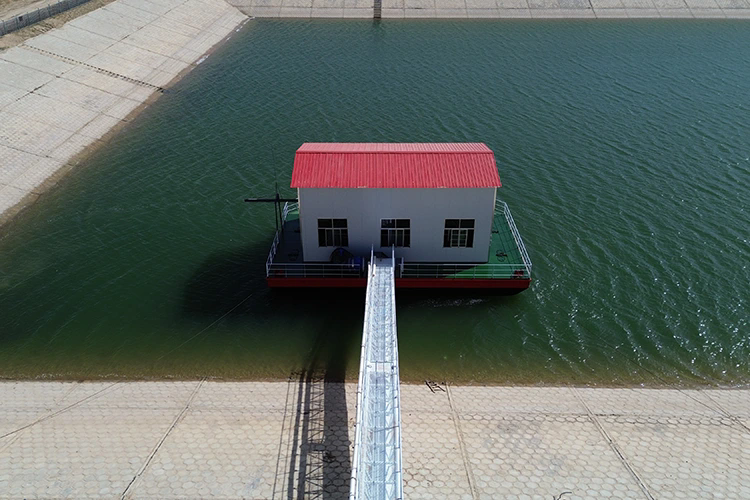
Table of Contents
- 1. Introduction
- 2. What Is a Supply Water Intake Floating Ship?
- 3. How Does It Work?
- 4. Key Advantages Over Traditional Systems
- 5. Main Application Scenarios
- 6. Core Components and Design Features
- 7. Floating vs Fixed Intake Systems
- 8. How to Choose the Right Solution
- 9. FAQ
1. Introduction
Water intake infrastructure is the backbone of urban water supply and industrial production. However, many projects encounter challenges such as fluctuating water levels, high sediment concentration, and costly civil construction. These issues often lead to inefficiencies, operational downtime, and increased lifecycle costs.
A Supply Water Intake Floating Ship emerges as a modern engineering solution that addresses these issues through mobility, adaptability, and modular design. Companies like HAIDING SHIPYARD have been at the forefront of developing such advanced floating systems, providing reliable solutions for complex water environments.
2. What Is a Supply Water Intake Floating Ship?
A Supply Water Intake Floating Ship is a floating platform equipped with pumping systems, pipelines, filtration units, and control equipment designed to extract water directly from rivers, lakes, or reservoirs.
- Mounted on a buoyant structure (barge or pontoon)
- Anchored but capable of adjusting position
- Integrated with pumps and intake pipelines
- Designed for rapid deployment and scalability
Unlike traditional fixed intake stations, this system floats on the water surface, allowing it to adapt dynamically to environmental changes.
3. How Does It Work?
The operation of a floating intake ship is straightforward yet highly efficient. It follows a systematic process:
- Water is drawn through submerged intake pipes
- Filters remove debris and sediment
- High-capacity pumps transfer water to onshore pipelines
- Water is delivered to treatment plants or industrial systems
Because the vessel floats, the intake point remains at an optimal depth, avoiding issues like sediment accumulation or dry intake during low water levels.
4. Key Advantages Over Traditional Systems
One of the main reasons clients choose floating intake ships is their ability to solve persistent operational challenges.
| Challenge | Traditional Intake | Floating Intake Ship |
|---|---|---|
| Water Level Fluctuation | Fixed elevation causes inefficiency | Automatically adjusts with water level |
| Construction Cost | High civil engineering cost | Lower installation investment |
| Maintenance | Difficult and costly | Easier access and servicing |
| Deployment Time | Long construction cycle | Rapid deployment |
These advantages translate into reduced downtime, improved reliability, and lower total cost of ownership.
5. Main Application Scenarios
Supply Water Intake Floating Ships are widely used across multiple industries:
- Municipal water supply systems
- Emergency water supply during drought
- Industrial cooling water intake
- Mining and construction water supply
- Environmental water management projects
Their versatility makes them suitable for both temporary and permanent installations.
6. Core Components and Design Features
A high-quality floating intake ship integrates multiple engineering systems:
- Floating Platform: Provides buoyancy and structural stability
- Pumping System: High-efficiency pumps for continuous operation
- Intake Structure: Designed to minimize debris intake
- Mooring System: Ensures positional stability
- Control System: Enables automation and remote monitoring
Manufacturers like HAIDING SHIPYARD focus on modular construction, allowing customization based on project requirements.
7. Floating vs Fixed Intake Systems
Choosing between floating and fixed systems depends on project conditions. Below is a simplified comparison:
- Floating Systems: Ideal for variable water levels and remote locations
- Fixed Systems: Suitable for stable environments with long-term infrastructure
In most modern water conservancy projects, floating systems are increasingly preferred due to their flexibility and cost efficiency.
8. How to Choose the Right Solution
When selecting a Supply Water Intake Floating Ship, consider the following factors:
- Water depth and fluctuation range
- Required flow rate and pumping capacity
- Water quality and sediment levels
- Installation environment
- Budget and timeline
Working with an experienced manufacturer such as HAIDING SHIPYARD ensures that the system is engineered to meet specific operational demands.
For more technical insights, you may explore this product page: Supply Water Intake Floating Ship Details
9. FAQ
Q1: Is a floating intake ship suitable for all water bodies?
Yes, it can be adapted for rivers, lakes, and reservoirs, but design adjustments may be required.
Q2: How long does installation take?
Compared to traditional systems, installation is significantly faster, often completed within weeks.
Q3: What about maintenance?
Maintenance is easier due to direct access to onboard equipment.
Q4: Can it handle extreme weather conditions?
Properly designed systems include reinforced mooring and structural stability to withstand harsh environments.
Q5: Is customization available?
Yes, manufacturers like HAIDING SHIPYARD offer tailored solutions based on project needs.
In conclusion, a Supply Water Intake Floating Ship represents a highly efficient and adaptable solution for modern water extraction challenges. Its ability to overcome fluctuating water levels, reduce costs, and simplify maintenance makes it an ideal choice for a wide range of applications.
If you are looking for a reliable and high-performance floating intake solution, contact us today to explore how HAIDING SHIPYARD can support your next water supply project with customized engineering expertise.