

How Does a Sectional Barge Solve Complex Marine Transport Challenges?
2026-02-11
Article Summary
A sectional barge is a modular floating platform engineered to address transportation, construction, and logistics challenges in shallow waters, remote regions, and dynamic project environments. This article explains how a sectional barge works, what problems it solves, and how to select the right configuration for demanding marine operations. Through structured analysis, technical comparisons, and practical guidance, readers gain a clear understanding of why sectional barges have become a preferred solution for modern marine projects.
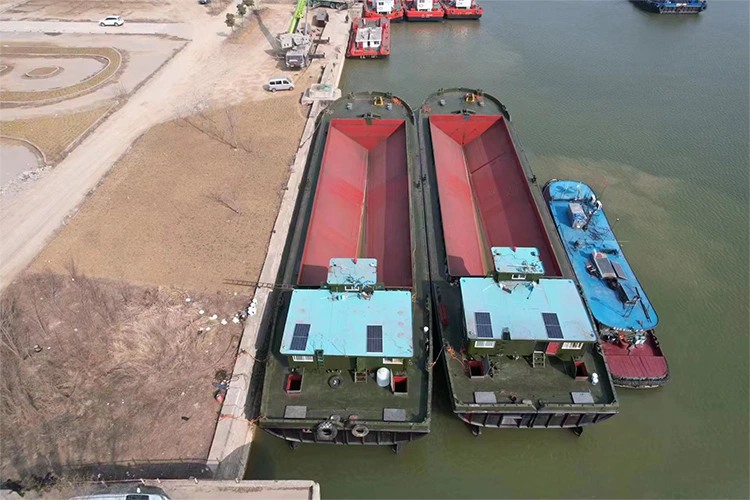
Table of Contents
- Overview of Sectional Barge Systems
- Key Challenges in Marine Transport
- How a Sectional Barge Works
- Core Advantages of Sectional Barges
- Typical Applications and Use Cases
- How to Choose the Right Sectional Barge
- Sectional Barge vs. Traditional Barges
- Frequently Asked Questions
- Conclusion and Contact Information
Overview of Sectional Barge Systems
A sectional barge is composed of multiple standardized steel or aluminum modules that can be connected horizontally and vertically to form a single working platform. Each section is designed for compatibility, allowing flexible assembly based on project requirements. Unlike monolithic barges, sectional barges are transported in parts and assembled on-site, significantly reducing logistical barriers.
These systems are widely used in dredging, offshore construction, bridge building, and heavy cargo transport where access, draft limitations, or variable load demands make conventional vessels impractical.
Key Challenges in Marine Transport
Marine contractors and project owners frequently encounter operational obstacles that increase cost and risk. Common challenges include:
- Limited access to shallow or inland waterways
- High transportation costs for oversized vessels
- Inflexible deck size and load distribution
- Difficulty mobilizing equipment in remote regions
- Project scope changes requiring rapid reconfiguration
Sectional barges directly address these issues by offering modularity, adaptability, and efficient transport solutions.
How a Sectional Barge Works
Each barge section functions as an independent buoyant unit with integrated connection points. When assembled, these sections form a rigid platform capable of supporting heavy loads. The assembly process typically involves:
- Transporting individual sections via truck, rail, or standard vessels
- Launching sections into the water near the project site
- Aligning and securing modules using mechanical locking systems
- Installing deck equipment, spuds, or ramps as required
This approach allows rapid mobilization while maintaining structural integrity and operational safety.
Core Advantages of Sectional Barges
The modular nature of sectional barges provides measurable benefits across multiple project phases.
| Advantage | Practical Impact |
|---|---|
| Modular Design | Customizable deck size and load capacity for each project |
| Easy Transportation | Reduced mobilization costs and simplified logistics |
| Shallow Draft | Operability in rivers, lakes, and nearshore zones |
| Scalability | Sections can be added or removed as project needs evolve |
| Durability | Engineered for repeated assembly and long-term use |
Typical Applications and Use Cases
Sectional barges are deployed across a wide range of industries due to their adaptability.
- Dredging operations and sediment management
- Bridge and pier construction
- Offshore wind and marine infrastructure projects
- Heavy equipment and project cargo transport
- Temporary work platforms and floating docks
Their ability to form stable, large-area platforms makes them suitable for both short-term and long-term deployments.
How to Choose the Right Sectional Barge
Selecting an appropriate sectional barge requires evaluating operational parameters rather than relying solely on size or capacity.
- Required deck area and payload distribution
- Water depth and environmental conditions
- Frequency of assembly and disassembly
- Compatibility with cranes, spuds, or ramps
- Compliance with applicable marine standards
A well-matched configuration improves safety, efficiency, and long-term return on investment.
Sectional Barge vs. Traditional Barges
Understanding the differences between sectional and traditional barges clarifies their strategic value.
| Criteria | Sectional Barge | Traditional Barge |
|---|---|---|
| Transport | Shipped in modules | Requires full-size towing |
| Flexibility | Highly configurable | Fixed dimensions |
| Mobilization | Rapid on-site assembly | Limited by access routes |
| Project Adaptability | Easy to modify | Minimal adaptability |
Frequently Asked Questions
What is the typical lifespan of a sectional barge?
With proper maintenance, sectional barges are designed for long-term service and can support multiple projects over decades.
Can sectional barges support heavy equipment?
Yes. When properly configured, they can support cranes, excavators, and other heavy machinery with stable load distribution.
Are sectional barges suitable for offshore use?
They are commonly used in nearshore and protected offshore environments, particularly when flexibility and rapid deployment are required.
Conclusion and Contact Information
A sectional barge offers a practical and adaptable solution for complex marine transport and construction challenges. Its modular structure reduces logistical constraints, improves operational efficiency, and allows project teams to respond quickly to changing requirements. For organizations seeking reliable modular barge systems, HAIDING SHIPYARD provides engineered solutions designed for demanding marine environments. To explore configurations or discuss project requirements, contact us today and connect with a team that understands modular marine engineering.