

How Does a Navtex Printer Improve Maritime Safety?
2026-03-20
Navtex printers are essential devices on modern vessels to automatically receive and print vital maritime safety information such as navigational warnings, weather forecasts, and distress alerts. This article explains what a Navtex printer is, how it works, practical benefits, how to choose the right model, and daily operational tips. Whether you are a ship operator, fleet manager, or marine equipment purchaser, you will gain actionable insight to solve pain points like signal reliability, message clarity, and maintenance challenges.
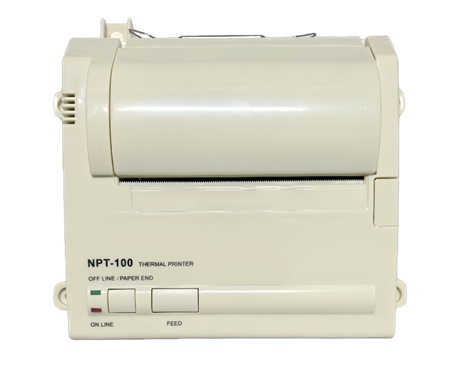
Table of Contents
What Is a Navtex Printer?
A Navtex printer is a dedicated communications peripheral designed to automatically receive and print messages transmitted via the NAVTEX (Navigational Telex) system. NAVTEX is an international automated medium-frequency (MF) broadcast system used by maritime authorities around the world to disseminate important safety and navigational data to ships at sea.
- Automatic reception of NAVTEX broadcasts
- Reliable printing of incoming messages
- Integration with shipboard communication systems
Unlike general-purpose printers, Navtex printers are optimized for maritime conditions: they withstand vibration, humidity, and long-term duty cycles while providing clear, legible output of safety-critical data.
How Does a Navtex Printer Work?
Navtex printers rely on the underlying NAVTEX receiver to tune into scheduled broadcasts from coastal stations. When a message is received, the attached printer automatically prints the text so that crew members can easily read, archive, and distribute the information.
Here’s the typical workflow:
- Signal Reception: The receiver captures incoming NAVTEX transmissions at predefined frequencies (usually 518 kHz for international broadcasts).
- Decoding: The system decodes the digital text message.
- Print Trigger: The Navtex printer activates and prints the message in real time.
- Archive & Review: Crew members review and store the printout for operational reference.
This automatic process ensures that even if crew members are occupied elsewhere, no important safety message goes unread.
Why a Navtex Printer Matters at Sea
In the marine environment, access to timely and accurate safety information can mean the difference between smooth passage and serious risks. Navtex printers provide a reliable way to capture, persist, and distribute messages that may affect vessel routing, weather response, or distress coordination.
Key operational advantages include:
- Instant Access: Automatically printed reports ensure no delays in receiving updates.
- Record Keeping: Hard copies serve as documented evidence of received warnings and notices.
- Compliance: Many maritime regulations require logging of navigational warnings and weather bulletins.
- Reduces Human Error: Automatic printing minimizes missed messages due to oversight.
Key Features to Look For
Choosing the right Navtex printer involves balancing performance, durability, and compatibility with your onboard systems. Below are essential features that solve common customer pain points:
- High-Contrast Print: Ensures readability even in low-light conditions.
- Marine-Grade Build: Corrosion-resistant materials and shock-absorbing design.
- Low Power Consumption: Critical for vessels operating with limited power budgets.
- Automatic Feed & Tear: Streamlines handling of long messages without manual intervention.
- Easy Integration: Support for NMEA 0183/2000 or other marine communication standards.
Common Issues and Solutions
Even well-specified Navtex printers can encounter issues. Here are typical problems and practical fixes:
- Poor Signal Strength: Verify antenna position, grounding, and cable integrity.
- Unreadable Printouts: Replace ribbon/tape media, adjust contrast settings, or switch to thermal printing.
- Feed Jams: Clean paper path regularly and avoid overloading paper rolls.
- Power Interruptions: Use uninterruptible power supplies (UPS) to avoid missed messages during brownouts.
Routine maintenance and correct installation significantly improve uptime and reliability.
Navtex Printer Comparison
| Feature | Standard Models | Advanced Marine Models |
|---|---|---|
| Print Technology | Dot Matrix | Thermal |
| Operating Environment | General Maritime | Extended Temperature & Moisture Protection |
| Integration | Basic Serial | NMEA & Ethernet Support |
| Maintenance Frequency | Medium | Low |
| Cost | Economical | Higher |
Frequently Asked Questions
Q: What frequency does Navtex use?
Navtex broadcasts are typically transmitted on the international safety frequency of 518 kHz, with some regions using 490 kHz or 4209.5 kHz for national or local services.
Q: Can a Navtex printer work without constant crew monitoring?
Yes, Navtex printers are designed for autonomous operation: they automatically print incoming transmissions. Crew review and archive the printouts as needed.
Q: How often should I service my Navtex printer?
Service intervals depend on usage intensity, but general practice is to inspect and clean the unit monthly, with a more thorough service quarterly.
Q: Is it possible to integrate Navtex output into digital shipboard systems?
Many modern Navtex units support digital interfaces like NMEA 0183 or Ethernet, allowing messages to be forwarded to electronic chart systems or bridge computers.
Conclusion & Contact
A reliable Navtex printer is a cornerstone of maritime safety, enabling vessels to receive, print, and archive critical navigational and weather information. Prioritize features that ensure durability, signal clarity, and seamless integration to solve operational pain points effectively. For high-quality maritime communications equipment tailored to professional needs, including reliable Navtex printers, explore solutions from Malins Marine.
Contact us today to discuss your vessel’s requirements and find the perfect Navtex printer that enhances situational awareness and compliance at sea.