

How Does a Law Enforcement Boat Improve Maritime Security and Rapid Response?
2026-03-13
Article Summary
Law enforcement agencies operating in coastal waters, rivers, and ports require reliable vessels that can respond quickly to emergencies and enforce maritime regulations effectively. A law enforcement boat is specifically engineered to support patrol missions, rescue operations, surveillance, and tactical deployment in challenging marine environments. This article explains how law enforcement boats function, the key technologies they incorporate, and how they address common operational challenges faced by maritime authorities. It also outlines the major design features, typical specifications, and practical benefits that modern enforcement vessels provide.
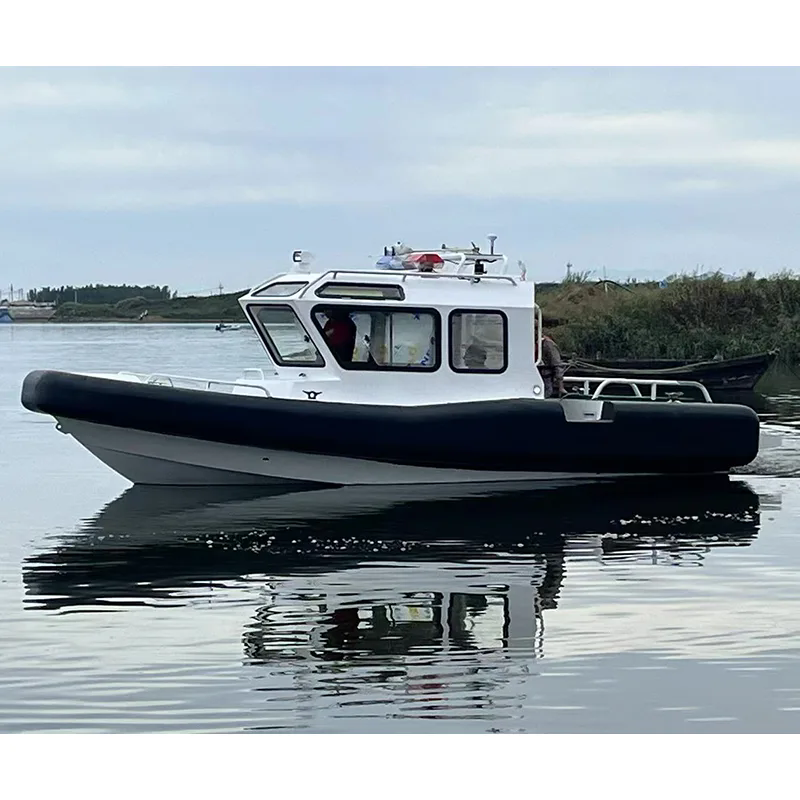
Table of Contents
- Introduction to Law Enforcement Boats
- How Law Enforcement Boats Work in Maritime Operations
- Key Structural and Technical Features
- Main Applications in Maritime Security
- Typical Technical Parameters of a Law Enforcement Boat
- Advantages for Patrol and Emergency Response
- Factors to Consider When Choosing a Law Enforcement Boat
- Frequently Asked Questions
- Conclusion
Outline
- Overview of law enforcement boats
- Operational mechanisms and mission roles
- Design elements that enhance safety and efficiency
- Practical use scenarios in law enforcement
- Technical specifications and parameters
- Benefits and selection considerations
- Common user questions and expert answers
Introduction to Law Enforcement Boats
Maritime security is an essential component of national safety and economic stability. Coastal patrol units, marine police, and port authorities require specialized vessels capable of performing surveillance, interception, rescue missions, and law enforcement tasks on water.
A law enforcement boat is a purpose-built patrol vessel designed for durability, speed, and operational flexibility. Unlike recreational boats, these vessels are engineered to withstand demanding operational conditions while supporting advanced navigation and communication equipment.
Organizations responsible for maritime security often face several operational challenges:
- Rapid response to emergencies and illegal activities
- Operating in rough water conditions
- Ensuring crew safety during high-risk missions
- Maintaining reliable communication and navigation systems
Modern vessels produced by manufacturers such as Lawada address these challenges through optimized hull structures, powerful propulsion systems, and mission-specific equipment integration.
How Law Enforcement Boats Work in Maritime Operations
Law enforcement boats function as mobile command platforms on water. Their operational workflow typically involves surveillance, rapid deployment, and tactical maneuvering.
The process usually includes the following stages:
- Patrolling designated maritime zones
- Monitoring vessel activity using radar and navigation systems
- Intercepting suspicious or unauthorized vessels
- Conducting boarding inspections or rescue operations
- Providing emergency response support
High-speed propulsion allows officers to reach target locations quickly. At the same time, reinforced hull structures enable stable operation even in waves or strong currents.
Integrated electronic systems further enhance operational capability. These may include GPS navigation, night-vision systems, communication radios, and surveillance equipment that help law enforcement teams maintain situational awareness during missions.
Key Structural and Technical Features
A high-performance law enforcement boat combines engineering reliability with mission-specific functionality. The following features are commonly found in modern patrol vessels.
- Reinforced Hull Structure – Designed to withstand impacts and harsh marine environments.
- High-Power Outboard or Inboard Engines – Provide rapid acceleration and high cruising speeds.
- Shock-Absorbing Seating – Protects crew members during high-speed navigation.
- Advanced Navigation Systems – GPS, radar, and digital chart displays improve operational precision.
- Communication Equipment – Enables coordination with other vessels and command centers.
- Modular Deck Layout – Allows installation of surveillance equipment, searchlights, or rescue gear.
These design features ensure that the vessel can perform effectively across a wide range of enforcement and emergency situations.
Main Applications in Maritime Security
Law enforcement boats are used across multiple maritime sectors. Their versatility makes them essential tools for maintaining order and safety on waterways.
- Coastal and harbor patrol
- Anti-smuggling and anti-piracy operations
- Search and rescue missions
- Environmental monitoring and enforcement
- Border security patrol
- Emergency response and disaster relief
For example, during search and rescue operations, a fast patrol boat can reach distressed vessels quickly and deploy life-saving equipment. In port security missions, these vessels help authorities monitor ship movements and enforce maritime regulations.
Typical Technical Parameters of a Law Enforcement Boat
Specifications may vary depending on mission requirements and vessel size. The following table illustrates typical parameters for a medium-size law enforcement patrol boat.
| Parameter | Description |
| Boat Length | Approximately 7.5 – 8 meters |
| Hull Material | Marine-grade aluminum alloy or reinforced fiberglass |
| Engine Type | Twin outboard engines |
| Maximum Speed | 40 – 50 knots depending on configuration |
| Crew Capacity | 6 – 10 personnel |
| Fuel Tank Capacity | 300 – 500 liters |
| Navigation System | GPS, radar, electronic chart system |
| Operational Range | 200 – 300 nautical miles |
These specifications demonstrate the balance between speed, endurance, and operational capability required for law enforcement missions.
Advantages for Patrol and Emergency Response
Compared with conventional utility boats, law enforcement vessels provide several operational advantages that significantly enhance maritime security capabilities.
- Rapid Deployment – High speed enables quick response to incidents.
- Operational Flexibility – Suitable for rivers, coastal areas, and offshore patrol.
- Enhanced Safety – Reinforced hulls and safety equipment protect crew members.
- Mission Customization – Modular systems allow installation of specialized equipment.
- Durability – Built to withstand long-term use in demanding environments.
Manufacturers like Lawada focus on integrating these advantages into vessel design to ensure reliable performance for maritime enforcement agencies worldwide.
Factors to Consider When Choosing a Law Enforcement Boat
Selecting the right patrol vessel requires careful evaluation of mission requirements and operational conditions.
Key factors include:
- Operating environment such as coastal waters or rivers
- Required maximum speed and range
- Crew capacity and deck layout
- Navigation and surveillance equipment integration
- Hull material and durability
- Maintenance and operational cost
A properly selected vessel can significantly improve efficiency and safety during maritime law enforcement operations.
Frequently Asked Questions
1. What is the primary purpose of a law enforcement boat?
The main purpose is to support maritime security operations such as patrol, interception, search and rescue, and regulatory enforcement on water.
2. What materials are typically used in law enforcement boat construction?
Most patrol boats are built with marine-grade aluminum or reinforced fiberglass because these materials provide excellent strength, corrosion resistance, and durability.
3. How fast can a law enforcement boat travel?
Many modern patrol vessels can reach speeds between 40 and 50 knots depending on engine configuration and hull design.
4. Can law enforcement boats operate in rough sea conditions?
Yes. Their reinforced hull structures, advanced stabilization systems, and powerful engines allow them to maintain stability and control even in challenging sea states.
Conclusion
A well-designed law enforcement boat plays a crucial role in protecting coastal areas, maintaining order on waterways, and ensuring rapid emergency response. Through high-speed propulsion, reinforced hull construction, and advanced navigation systems, these vessels provide the reliability and performance required for demanding maritime missions.
As maritime security challenges continue to evolve, modern patrol vessels developed by companies such as Lawada offer practical solutions that combine durability, safety, and operational efficiency.
If your organization is planning to upgrade or deploy new patrol vessels, selecting a professionally engineered solution can greatly improve mission effectiveness. Contact us today to learn more about advanced law enforcement boat designs, customization options, and how the right vessel can enhance your maritime security operations.