

How Does a Jack Up Living Quarter Platform Differ from a Fixed Living Quarter Platform
2026-09-22
Offshore accommodation units are not interchangeable, and choosing the wrong type can affect project timelines, safety, and total cost. A Jack Up Living Quarter Platform and a fixed living quarter platform serve similar human-habitation functions, yet they differ fundamentally in structure, mobility, installation, and operational flexibility. HAIDING SHIPYARD has designed and delivered both types for clients across the offshore oil, gas, and renewable energy sectors, and this comparison reflects the engineering and commercial factors that matter most.
Definition and Structural Concept
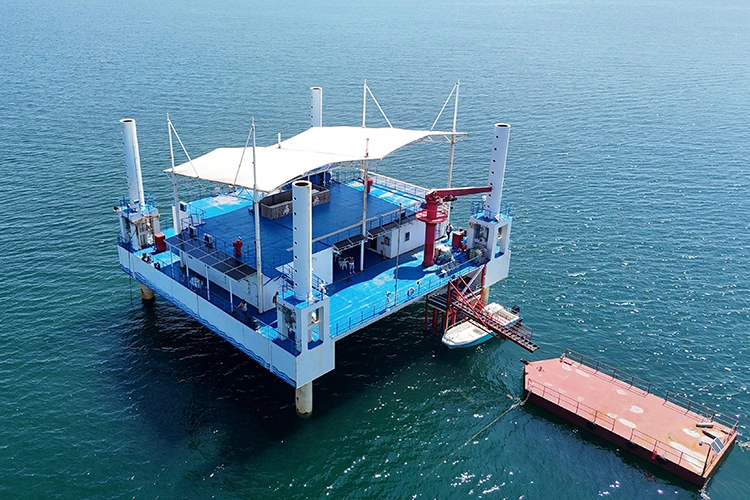
A Jack Up Living Quarter Platform is a self-elevating unit equipped with retractable legs and a jacking system. It is towed to location, then the legs are lowered to the seabed and the hull is lifted above wave action. A fixed living quarter platform is a bottom-founded structure, typically a steel jacket or gravity-based foundation, permanently installed at one location.
| Feature | Jack Up Living Quarter Platform | Fixed Living Quarter Platform |
|---|---|---|
| Mobility | Relocatable, self-elevating | Permanent, site-specific |
| Installation | Towed and jacked up on site | Heavy lift or float-over |
| Water depth | Typically 5–120 m | Depends on jacket design |
| Reuse | High, redeployable | Low, limited reuse |
| Capital cost | Higher initial unit cost | Lower unit cost, higher installation |
| Schedule | Faster relocation | Longer offshore installation |
Key Differences That Drive Selection
Mobility and Redeployment. The most obvious distinction is that a Jack Up Living Quarter Platform can be moved. Operators working marginal fields or short-cycle campaigns favour this because the asset can be reused across locations. A fixed platform cannot be relocated economically.
Installation and Commissioning. A Jack Up Living Quarter Platform requires a tow, a pre-load and jacking operation, and a connection to the host facility. A fixed platform needs offshore heavy lifting, piling, or grouting, which increases weather sensitivity and vessel spread cost. HAIDING SHIPYARD manages both scopes, including leg fabrication, jacking system integration, and sea fastening.
Structural and Safety Design. A Jack Up Living Quarter Platform must resist leg penetration, punch-through, and dynamic jacking loads, while a fixed platform is governed by fatigue and wave-in-deck criteria. Both must meet class and flag requirements for fire, blast, and evacuation, but the load paths and failure modes differ.
Cost Profile and Lifecycle Value. A fixed platform usually wins on a single long-life field with stable reservoir performance. A Jack Up Living Quarter Platform wins when relocation, fast deployment, or multi-field campaigns are expected. HAIDING SHIPYARD supports lifecycle cost modelling so clients compare total cost of ownership rather than headline fabrication price.
Frequently Asked Questions
Q: Can a Jack Up Living Quarter Platform operate in deeper water than a fixed platform?
A: A Jack Up Living Quarter Platform is generally limited by leg length and soil conditions, with most units operating in 5 to 120 metres. Fixed platforms can exceed this in certain jacket designs, but they lose the relocation advantage.
Q: Is a Jack Up Living Quarter Platform more expensive than a fixed living quarter platform?
A: The unit fabrication cost is often higher because of the jacking system and legs. However, when relocation, reuse, and reduced offshore installation time are included, a Jack Up Living Quarter Platform can deliver lower total cost across multiple campaigns.
Q: How long does it take to install a Jack Up Living Quarter Platform offshore?
A: A typical Jack Up Living Quarter Platform installation takes several days to a few weeks, depending on water depth, soil pre-load, weather, and hook-up scope. A fixed platform installation usually takes longer because of piling and heavy lift operations.
Why This Matters for Project Decisions
Selecting between a Jack Up Living Quarter Platform and a fixed living quarter platform is a strategic decision, not only a technical one. It affects field development philosophy, contracting strategy, and long-term asset utilisation. HAIDING SHIPYARD provides front-end engineering, detailed design, construction, and commissioning support for both configurations, helping operators match the accommodation solution to the field lifecycle.
For project-specific guidance on Jack Up Living Quarter Platform design, fabrication, or conversion, contact HAIDING SHIPYARD today. Our engineering and project teams will review your water depth, soil data, accommodation requirements, and deployment schedule to recommend the most cost-effective solution. Reach out to HAIDING SHIPYARD for a technical proposal and budget estimate.