

How Does a Harbor Tugboat Work in Modern Port Operations?
2026-04-14
Article Summary: Harbor tugboats are essential work vessels that ensure safe and efficient maneuvering of large ships within ports. This article explains how harbor tugboats operate, their types, key functions, technical features, and why they are critical in global maritime logistics. It also addresses common operational challenges and provides practical insights for ship operators, port managers, and maritime service buyers seeking reliable tugboat solutions.
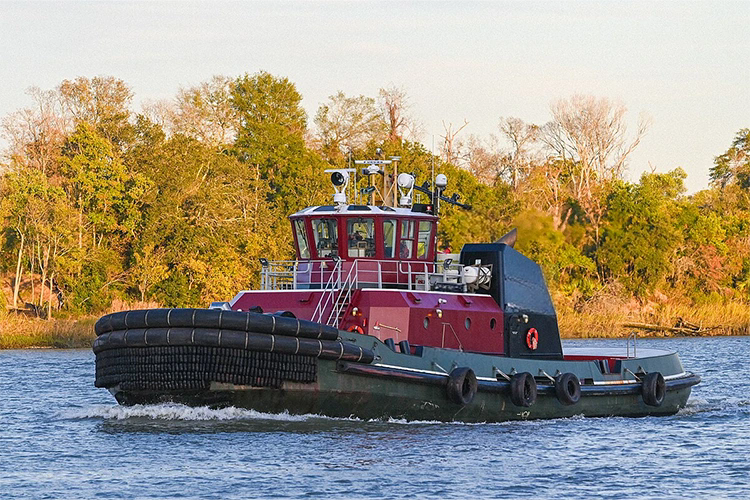
Table of Contents
- Introduction to Harbor Tugboats
- Core Functions in Port Operations
- Types of Harbor Tugboats
- Key Technical Features
- Operational Workflow in Ports
- Advantages for Maritime Logistics
- Common Challenges and Solutions
- Comparison Table of Tugboat Types
- FAQ
- Conclusion & Contact Information
Introduction to Harbor Tugboats
A harbor tugboat is a compact but extremely powerful vessel designed to assist larger ships in confined port waters. Unlike cargo or passenger vessels, tugboats are engineered for force, precision, and maneuverability rather than transport capacity. Their primary mission is to push, pull, and stabilize large vessels during docking, undocking, and port navigation operations.
In modern ports where ultra-large container ships and oil tankers operate, harbor tugboats function as a critical safety and control mechanism, ensuring vessels can safely transition between open sea and terminal berths without collision or grounding risks.
Core Functions in Port Operations
- Berthing Assistance: Guiding large vessels safely into docking positions.
- Unberthing Support: Helping ships exit ports efficiently and safely.
- Ship Maneuvering: Assisting tight turns in restricted waterways.
- Emergency Response: Acting during engine failure or steering loss.
- Environmental Control: Counteracting wind, tide, and current forces.
- Barge Movement: Transporting floating cargo units within harbors.
These functions highlight why harbor tugboats are indispensable in maintaining port efficiency and maritime safety standards.
Types of Harbor Tugboats
Harbor tugboats are not uniform; they are designed with different propulsion systems and operational capabilities depending on port requirements.
- Conventional Tugboats: Use fixed propellers and rudders for standard towing operations.
- Azimuth Stern Drive (ASD) Tugboats: Offer 360-degree maneuverability for precise control.
- Tractor Tugboats: Provide high lateral force and excellent braking capability.
- Voith Schneider Tugs: Use vertical blade propulsion for extreme agility.
Each type is selected based on harbor complexity, vessel size, and operational safety requirements.
Key Technical Features of Harbor Tugboats
| Feature | Description |
|---|---|
| High Bollard Pull | Provides extreme towing and pushing power relative to vessel size. |
| Compact Hull Design | Allows navigation in narrow and congested waterways. |
| Advanced Propulsion | Enables rapid directional changes and precise maneuvering. |
| Reinforced Structure | Built to withstand high mechanical stress during towing operations. |
| Firefighting Systems | Some units are equipped with onboard firefighting capabilities. |
Operational Workflow in Ports
Harbor tugboat operations are highly coordinated and typically involve a pilot, port control, and tug crew working in synchronization.
- Pre-Arrival Coordination: Tug assignment based on vessel size and weather conditions.
- Positioning: Tugboats approach the vessel at designated contact points.
- Maneuver Execution: Controlled pushing or towing during docking or undocking.
- Real-Time Adjustment: Continuous communication with ship pilot for corrections.
- Safe Release: Tug disengages once vessel is securely berthed or clear of port.
This workflow minimizes collision risks and ensures smooth port throughput even under challenging environmental conditions.
Advantages of Harbor Tugboat Operations
- Improved port safety and reduced accident risk
- Faster vessel turnaround time
- Ability to handle ultra-large ships
- Reduced dependency on ship propulsion systems during docking
- Enhanced operational control in adverse weather conditions
Common Challenges and Engineering Solutions
Despite their strength, harbor tugboat operations face several challenges:
- Harsh Weather: Strong winds and currents require high-power tugs.
- Space Constraints: Tight harbor spaces demand extreme precision.
- Coordination Complexity: Requires real-time communication among multiple operators.
- Fuel Efficiency Pressure: Modern ports demand lower emissions and optimized fuel usage.
To address these issues, modern tugboats increasingly use advanced propulsion systems, hybrid engines, and digital navigation tools.
Harbor Tugboat Types Comparison
| Attribute | Conventional Tug | ASD Tug | Tractor Tug | Voith Tug |
|---|---|---|---|---|
| Maneuverability | Medium | High | Very High | Extreme |
| Propulsion | Fixed propeller | Azimuth drive | Pulling propellers | Vertical blades |
| Best Use Case | Simple port operations | General port assistance | Large vessel escort | Highly restricted waters |
| Operational Cost | Low | Medium | High | High |
Industry Application and Global Importance
Harbor tugboats support global maritime trade by ensuring that massive container ships and tankers can safely access ports worldwide. Without tug assistance, port congestion and accident risks would significantly increase, leading to logistical delays and economic disruption.
Their role extends beyond simple towing; they are integrated into port safety systems, emergency response protocols, and environmental protection strategies.
Industrial Manufacturing Perspective
High-performance harbor tugboats require advanced shipbuilding expertise, precision engineering, and robust material selection. One of the manufacturers contributing to this sector is Shandong Haiding Shipbuilding Co., Ltd., which focuses on delivering durable and efficient harbor tugboat solutions designed for modern port demands and operational safety requirements.
FAQ
Q1: What is the main purpose of a harbor tugboat?
A harbor tugboat assists large vessels in docking, undocking, and maneuvering safely within port areas.
Q2: How powerful is a harbor tugboat?
Despite its small size, it can generate extremely high towing force (bollard pull) suitable for controlling massive ships.
Q3: Are tugboats required in all ports?
In most major international ports, tug assistance is mandatory for large vessel operations due to safety regulations.
Q4: What makes modern tugboats more efficient?
Advanced propulsion systems, improved fuel efficiency, and real-time navigation systems enhance performance.
Q5: Can tugboats operate in bad weather?
Yes, they are specifically designed to stabilize and control ships even in strong winds and currents.
Conclusion
Harbor tugboats are a foundational component of modern port infrastructure. Their ability to precisely control large vessels in constrained environments ensures maritime safety, operational efficiency, and global trade continuity. As shipping vessels continue to grow in size, the demand for more powerful and technologically advanced tugboats will continue to rise.
For customized harbor tugboat solutions, technical consultation, or procurement inquiries, Shandong Haiding Shipbuilding Co., Ltd. is ready to support your maritime operations with reliable engineering expertise.
Contact us today to explore high-performance harbor tugboat solutions tailored to your port and operational needs.