

How Does a Bucket Dredger Work?
2026-04-28
Summary: Bucket dredgers are essential machinery in dredging operations, widely used for harbor maintenance, river deepening, and land reclamation. This article explores their working principles, advantages, key components, and maintenance tips to help you optimize your dredging projects efficiently. Qingzhou City Dingke Dredger Equipment Co., Ltd. provides advanced bucket dredgers designed for high performance and durability.
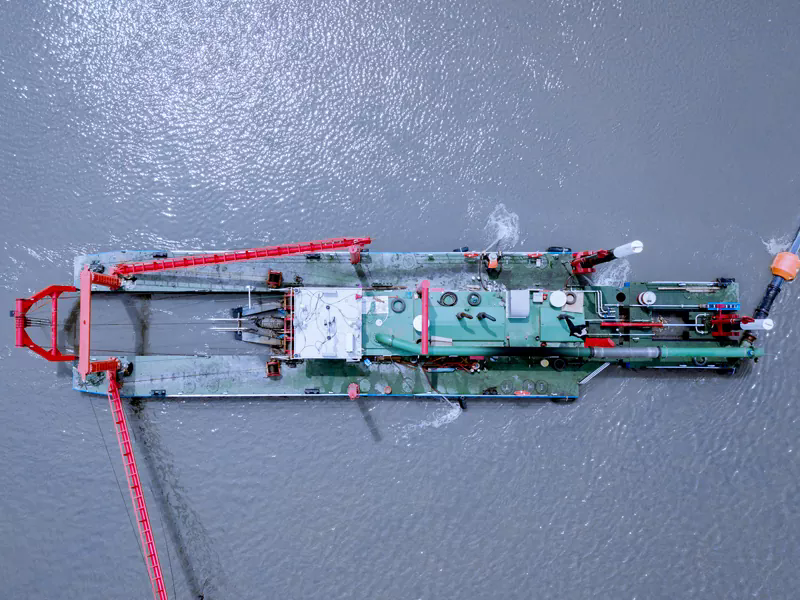
Table of Contents
- Introduction to Bucket Dredgers
- Working Principle
- Key Components
- Advantages of Bucket Dredgers
- Operational Tips
- Common Issues and Solutions
- FAQ
Introduction to Bucket Dredgers
A bucket dredger is a type of dredging vessel designed to remove sediments and debris from water bodies efficiently. Unlike suction dredgers, which rely on hydraulic suction, bucket dredgers use a mechanical system of buckets to scoop up material and deposit it onto barges or the shore. These machines are particularly effective for dense, compacted materials and precise excavation tasks.
Industries that benefit from bucket dredgers include:
- Port and harbor maintenance
- River and canal deepening
- Land reclamation projects
- Mining operations in water-rich environments
Qingzhou City Dingke Dredger Equipment Co., Ltd. manufactures robust bucket dredgers tailored for various industrial applications, ensuring reliability and efficiency on every project.
Working Principle
The working principle of a bucket dredger revolves around a continuous chain or ladder equipped with buckets. These buckets scoop up sediments from the water bed and transport them to the surface for disposal. The process is highly efficient for removing hard or sticky materials.
| Step | Description |
|---|---|
| 1 | Positioning the dredger at the desired location using anchors or spuds |
| 2 | Lowering the ladder or bucket chain into the water |
| 3 | Engaging the motor to rotate the bucket chain, collecting sediment |
| 4 | Conveying dredged material to the discharge area via conveyor belts or chutes |
This mechanical approach allows for precise dredging, minimal environmental disruption, and consistent sediment removal in challenging conditions.
Key Components
Understanding the major components of a bucket dredger is essential for maintenance and operational efficiency:
- Bucket Ladder: The primary structure holding the buckets, adjustable for different dredging depths.
- Buckets: Various sizes and shapes are available depending on material density.
- Drive System: Powers the bucket chain and ensures smooth operation.
- Spuds and Anchors: Stabilize the dredger during excavation.
- Conveyor or Discharge System: Transfers dredged material to storage or disposal areas.
Qingzhou City Dingke Dredger Equipment Co., Ltd. offers customizable components to match project requirements and improve overall efficiency.
Advantages of Bucket Dredgers
Bucket dredgers provide multiple benefits compared to other dredging methods:
- Ability to handle dense or sticky sediments
- Precise dredging for controlled depth and shape
- Continuous operation with minimal downtime
- Durable machinery with low maintenance cost
- Reduced environmental impact in sensitive water areas
Choosing a high-quality bucket dredger ensures maximum productivity and cost-effectiveness for long-term operations.
Operational Tips
Proper operation is key to extending the life of your bucket dredger:
- Regularly inspect bucket teeth and replace worn parts promptly.
- Lubricate drive systems according to manufacturer guidelines.
- Monitor water and sediment conditions to adjust dredging speed.
- Keep the discharge system clean to prevent blockages.
- Train operators thoroughly to avoid accidental equipment damage.
Following these practices helps maintain consistent dredging performance while minimizing repair costs.
Common Issues and Solutions
Even the best bucket dredgers may face operational challenges. Here are common problems and solutions:
| Issue | Cause | Solution |
|---|---|---|
| Bucket chain slipping | Worn sprockets or loose chain | Replace sprockets and adjust chain tension |
| Uneven dredging depth | Incorrect ladder angle | Adjust ladder positioning and spud height |
| Material blockage in conveyor | Sticky or oversized sediment | Clean conveyor and use appropriate bucket size |
Regular inspection and preventive maintenance can significantly reduce downtime and improve operational efficiency.
FAQ
Q1: Can bucket dredgers operate in shallow waters?
A1: Yes, bucket dredgers are versatile and can operate in both shallow and deep waters with adjustable ladder depth.
Q2: How often should maintenance be performed?
A2: Maintenance should be done weekly for critical components and monthly for complete system checks.
Q3: Are bucket dredgers environmentally safe?
A3: Yes, they minimize water turbidity and sediment spread compared to hydraulic dredgers.
Q4: What is the maximum dredging depth?
A4: Depth depends on the model, but Qingzhou City Dingke Dredger Equipment Co., Ltd. offers bucket dredgers capable of dredging up to 30 meters.
Investing in a reliable bucket dredger can greatly enhance your dredging operations. Qingzhou City Dingke Dredger Equipment Co., Ltd. provides top-quality machinery that combines efficiency, durability, and precision. For more details about our bucket dredgers, visit our product page or contact us today to discuss your project requirements.