

How Do Water Sports Cars Transform the Way People Experience Water Adventures?
2026-03-06
Article Summary
Water sports cars represent an exciting innovation in marine recreation, combining the design aesthetics of sports cars with the performance of high-speed jet boats. These vehicles offer a unique experience for tourism operators, water sports businesses, and adventure enthusiasts seeking something beyond traditional boats or jet skis. This article explains how water sports cars work, why they are becoming popular in water tourism markets, what features buyers should consider, and how modern manufacturers such as Lawada are redefining aquatic entertainment vehicles. Practical guidance is also provided to help buyers evaluate performance, safety, and investment potential.
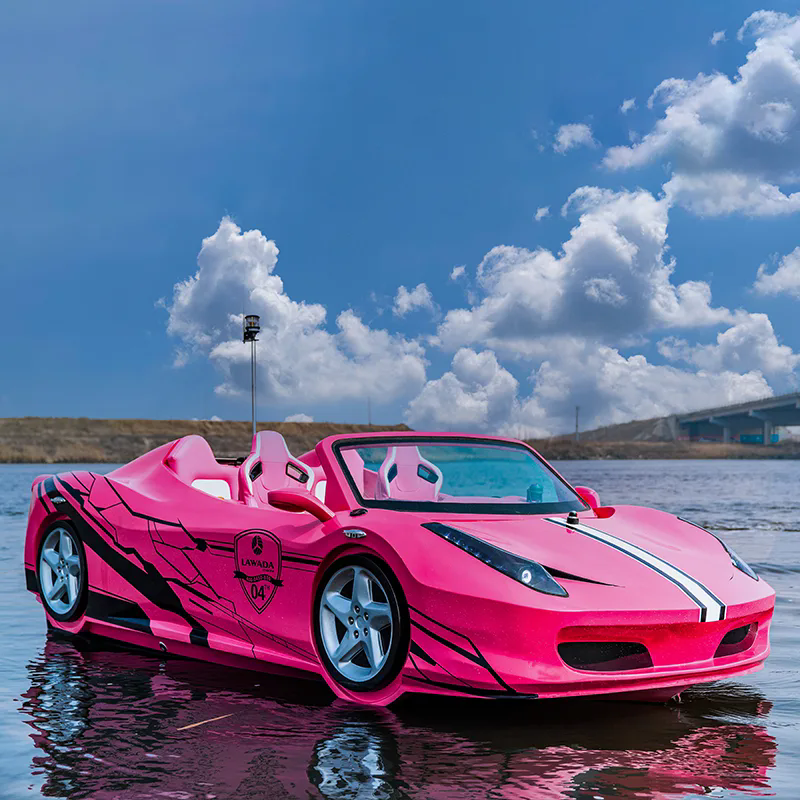
Table of Contents
- Introduction to Water Sports Cars
- How Water Sports Cars Work
- Key Features That Make Water Sports Cars Unique
- Typical Technical Specifications
- Main Applications in Tourism and Recreation
- Benefits for Commercial Operators
- Important Factors to Consider Before Buying
- Comparison: Water Sports Cars vs Traditional Watercraft
- Frequently Asked Questions
- Conclusion
Introduction to Water Sports Cars
Water sports cars are a modern category of recreational watercraft designed to resemble high-performance sports cars while operating like jet-powered boats. Their distinctive appearance immediately attracts attention in tourist destinations, marinas, and recreational lakes.
Unlike traditional boats, these vehicles combine automotive styling with powerful marine propulsion systems. The result is a vessel that delivers both excitement and visual appeal. Many models feature advanced engines, ergonomic seating, and intuitive steering systems, making them accessible even to beginners.
In recent years, demand for these innovative watercraft has grown significantly in water tourism markets because they provide a unique attraction that standard jet skis or boats cannot easily match.
How Water Sports Cars Work
Water sports cars typically operate using jet propulsion systems similar to those used in jet skis. Instead of propellers, a high-powered marine engine drives a pump that draws in water and expels it at high velocity to create thrust.
This propulsion system provides excellent maneuverability and acceleration on the water. Some models can reach impressive speeds depending on engine configuration, often exceeding 35–55 knots when equipped with higher horsepower engines. :contentReference[oaicite:0]{index=0}
Modern water sports cars also include advanced navigation lights, hydraulic steering systems, and safety equipment commonly found on speed boats. :contentReference[oaicite:1]{index=1}
Key Features That Make Water Sports Cars Unique
Several design elements distinguish water sports cars from other recreational watercraft:
- Sports Car Styling – Designed to resemble luxury automobiles, making them visually striking.
- Jet Propulsion System – Delivers fast acceleration and smooth control.
- Fiberglass Hull Structure – Provides durability and resistance to water corrosion.
- Comfortable Passenger Seating – Many models support multiple passengers with safety belts.
- Advanced Control Systems – Digital dashboards, steering wheels, and throttle pedals.
For example, some modern models feature hydraulic steering systems, stainless steel components, and integrated entertainment systems for passenger comfort. :contentReference[oaicite:2]{index=2}
Typical Technical Specifications
Although designs vary by manufacturer, most water sports cars share several common specifications.
| Specification | Typical Range |
|---|---|
| Hull Material | Fiberglass or reinforced composite |
| Passenger Capacity | 2 – 5 persons |
| Engine Power | 110HP – 300HP marine engines |
| Top Speed | 35 – 70 mph depending on engine |
| Fuel Capacity | 70L – 150L |
| Hull Length | 4.9m – 5.2m |
High-performance engines directly influence speed and acceleration, which is why many manufacturers integrate powerful marine engines into these vehicles. :contentReference[oaicite:3]{index=3}
Main Applications in Tourism and Recreation
Water sports cars are becoming increasingly popular in tourism destinations because they offer both entertainment and business opportunities.
Common applications include:
- Beach and resort entertainment activities
- Water sports rental businesses
- Luxury marina experiences
- Tourist attraction operations
- Private recreational boating
Their striking design often draws crowds, making them particularly effective as a revenue-generating attraction in tourist areas.
Benefits for Commercial Operators
For water sports companies and resort operators, water sports cars can provide several advantages.
- High Visual Appeal – The car-style design attracts tourists immediately.
- Unique Market Offering – Differentiates businesses from competitors.
- Passenger-Friendly Design – Allows multiple passengers for shared experiences.
- Flexible Operation – Suitable for lakes, coastal areas, and water parks.
Because they combine excitement with comfort, water sports cars often become one of the most popular attractions in water activity centers.
Important Factors to Consider Before Buying
Selecting the right water sports car requires careful evaluation of several key aspects.
1. Engine Performance
Engine power determines acceleration, speed, and overall ride quality.
2. Hull Construction
Fiberglass hulls are widely used because they offer durability, lightweight performance, and resistance to corrosion.
3. Passenger Capacity
Tourism operators often prefer models that accommodate multiple passengers for higher profitability.
4. Safety Features
Essential components include navigation lights, emergency stop systems, and stable steering mechanisms.
5. Customization Options
Color customization, lighting systems, and entertainment equipment can enhance customer experience.
Manufacturers like Lawada offer customizable water sports cars equipped with powerful engines, advanced steering systems, and comfortable seating designed for recreational and commercial marine environments.
Comparison: Water Sports Cars vs Traditional Watercraft
| Feature | Water Sports Cars | Jet Skis | Speed Boats |
|---|---|---|---|
| Design Style | Sports car appearance | Compact watercraft | Boat structure |
| Passenger Capacity | 2–5 persons | 1–2 persons | 4–10 persons |
| Tourist Attraction | Very high | Moderate | Moderate |
| Driving Experience | Car-style steering | Handlebar control | Boat steering wheel |
This comparison shows why water sports cars are gaining popularity in modern recreational markets.
Frequently Asked Questions
What is a water sports car?
A water sports car is a jet-powered recreational watercraft designed to look like a sports car while operating like a high-speed boat.
How fast can water sports cars go?
Depending on engine configuration, many models can reach speeds between 35 mph and 70 mph.
Are water sports cars safe for beginners?
Yes. Many models include stable hull designs, intuitive steering systems, and safety equipment that make them easier to control than traditional jet skis.
Who typically buys water sports cars?
Typical buyers include tourism operators, water sports rental businesses, luxury resort owners, and private recreational users.
Can water sports cars be customized?
Yes. Manufacturers often offer customizable colors, lighting systems, seating configurations, and entertainment features.
Conclusion
Water sports cars represent a new generation of marine recreation vehicles that combine the visual appeal of sports cars with the performance capabilities of jet-powered boats. Their distinctive design, strong performance, and growing popularity in tourism markets make them an attractive option for both recreational users and commercial operators.
With innovative engineering and customizable features, manufacturers such as Lawada continue to push the boundaries of aquatic entertainment vehicles, providing exciting new possibilities for water sports businesses worldwide.
If you are interested in high-performance water sports cars for tourism operations, rental businesses, or private marine adventures, contact us today to learn more about available models, customization options, and professional solutions for your water sports projects.