

How Do Solid Rubber Fenders for Docks Improve Berthing Safety and Vessel Protection?
2026-09-09
When a vessel approaches a dock, even a routine berthing operation can generate significant impact forces caused by vessel momentum, wind, waves, currents, and tidal movement. Without an appropriate protection system, repeated contact may damage the vessel hull, quay wall, loading platform, or dock structure. Solid Rubber Fenders for Docks provide a practical way to absorb and distribute these forces while creating a durable buffer between the vessel and the dock. Their simple construction, strong impact resistance, low maintenance requirements, and flexible customization options make them suitable for many marine applications.
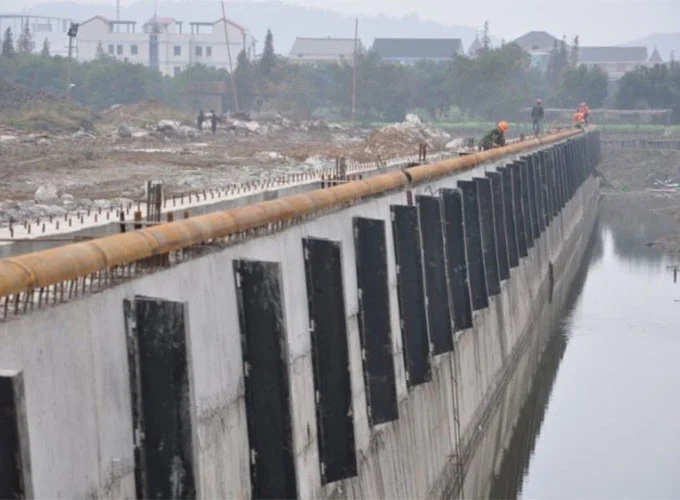
What Are Solid Rubber Fenders for Docks?
Solid rubber fenders are high-strength rubber protective components installed along dock edges, quay walls, berthing platforms, piers, or other vessel-contact areas. When a ship approaches the berth, the rubber body compresses and deforms to absorb part of the impact energy, helping reduce direct contact between the hull and rigid structures.
Compared with inflatable fenders, solid rubber designs do not depend on internal air pressure. This gives them a straightforward structure and reduces concerns related to punctures, air leakage, or regular pressure maintenance.
Typical applications include:
- Commercial docks and ports
- Shipyards and repair facilities
- Fishing harbors
- Ferry terminals
- Workboat and tugboat berths
- Floating platforms
- Industrial marine facilities
- Small and medium-energy berthing locations
Why Are They Important for Dock Protection?
The primary purpose of a dock fender is not simply to act as a bumper. A properly selected fender system manages berthing energy while helping control contact pressure and friction.
A solid rubber fender can provide several important benefits:
| Function | Practical Benefit |
|---|---|
| Impact absorption | Reduces direct berthing impact |
| Hull protection | Helps minimize scratches, dents, and structural damage |
| Dock protection | Reduces damage to concrete, steel, and other structures |
| Wear resistance | Supports repeated vessel contact |
| Low maintenance | No inflation or air-pressure management required |
| Cost efficiency | Helps reduce long-term repair and replacement expenses |
| Installation flexibility | Can be produced in different profiles and dimensions |
For facilities with frequent vessel movements, these advantages can contribute to safer and more predictable docking operations.
How Do Solid Rubber Fenders Improve Berthing Performance?
During berthing, the vessel's kinetic energy must be managed safely. When the hull contacts the fender, the rubber compresses and distributes the impact over the contact area. This reduces the severity of direct vessel-to-dock contact.
The actual performance depends on factors such as:
- Vessel displacement and berthing speed
- Dock configuration
- Contact angle
- Fender dimensions
- Rubber compound and hardness
- Fender spacing
- Tidal and environmental conditions
- Expected berthing frequency
Therefore, selecting a fender based only on appearance or nominal size may result in an unsuitable solution. A professional supplier should evaluate the vessel, berth, installation conditions, and expected impact requirements before recommending a configuration.
Which Vessel Types Can Be Supported?
One of the major advantages of working with an experienced manufacturer is the ability to develop customized fender solutions for different ship types.
Qingdao Aorunda Rubber Industry Co., Ltd. can provide solid rubber fender solutions according to specific marine project requirements. Customization can be considered for dimensions, profiles, lengths, fixing arrangements, and application conditions rather than forcing every project into one standard configuration.
This makes the solution applicable to different vessels, including:
- Cargo ships – requiring robust protection during repeated port operations.
- Tugboats – often involving frequent contact with docks and other vessels.
- Workboats – benefiting from durable protection in demanding working environments.
- Fishing vessels – suitable for harbor and small-port applications.
- Barges – requiring strong contact protection along exposed hull areas.
- Ferries – where repeated berthing makes reliable fender performance particularly important.
- Yachts and service vessels – where hull protection and suitable contact dimensions are essential.
Customization for Different Ship Types
A particularly valuable advantage is ship-type customization. Different vessels have different hull shapes, freeboard heights, berthing speeds, contact points, and operating environments. A fender system designed for a small fishing vessel may not be appropriate for a large commercial vessel.
A customized solution can consider:
- Vessel dimensions and hull shape
- Berthing location and contact height
- Required fender length
- Fender profile and cross-section
- Mounting-hole arrangement
- Rubber hardness and performance requirements
- Dock structure and available installation space
This approach helps create a closer match between the fender and the actual vessel-dock interface.
Solid Rubber Fenders vs. Other Fender Solutions
Different marine environments require different protection technologies. Solid rubber fenders are particularly attractive where simplicity, durability, and low maintenance are priorities.
| Fender Solution | Main Advantage | Typical Consideration |
|---|---|---|
| Solid rubber fender | Simple, durable, puncture-resistant | Best selected according to berthing energy |
| Pneumatic fender | Flexible and energy-absorbing | Requires air-pressure management |
| Foam-filled fender | Buoyant and flexible | Can have higher initial cost |
| Polyurethane fender | Wear and corrosion resistance | Material and design must match application |
| Fixed rubber profile | Simple permanent installation | Requires correct profile and mounting design |
The best solution depends on the vessel, dock structure, operating frequency, impact energy, and installation conditions rather than simply choosing the most expensive option.
What Results Can Users Expect?
When correctly designed and installed, Solid Rubber Fenders for Docks can deliver several practical results:
Safer Berthing
The fender creates a protective interface between the vessel and dock, helping reduce sudden direct impact.
Reduced Structural Damage
Repeated vessel contact can gradually damage quay edges and dock surfaces. A suitable rubber fender helps absorb these forces before they reach the primary structure.
Lower Maintenance Requirements
Because solid rubber fenders do not require inflation, routine maintenance can be simpler than systems that depend on internal air pressure.
Longer Service Life
High-quality rubber compounds can provide resistance to repeated compression, abrasion, and harsh outdoor conditions. Proper sizing and installation are essential to achieving expected service performance.
Why Choose Qingdao Aorunda Rubber Industry Co., Ltd.?
Qingdao Aorunda Rubber Industry Co., Ltd. has specialized in rubber products and marine engineering solutions since 1996. The company operates production facilities with rubber mixing, molding, vulcanization, and testing capabilities, supporting quality control throughout the manufacturing process. Its product range includes marine and industrial fenders, marine airbags, and other engineered rubber products.
For customers purchasing Solid Rubber Fenders for Docks, the value is not only the rubber product itself but also the ability to develop a solution around the actual project.
Aorunda can focus on:
- Customized dimensions
- Different fender profiles
- Project-specific installation requirements
- Different vessel types
- Dock and quay protection
- Long-term marine operating conditions
- Engineering consultation and product selection
This customized approach is especially useful for projects where standard fender dimensions cannot fully match the vessel or berth.
How Should Buyers Select the Right Fender?
Before requesting a quotation, buyers should prepare basic project information. This helps manufacturers evaluate the application more accurately.
Recommended information includes:
- Vessel type
- Vessel length and displacement
- Berthing speed
- Dock or quay dimensions
- Fender installation position
- Expected contact area
- Fender quantity
- Required dimensions
- Mounting-hole requirements
- Environmental conditions
- Drawings or photographs of the installation area
Providing these details can make the selection process faster and reduce the risk of choosing an unsuitable fender configuration.
FAQ About Solid Rubber Fenders for Docks
Are solid rubber fenders suitable for frequent berthing?
Yes. Their durable structure makes them suitable for repeated contact applications, provided that the fender type, size, material, and installation are properly matched to the berthing conditions.
Can solid rubber fenders be customized for different vessels?
Yes. Ship-type customization is one of the key advantages of a project-based fender solution. Dimensions, profiles, lengths, mounting arrangements, and other specifications can be developed according to vessel and dock requirements.
Do solid rubber fenders require inflation?
No. Solid rubber fenders use a solid rubber structure rather than an air-filled chamber, eliminating the need for routine inflation.
Can they be used for small boats and workboats?
Yes. They can be applied to small docks, workboat berths, shipyards, fishing ports, and other low- to medium-energy berthing environments, subject to proper engineering selection.
What information is needed for customized production?
Vessel specifications, dock structure, required dimensions, installation method, expected operating conditions, and drawings or photos of the installation area are useful starting points.
Conclusion
Solid Rubber Fenders for Docks offer a practical combination of impact protection, durability, simple maintenance, and installation flexibility. Their value becomes even greater when the fender is engineered around the actual vessel and dock rather than selected solely from a standard catalog.
For ports, shipyards, ferry terminals, fishing harbors, industrial docks, and workboat facilities, the right fender configuration can help protect valuable vessels and infrastructure while reducing long-term maintenance pressure. Most importantly, customization for different ship types allows the protection system to better match real-world berthing conditions.
With engineering experience, manufacturing capabilities, and customized marine rubber solutions, Qingdao Aorunda Rubber Industry Co., Ltd. can support projects requiring reliable solid rubber fender protection. If you are planning a new dock, upgrading an existing berth, or looking for a fender designed specifically around your vessel type, contact us with your vessel and dock specifications for a professional customized solution.