

How Do Ship Launching Airbags Compare to Traditional Launching Methods
2026-02-11
In the world of shipbuilding and maritime operations, the launch of a vessel is a critical and complex event. For centuries, traditional methods like slipways and dry docks have dominated the process. Today, modern technology offers a compelling alternative: Ship Launching Safety Airbags. As a leader in this innovative field, SunKai provides robust and reliable airbag systems that are transforming maritime launch protocols. This blog offers a professional comparison, highlighting why this modern method is gaining global traction.
The core difference lies in the fundamental approach. Traditional methods require massive, permanent infrastructure, while SunKai airbags offer unparalleled mobility and flexibility. Let's break down the key distinctions.
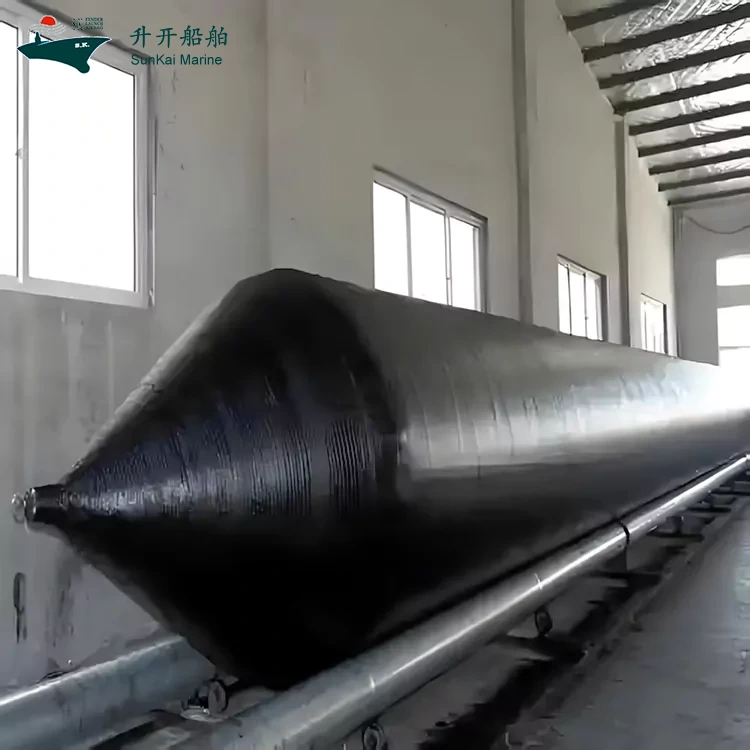
Key Advantages of Ship Launching Airbags:
-
Lower Initial & Operational Cost: Eliminates the need for expensive fixed structures.
-
Enhanced Flexibility: Suitable for various locations, including narrow or restricted waterways.
-
Reduced Environmental Impact: Minimal disturbance to the riverbed or coastline compared to dredging for slipways.
-
Improved Safety: Provides a more controlled, gradual descent into the water, reducing stress on the hull.
-
Faster Mobilization: Systems can be deployed quickly at the construction site.
Direct Comparison: Airbags vs. Traditional Ways
| Feature | SunKai Ship Launching Airbags | Traditional Slipway/Gravel Launch |
|---|---|---|
| Infrastructure | Temporary, mobile system | Permanent, fixed concrete structure |
| Site Requirement | Minimal; adaptable to different banks | Extensive, specific gradient and dredging needed |
| Capital Investment | Significantly lower | Very high for construction and maintenance |
| Operational Flexibility | High; can launch multiple vessels from different sites | Very low; fixed to one location |
| Environmental Impact | Low; no permanent alteration to the shoreline | High; requires dredging and changes to coastal line |
Ship Launching Safety Airbags FAQ
What are Ship Launching Safety Airbags made of?
SunKai Ship Launching Safety Airbags are engineered from high-strength, layered rubber cord fabric, similar to but much more robust than standard marine fenders. They are designed with exceptional tensile strength, puncture resistance, and air-tight integrity to handle immense loads and pressures during a launch.
How are the airbags controlled during launch?
The launch is controlled by a carefully orchestrated sequence of deflation. Operators, following SunKai's detailed protocols, gradually release air from the staggered rows of airbags. This allows the vessel to roll down the bank in a stable, balanced, and slow manner, ensuring a smooth entry into the water.
Can airbags launch any type of vessel?
Yes, modern Ship Launching Safety Airbags are highly versatile. SunKai designs systems capable of launching a wide range of vessels, from small fishing boats and barges to large cargo ships and offshore modules weighing thousands of tonnes, by calculating the required number and arrangement of airbags.
In conclusion, while traditional launching methods have a long history, the flexibility, cost-efficiency, and safety offered by modern Ship Launching Safety Airbags present a superior solution for many of today's shipyards and projects. The data clearly shows advantages in reduced environmental impact, lower capital expenditure, and operational adaptability. For maritime professionals looking to optimize their launch operations with proven, reliable technology, the choice is clear.
Ready to modernize your vessel launch strategy? Contact us at SunKai today to discuss your specific project needs and discover how our engineered airbag solutions can deliver safety and efficiency to your operations.