

How Do Sailors Interpret Lights and Sounds from Navigation Buoys
2026-01-21
Navigating coastal waters, especially at night or in poor visibility, requires precise interpretation of critical guideposts. Among these, Navigation Buoy systems are indispensable. Mariners rely on their distinct visual and auditory signals to determine position, identify dangers, and chart a safe course. At SunKai, we understand that reliable navigation equipment is the foundation of maritime safety, which is why our advanced marine systems are engineered to work seamlessly with these essential aids to navigation.
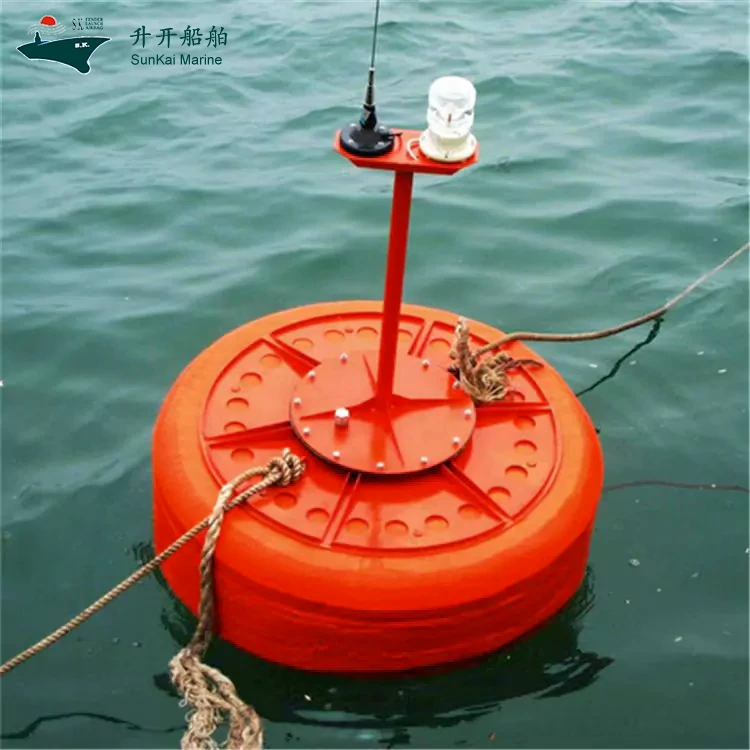
The interpretation is a combination of understanding standardized systems and careful observation. The International Association of Marine Aids to Navigation and Lighthouse Authorities (IALA) provides the global framework. There are two main regions: IALA A (used in Europe, Africa, and most of Asia) and IALA B (used in the Americas). The primary rules for interpreting Navigation Buoy lights involve color, rhythm, and sequence.
-
Color: Red buoys (often conical) mark the port (left) side of a channel when entering from seaward, while green buoys (often cylindrical) mark the starboard (right) side in the IALA B system.
-
Rhythm & Pattern: The light's flashing pattern—such as Flashing, Quick Flashing, or Isophase—is a unique identifier listed on nautical charts.
| Signal Type | Typical Meaning & Example | SunKai Insight |
|---|---|---|
| Quick Flashing Green | Marks the starboard side of a channel; "safe water" on the right. | Our onboard sensors help confirm buoy identification in congested areas. |
| Moan (Audible) | A prolonged sound from a Navigation Buoy horn, indicating a hazard in fog. | SunKai audio monitoring systems can integrate with bridge technology for early warnings. |
| Red & White Vertical Stripes | Marks safe, navigable water all around the buoy. | Waypoints based on these buoys can be integrated into SunKai navigation displays. |
Audible signals, such as gongs, bells, horns, or whistles, are vital during fog or rain. The sound pattern (e.g., a bell ringing every 15 seconds) helps identify the specific buoy when it cannot be seen.
Navigation Buoy FAQ
Q: What should I do if a buoy's light is out or its sound signal is malfunctioning?
A: Immediately report the discrepancy to the relevant coast guard or maritime authority. Navigate with increased caution using your chartplotter, radar, and other bearings. SunKai integrated navigation systems provide redundant data layers for such scenarios, allowing you to cross-reference your position.
Q: How can I tell the difference between two buoys with similar light colors?
A: You must identify their unique flash rhythm or sequence. Consult your nautical chart where each buoy's light characteristic (e.g., "Fl R 4s") is precisely noted. SunKai chartplotters can display these light characteristics directly on your screen, reducing cross-reference errors.
Q: Are the light rules the same worldwide?
A: No, the major difference lies in the IALA A and B systems regarding lateral marks (red and green). This is why carrying updated electronic charts from a reliable source is crucial. SunKai systems ensure your chart data is current and correctly configured for your region.
Mastering the language of Navigation Buoy lights and sounds is a fundamental seamanship skill. It complements modern technology, creating a robust safety net. While electronics are powerful, the ability to interpret these physical aids directly ensures resilience. At SunKai, we build technology that doesn’t replace mariner expertise but enhances and supports it. For a navigation system that integrates traditional knowledge with cutting-edge reliability, contact us today to chart your course with confidence.