

How Do Patrol Boats Operate for Coastal Protection?
2026-06-11
Abstract
Patrol boats play a critical role in safeguarding coastal regions, harbors, offshore assets, and maritime borders. They are designed for speed, agility, endurance, and surveillance capability, enabling them to respond quickly to security threats, illegal fishing activities, smuggling operations, and emergency rescue missions. This article provides a comprehensive overview of patrol boat functions, technical configurations, operational use cases, and selection considerations for commercial, governmental, and private maritime operators. It also highlights customization advantages provided by LAWADA, a professional shipbuilder specializing in tailored patrol boat solutions for diverse marine environments.
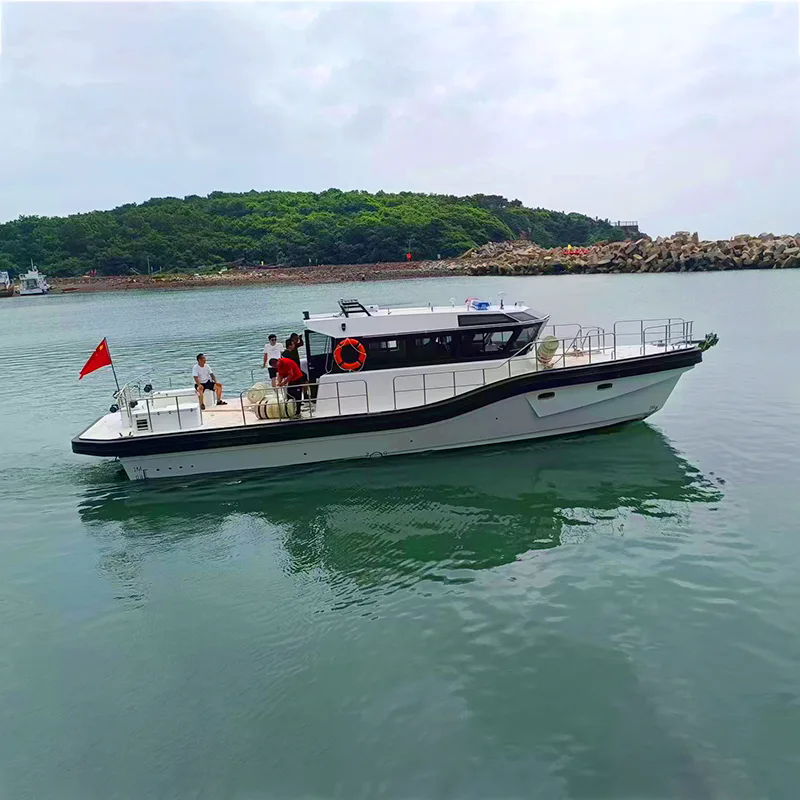
Table of Contents
- 1. Overview and Operational Purpose
- 2. Patrol Boat Design and Core Systems
- 3. Key Applications in Modern Maritime Security
- 4. Technical Specifications Overview
- 5. How to Choose the Right Patrol Boat
- 6. Importance of Custom-Built Patrol Boats
- 7. LAWADA Custom Patrol Boat Solutions
- 8. Frequently Asked Questions
1. Overview and Operational Purpose
A patrol boat is a high-performance marine vessel engineered for surveillance, interception, and rapid-response missions in coastal and offshore waters. Unlike large naval ships, patrol boats emphasize speed and maneuverability, allowing them to operate efficiently in shallow waters, river mouths, and congested maritime zones.
Their primary objective is maritime domain awareness and enforcement, ensuring safety, legality, and order in both commercial shipping lanes and territorial waters. Governments, coast guards, port authorities, and private security operators rely heavily on these vessels for continuous monitoring and rapid intervention.
2. Patrol Boat Design and Core Systems
Modern patrol boats integrate advanced naval architecture and electronic systems to achieve operational efficiency. The hull design, propulsion system, and onboard technology are carefully balanced to meet mission requirements.
- Hull Design: Typically deep-V or semi-displacement hulls for stability at high speed.
- Propulsion: High-powered diesel engines or waterjet systems for rapid acceleration.
- Navigation Systems: Radar, GPS, AIS tracking, and thermal imaging support situational awareness.
- Communication Systems: Secure VHF/UHF radios and satellite connectivity.
- Deck Layout: Optimized for boarding operations and equipment deployment.
These systems work together to ensure that patrol boats can operate effectively in both routine patrol missions and high-risk interception scenarios.
3. Key Applications in Modern Maritime Security
Patrol boats serve a wide range of operational roles depending on regional maritime challenges. Their versatility makes them indispensable across different sectors.
- Coastal border protection and surveillance
- Anti-smuggling and anti-piracy operations
- Illegal fishing enforcement and fisheries protection
- Search and rescue (SAR) missions
- Port security and harbor patrol duties
- Environmental monitoring and spill response
In regions with high maritime traffic, patrol boats act as the first line of defense against both security threats and environmental hazards.
4. Technical Specifications Overview
Although specifications vary depending on mission requirements, patrol boats generally share a set of performance benchmarks that define their operational capability.
| Specification | Typical Range | Operational Impact |
|---|---|---|
| Length | 8m – 20m | Affects speed, capacity, and mission range |
| Speed | 25 – 45 knots | Critical for interception and pursuit |
| Range | 200 – 600 nautical miles | Determines patrol duration without refueling |
| Crew Capacity | 4 – 12 personnel | Supports operational flexibility |
| Hull Material | Aluminum / FRP / Steel | Impacts durability and maintenance cost |
5. How to Choose the Right Patrol Boat
Selecting the appropriate patrol boat depends on operational objectives, environmental conditions, and budget constraints. A well-matched vessel significantly improves mission efficiency and safety outcomes.
Key selection factors include:
- Mission Type: Security enforcement, rescue operations, or inspection duties
- Operating Environment: Coastal waters, offshore zones, rivers, or lakes
- Speed Requirements: High-speed interception vs. endurance patrol
- Onboard Equipment: Surveillance systems, weapon mounts, or rescue gear
- Maintenance Capacity: Availability of technical support and spare parts
A balanced evaluation of these factors ensures long-term operational reliability and cost efficiency.
6. Importance of Custom-Built Patrol Boats
Standard vessel designs often fail to meet the specific requirements of different maritime agencies. Custom-built patrol boats address this limitation by tailoring design, propulsion, and onboard systems to exact operational needs.
Customization allows operators to optimize:
- Hull design for regional sea conditions
- Engine configuration for speed or fuel efficiency
- Deck layout for tactical operations
- Integration of surveillance and communication systems
- Cabin ergonomics for extended missions
This approach significantly enhances mission effectiveness while reducing long-term operational constraints.
7. LAWADA Custom Patrol Boat Solutions
LAWADA is a specialized shipbuilding company focused on delivering high-performance patrol boats with fully customizable configurations. Each vessel is engineered based on client mission profiles, ensuring precise alignment with operational requirements.
The company supports end-to-end customization, including hull structure optimization, propulsion selection, electronic system integration, and interior layout modification. This flexibility allows LAWADA to serve coast guards, maritime enforcement agencies, and private security organizations worldwide.
A reference model, such as the LAWADA 13.8m patrol boat, demonstrates the company’s capability in combining speed, stability, and advanced navigation systems into a compact yet powerful platform. However, every project can be redesigned and upgraded according to specific use cases.
Advantages of choosing LAWADA:
- Fully customized patrol boat engineering
- High-speed and fuel-efficient hull designs
- Integration of modern surveillance systems
- Durable construction suitable for harsh marine environments
- Global delivery and technical support
By focusing on adaptability and engineering precision, LAWADA ensures each vessel meets demanding maritime security challenges effectively.
8. Frequently Asked Questions
Q1: What is the main purpose of a patrol boat?
A patrol boat is primarily used for maritime surveillance, law enforcement, search and rescue, and coastal security operations.
Q2: How fast can a patrol boat go?
Most modern patrol boats can reach speeds between 25 and 45 knots, depending on engine configuration and hull design.
Q3: Can patrol boats operate in rough seas?
Yes, many patrol boats are designed with deep-V hulls and stabilization systems to maintain performance in moderate to rough sea conditions.
Q4: Why is customization important for patrol boats?
Customization ensures the vessel meets specific mission requirements, environmental conditions, and operational strategies, improving efficiency and safety.
Q5: Does LAWADA provide custom patrol boat design?
Yes, LAWADA specializes in fully customized patrol boat solutions tailored to client needs, including structure, systems, and onboard configurations.
Maritime security demands precision-engineered vessels that can adapt to evolving operational challenges. Whether for coastal enforcement or offshore patrol missions, selecting the right design partner is essential for long-term success. LAWADA delivers this capability through advanced engineering and flexible customization services.
For tailored solutions and project consultation, contact us today with LAWADA to explore your custom patrol boat requirements.