

How Do Ocean-Going Tugs Operate?
2026-04-20
Article Summary
Ocean-going tugs are powerful marine vessels designed to tow, escort, and assist large ships across open seas under extreme conditions. Unlike harbor tugs, these vessels are built for long-distance voyages, harsh weather resilience, and deep-sea towing operations. This article explains how ocean-going tugs work, their key systems, operational challenges, and how buyers can choose the right vessel configuration for commercial or industrial use.
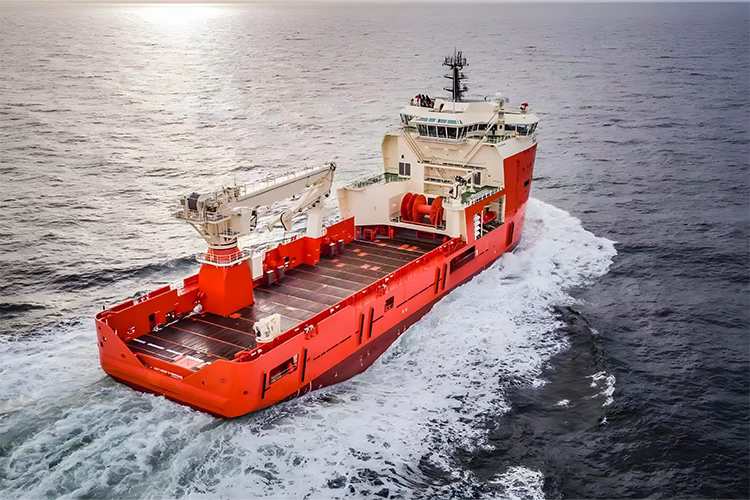
Table of Contents
- 1. Overview of Ocean-Going Tugs
- 2. Core Functions and Applications
- 3. Structural Design and Engineering Features
- 4. Critical Onboard Systems
- 5. How Ocean-Going Tugs Operate at Sea
- 6. Operational Challenges in Deep Sea Towing
- 7. How to Choose the Right Ocean-Going Tug
- 8. Key Specifications Comparison
- 9. Frequently Asked Questions
- 10. Conclusion
1. Overview of Ocean-Going Tugs
An ocean-going tug is a specialized marine vessel engineered to tow ships, barges, and offshore structures across long distances in open water. These vessels are fundamentally different from harbor tugs due to their enhanced propulsion systems, fuel capacity, hull reinforcement, and navigation technology.
They are widely used in offshore construction, salvage operations, military logistics, and intercontinental towing missions where conventional vessels cannot safely maneuver large loads.
2. Core Functions and Applications
Ocean-going tugs serve multiple critical roles in maritime operations. Their versatility makes them essential assets in global shipping and offshore industries.
- Deep-sea towing: Transporting large ships or floating structures across oceans.
- Escort operations: Assisting large vessels during entry and exit from ports.
- Salvage missions: Recovering disabled or wrecked ships.
- Offshore support: Assisting oil rigs, wind farms, and subsea installations.
- Emergency response: Firefighting and rescue operations at sea.
3. Structural Design and Engineering Features
The structural integrity of ocean-going tugs is designed for endurance and power. Their hulls are reinforced with high-tensile steel to withstand rough seas and towing stress.
Key design characteristics include:
- Deep-V hull for wave cutting efficiency
- High bollard pull capability
- Reinforced towing winches and stern rollers
- Double engine redundancy systems
- Extended fuel storage for long voyages
These design features ensure operational stability even in severe oceanic conditions.
4. Critical Onboard Systems
Modern ocean-going tugs integrate advanced systems that enhance safety, navigation, and towing performance.
- Propulsion System: Typically twin diesel engines or hybrid propulsion for maximum thrust control.
- Dynamic Positioning System: Maintains vessel position without anchoring.
- Navigation Suite: Radar, GPS, AIS, and satellite communication systems.
- Towing Equipment: High-capacity winches, towing hooks, and synthetic or steel wire ropes.
- Firefighting Systems: Offshore firefighting class capabilities for emergency response.
5. How Ocean-Going Tugs Operate at Sea
The operation of an ocean-going tug involves coordinated engineering and navigation control. The process begins with securing the tow line to the target vessel or structure using high-strength towing gear.
Once connected, the tug gradually applies propulsion force, ensuring controlled acceleration to avoid stress damage to both vessels. Navigation is continuously monitored using satellite systems and onboard radar.
During long-distance voyages, tug crews manage fuel efficiency, weather routing, and tension control systems to maintain safe towing conditions.
In rough seas, dynamic adjustments are made to towing angles and engine output to reduce strain on the towline and maintain directional stability.
6. Operational Challenges in Deep Sea Towing
Operating ocean-going tugs is complex and demands high technical expertise. Some of the most common challenges include:
- Extreme weather conditions: Storms and high waves affect towing stability.
- Fuel consumption: Long-distance towing requires optimized fuel management.
- Towline stress: Mechanical stress can lead to equipment fatigue.
- Navigation risks: Avoiding shipping lanes and underwater hazards.
- Crew endurance: Long voyages require efficient shift management.
7. How to Choose the Right Ocean-Going Tug
Selecting the right tug depends on operational requirements, towing capacity, and intended usage. Buyers should consider the following factors:
- Bollard pull rating: Determines towing strength capability.
- Fuel efficiency: Impacts long-term operational cost.
- Hull design: Affects seaworthiness in rough conditions.
- Engine redundancy: Ensures operational safety.
- Certification standards: Compliance with international maritime regulations.
For customized industrial solutions, Shandong Haiding Shipbuilding Co., Ltd. provides engineered ocean-going tug designs tailored to offshore and deep-sea requirements.
8. Key Specifications Comparison
| Specification | Light Duty Tug | Ocean-Going Tug |
|---|---|---|
| Bollard Pull | 20–40 tons | 60–200+ tons |
| Operating Range | Coastal waters | Global ocean routes |
| Fuel Capacity | Limited | Extended long-range tanks |
| Hull Strength | Standard | Reinforced heavy-duty steel |
| Weather Resistance | Moderate | High storm-class resistance |
9. Frequently Asked Questions
Q1: What is the main difference between a harbor tug and an ocean-going tug?
Harbor tugs operate in ports and nearshore waters, while ocean-going tugs are designed for long-distance towing across open seas.
Q2: How powerful is an ocean-going tug?
They can generate extremely high bollard pull forces, often exceeding 200 tons depending on configuration.
Q3: Can ocean-going tugs operate in storms?
Yes, they are specifically engineered for heavy-weather operations with reinforced hulls and advanced stability systems.
Q4: What industries use ocean-going tugs?
They are widely used in offshore oil and gas, shipping logistics, salvage operations, and marine construction.
Q5: How long can they operate at sea?
Depending on fuel capacity and mission profile, they can operate continuously for several weeks.
10. Conclusion
Ocean-going tugs are indispensable assets in modern maritime operations, combining power, endurance, and advanced engineering to perform critical towing and support missions across global waters. Their role continues to expand alongside offshore energy development and international shipping demands.
For reliable marine engineering solutions and customized tugboat construction, Shandong Haiding Shipbuilding Co., Ltd. delivers high-performance vessels designed for demanding ocean environments.
Contact us to discuss specifications, customization options, or project requirements and receive professional guidance for your next ocean-going tug investment.