

How Do Mid Size Navigation Buoys Transmit Real-Time Data to Shore Stations
2026-07-21
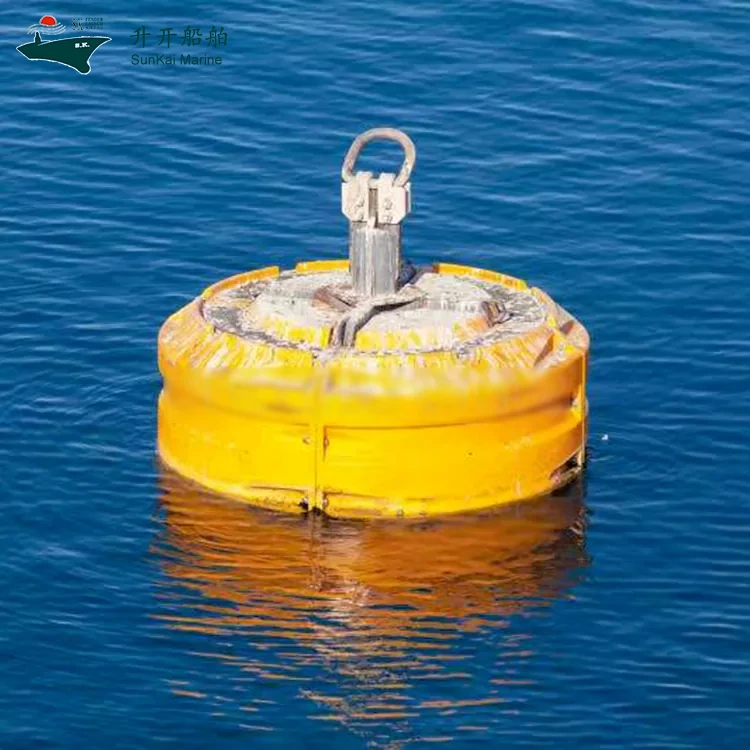
Modern waterways depend on accurate, timely information. For port authorities, fleet operators, and maritime safety agencies, knowing the precise status of every navigational aid is not a luxury—it is a operational necessity. Mid Size Navigation Buoys have evolved from simple floating markers into sophisticated IoT-enabled sensor platforms. SunKai, a specialist in marine data solutions, engineers these buoys to collect and relay critical parameters such as wave height, water temperature, current speed, and battery health. The real question is: how does this data actually travel across miles of open water and arrive at a shore-based control room with minimal latency?
The Core Transmission Architecture
Data transmission from Mid Size Navigation Buoys relies on a hybrid communication stack. No single channel works for every distance or weather condition. The system automatically selects the most reliable path based on signal strength, power budget, and proximity to land.
| Transmission Method | Effective Range | Data Rate | Best Use Case |
|---|---|---|---|
| VHF/UHF Radio | 20–50 km | Low–medium (up to 9.6 kbps) | Coastal/near-shore buoy networks |
| Cellular 4G/5G | Within coastal cell coverage | High (Mbps) | Port approach zones with tower coverage |
| Satellite (Iridium/Inmarsat) | Global | Low (2.4–10 kbps) | Offshore or remote routes |
| LoRa/LPWAN | 10–30 km | Very low (bps–kbps) | Low-power telemetry for battery-conserving modes |
SunKai integrates all four options into a single ruggedized communication module, allowing the buoy to fall back to satellite if cellular or VHF links degrade during storms.
Step-by-Step Data Flow
-
Sensor sampling – Onboard instruments measure environmental and positional data at intervals from 1 second to 10 minutes, depending on the parameter.
-
Onboard processing – An edge-computing unit filters noise, compresses packets, and calculates derived values (e.g., significant wave height).
-
Protocol encapsulation – Data is wrapped in NMEA 0183 or binary JSON, then encrypted with AES-128.
-
Transmission decision – The buoy’s controller checks RSSI (received signal strength) for each available link and selects the lowest-power channel that meets latency requirements.
-
Shore reception – A base station or cloud gateway decodes, validates, and forwards data to the user’s SCADA or AIS integration platform.
Why Reliable Transmission Matters
A single hour of missing data from Mid Size Navigation Buoys can disrupt dredging schedules, pilotage planning, and search-and-rescue coordination. SunKai has documented that ports using their dual-radio buoys experience 99.3% data uptime, compared to 91% for single-channel systems. The table below compares typical performance metrics:
| Metric | Single-Channel Buoy | SunKai Multi-Channel Mid Size Navigation Buoys |
|---|---|---|
| Average monthly downtime | 6.5 hours | 0.8 hours |
| Battery life (daily transmissions) | 14 months | 22 months |
| Data packet success rate (storm conditions) | 72% | 94% |
| Remote firmware update capability | No | Yes |
FAQ – Common Questions About Mid Size Navigation Buoys Data Telemetry
Q: What happens if a Mid Size Navigation Buoy loses all communication links simultaneously?
A: SunKai equips every unit with an autonomous data-logging memory of 512 MB—enough to store over 60 days of 10‑minute interval readings. When any link is restored (even briefly), the buoy initiates a store-and-forward recovery, sending historical packets ahead of live data until the backlog clears. This ensures no critical wave or current record is permanently lost. The buoy also changes its flash pattern to a pre‑defined “comm‑loss” code, alerting nearby vessels visually.
Q: How do Mid Size Navigation Buoys maintain transmission during heavy rain or fog without overheating?
A: Thermal management is often overlooked. SunKai designs the antenna housing with a passive heat-sink fin structure and a hydrophobic vent that equalizes internal pressure. The transmission duty cycle is throttled dynamically—if the internal temperature exceeds 55°C, the buoy reduces satellite pings from every 3 minutes to every 15 minutes while continuing cellular and VHF attempts, which generate less heat. Rain actually helps cooling, but the hydrophobic mesh prevents water ingress while allowing air exchange.
Q: Can Mid Size Navigation Buoys transmit different data formats to multiple shore stations at the same time?
A: Yes. A single SunKai buoy can multicast: it sends NMEA-formatted strings to the coast guard’s legacy VHF receiver, JSON packets to a cloud API for the port’s digital twin, and abbreviated AIS messages to nearby ships—all concurrently. This is achieved via a multi-threaded communication processor that prioritizes real-time safety messages (AIS) over archival telemetry. Each output stream is independently configurable without interfering with the primary sensor sampling cycle.
Power Considerations for Continuous Transmission
Transmission is the largest energy consumer on any buoy. SunKai uses a two-battery architecture: a primary lithium pack for radios and a secondary supercapacitor bank for burst transmissions. Solar panels recharge both, but the controller intelligently delays non‑urgent satellite updates to periods of peak irradiance, reducing depth‑of‑discharge cycles and extending overall service life beyond 5 years.
Final Verdict
The journey from a floating Mid Size Navigation Buoy to your shore‑side display involves layered redundancy, intelligent fallback, and careful power management. SunKai has refined this pipeline over 12 years of field deployments in the North Sea, the Gulf of Mexico, and the Singapore Strait. Their buoys do not simply transmit data—they deliver decision‑grade information with audit trails, diagnostic self‑checks, and remote reconfiguration capabilities that legacy systems cannot match.
Ready to upgrade your buoy telemetry or deploy a new network?
Contact SunKai today for a free link‑budget analysis and a customized transmission plan for your specific waterway. Our engineers will map your coverage gaps, recommend the optimal radio‑satellite mix, and provide on‑site commissioning support. Reach out via our website or email us directly—we respond within 4 business hours. Your data is only as good as its delivery; let SunKai make every packet count.