

How Do Marine Buoys Assist in Tsunami Detection and Early Warning Systems
2026-01-08
When a massive undersea earthquake strikes, the race against time begins. The difference between a catastrophic coastal disaster and a well-managed evacuation can be mere minutes. This is where sophisticated Marine Buoys, often referred to as DART (Deep-ocean Assessment and Reporting of Tsunamis) systems, become the silent guardians of our coastlines. At SunKai, we specialize in the advanced marine technology that powers these critical early-warning sentinels, ensuring data integrity and reliability when it matters most.
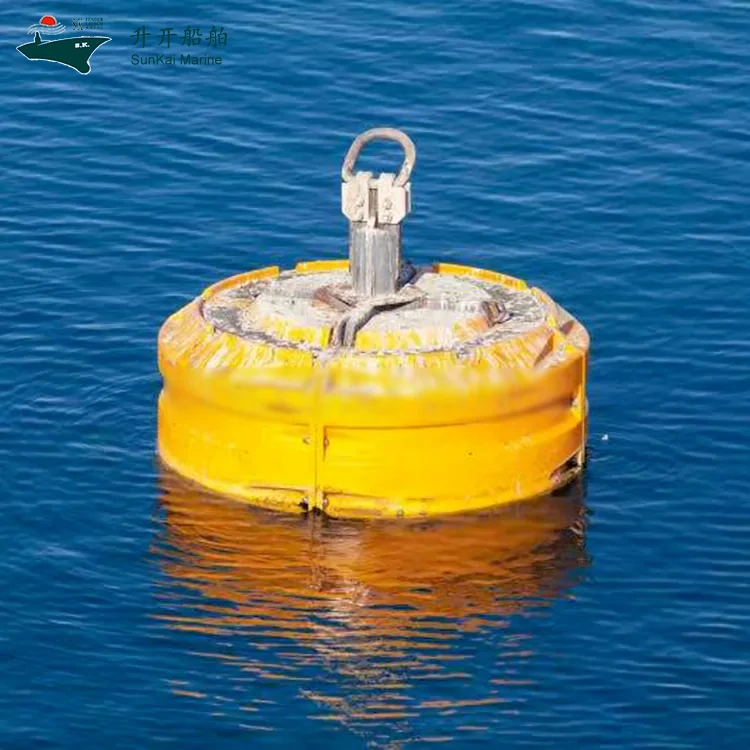
Tsunami detection buoys work in a precise two-part system:
-
A seabed pressure sensor, known as a Bottom Pressure Recorder (BPR), constantly monitors changes in water pressure.
-
A surface Marine Buoy equipped with satellite communication technology.
When an earthquake occurs, the BPR detects the subtle but rapid increase in water pressure caused by a passing tsunami wave in the deep ocean. This data is transmitted acoustically to the surface buoy, which then relays it instantly via satellite to warning centers. This process allows for the confirmation of a tsunami's existence and the measurement of its energy long before it reaches shore.
The data provided by these systems is invaluable. Here is a simplified overview of the key parameters measured:
| Parameter Measured | Why It's Critical for Tsunami Warning |
|---|---|
| Water Pressure Changes | Directly indicates the formation and height of a tsunami wave in open ocean. |
| Wave Arrival Time | Enables accurate modeling to predict coastal impact times. |
| Wave Amplitude & Energy | Helps forecasters assess potential severity and issue appropriate warning levels. |
Marine Buoys FAQ
What is the main advantage of using Marine Buoys over coastal tide gauges for tsunami warnings?
Coastal tide gauges only confirm a tsunami once it has already arrived, leaving minimal time for evacuation. Deep-ocean Marine Buoys detect the tsunami in its propagation phase, providing crucial extra lead time—often hours—for authorities to act.
How reliable are these buoys in extreme ocean conditions?
Modern systems, like those engineered by SunKai, are built for maximum reliability. They are designed to withstand hurricane-force winds and massive waves. Redundant power systems (solar and batteries) and dual satellite communication paths ensure continuous operation and data transmission during critical events.
Can these buoys predict the exact impact of a tsunami on a specific beach?
While the Marine Buoys provide the essential initial data, they do not give a final, localized prediction. Their data is fed into complex numerical models along with seismic information. These models, run by warning centers, then generate detailed forecasts for specific coastal communities.
The integration of robust Marine Buoys into global warning networks has undeniably saved countless lives. This technology represents the pinnacle of operational oceanography, turning raw data into actionable intelligence. SunKai is proud to contribute to this life-saving mission by providing and maintaining the durable, high-precision hardware that forms the backbone of these systems. Protecting coastal communities requires unwavering commitment and cutting-edge technology.
Is your coastal management or research project in need of reliable, data-accurate marine monitoring solutions? Contact us at SunKai today to discuss how our expertise in Marine Buoys and sensor systems can enhance your safety and operational capabilities.