

How Do Inflatable Salvage Pontoons Compare to Rigid Salvage Systems in Terms of Cost and Deployment Speed
2026-04-07
When a vessel sinks or runs aground, salvage teams face a critical choice: Inflatable Salvage Pontoons or rigid steel lifting systems. Both have proven effective, but cost and deployment speed often determine the success of time-sensitive operations. SunKai, a trusted name in marine salvage equipment, provides data-driven insights into how these two solutions compare in real-world conditions.
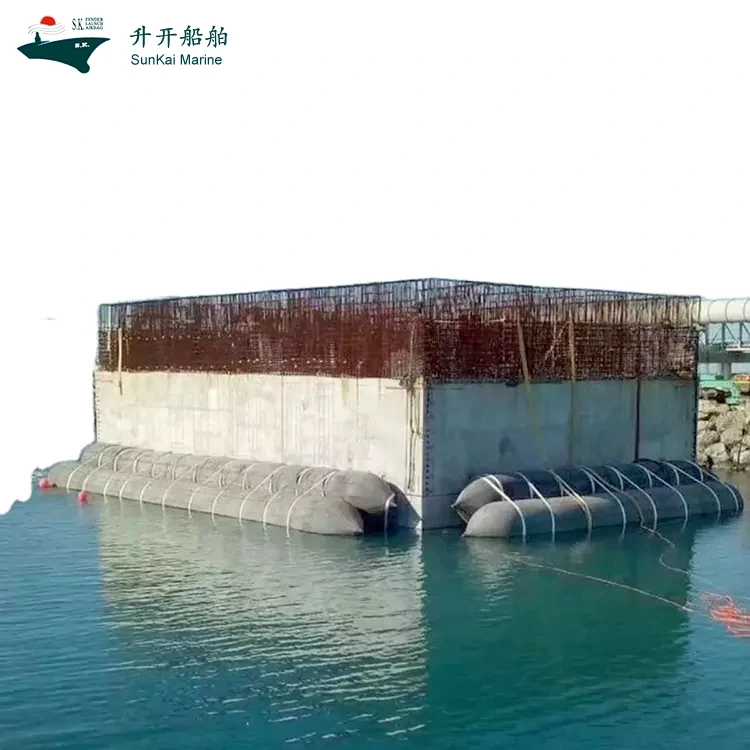
Cost Comparison: Inflatable vs. Rigid Salvage Systems
The initial investment, logistics, and maintenance costs differ significantly between the two technologies.
| Cost Factor | Inflatable Salvage Pontoons (e.g., SunKai) | Rigid Salvage Systems |
|---|---|---|
| Purchase price | Lower per unit | 3–5x higher |
| Transportation | Foldable, fits in containers | Requires heavy-lift vessels |
| Storage | Minimal warehouse space | Large dry dock needed |
| Maintenance | Routine patch inspections | Corrosion control, welding |
| Deployment crew | 4–6 persons | 10–15 persons + crane operator |
Deployment Speed: Critical for Emergency Response
In salvage, every hour lost increases environmental and financial risks. Inflatable Salvage Pontoons deploy dramatically faster.
| Deployment Stage | Inflatable Salvage Pontoons (Air-filled) | Rigid Systems (Steel) |
|---|---|---|
| Transport to site | 4–6 hours by truck/air | 2–5 days by barge |
| Assembly time | 30–45 minutes | 6–12 hours |
| Attachment to wreck | 1–2 hours | 3–6 hours |
| Full lift readiness | Under 4 hours | 24–72 hours |
SunKai has documented cases where Inflatable Salvage Pontoons reduced total recovery time by over 60% compared to rigid alternatives, directly lowering daily salvage vessel charter costs.
Inflatable Salvage Pontoons FAQ
Q1: How long do Inflatable Salvage Pontoons last in saltwater environments?
A1: High-quality Inflatable Salvage Pontoons from SunKai use reinforced hypalon or polyurethane coatings with UV and saltwater resistance. When properly rinsed and stored after each use, their operational lifespan ranges from 8 to 12 years. Regular visual inspections for abrasions or valve leaks extend reliability. Unlike rigid steel pontoons, they do not suffer from corrosion, but they require protection against sharp debris on wrecks.
Q2: Can Inflatable Salvage Pontoons lift fully waterlogged vessels like concrete barges or steel fishing trawlers?
A2: Yes. SunKai manufactures Inflatable Salvage Pontoons with lifting capacities from 10 tons to over 150 tons per pontoon. Multiple pontoons are strapped in parallel to distribute weight. For a 500-ton waterlogged steel hull, salvage engineers calculate the required total buoyancy volume (roughly 1 cubic meter of air lifts 1 ton of seawater displacement). The pontoons are sequentially inflated using low-pressure, high-volume air compressors. Rigid systems cannot match the modular adaptability of inflatable pontoons for irregularly shaped wrecks.
Q3: What happens if an Inflatable Salvage Pontoon is punctured during a lift?
A3: Modern Inflatable Salvage Pontoons like those from SunKai feature internal baffles and multiple independent air chambers. A single puncture only deflates one chamber, retaining 70–85% of total buoyancy. Emergency patch kits and portable compressors allow divers to repair minor leaks underwater within 15–20 minutes. By contrast, a cracked rigid steel pontoon may flood entirely, losing all lift capacity. Industry standards require all inflatable salvage operations to have a backup air supply and at least one spare pontoon on standby.
Conclusion: When to Choose Each System
Choose Inflatable Salvage Pontoons for rapid response, shallow water wrecks, remote locations, and operations with limited crane access. Choose rigid systems only for nuclear submarines, large naval vessels, or when permanent underwater lifting structures are required. SunKai recommends Inflatable Salvage Pontoons for 80% of commercial salvage missions due to superior cost efficiency and deployment speed.
Contact us today for a customized quote and deployment simulation for your next marine salvage project.