

How Do Fishing Boat Counterweights Improve Stability, Safety, and Operational Efficiency?
2026-06-15
Fishing vessels operate in constantly changing marine environments where stability and weight distribution directly influence crew safety, fuel consumption, and fishing productivity. Fishing Boat Counterweights are specialized balancing components installed to optimize a vessel's center of gravity, reduce excessive rolling, and support heavy equipment operations. Properly engineered counterweights help fishing boats maintain balance while handling nets, cranes, winches, and varying catch loads.
This guide explains how Fishing Boat Counterweights work, their advantages, material selection, installation methods, maintenance practices, and how businesses can choose reliable manufacturing partners for long-term performance.
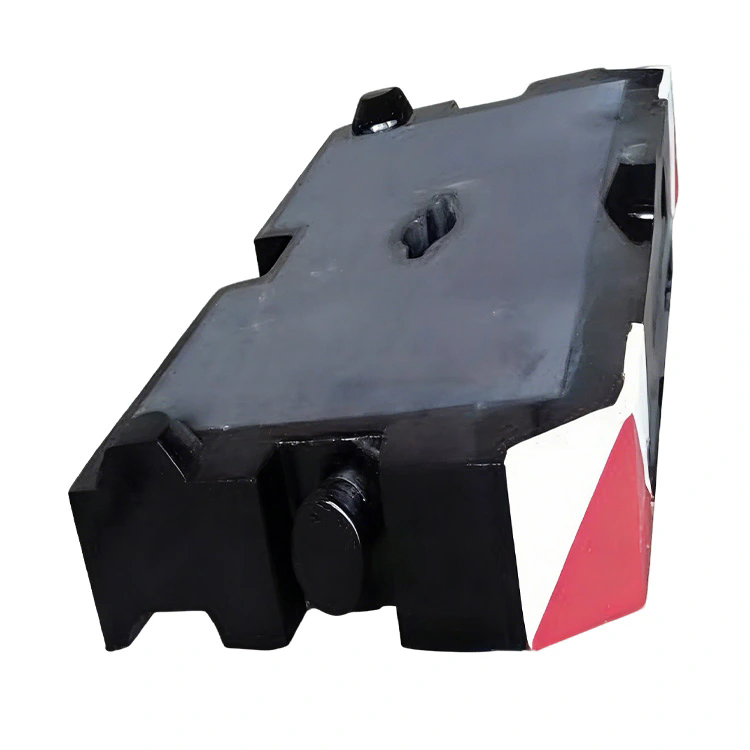
Table of Contents
- 1. What Are Fishing Boat Counterweights?
- 2. Why Are Counterweights Essential for Fishing Boats?
- 3. How Do Fishing Boat Counterweights Work?
- 4. What Materials Are Used?
- 5. Types of Fishing Boat Counterweights
- 6. Key Benefits for Vessel Operators
- 7. How to Select the Right Counterweight?
- 8. Installation Considerations
- 9. Maintenance Best Practices
- 10. Common Customer Pain Points and Solutions
- 11. Why Work with a Professional Manufacturer?
- 12. Frequently Asked Questions
1. What Are Fishing Boat Counterweights?
Fishing Boat Counterweights are heavy balancing components strategically installed on fishing vessels to offset uneven weight distribution created by onboard equipment, cargo, or fish catches.
They serve an important engineering purpose by stabilizing the vessel's center of gravity and minimizing excessive side-to-side movement.
Counterweights are commonly used alongside:
- Fishing net systems
- Hydraulic cranes
- Deck machinery
- Winches
- Processing equipment
- Cold storage systems
- Heavy catches loaded on one side
Without proper balancing systems, fishing boats become vulnerable to instability, increasing safety risks and reducing operational efficiency.
2. Why Are Counterweights Essential for Fishing Boats?
Fishing boats face continuously shifting loads during daily operations.
Several factors can disturb vessel balance:
- Changing weather conditions
- Uneven fish loading
- Heavy lifting operations
- Equipment movement
- Fuel consumption changes
- Wave impacts
Counterweights compensate for these variables and maintain vessel equilibrium.
| Challenge | Without Counterweights | With Counterweights |
|---|---|---|
| Heavy catches | Dangerous imbalance | Improved stability |
| Crane operations | Severe tilting | Controlled movement |
| Rough seas | Excessive rolling | Reduced motion |
| Crew safety | Higher risk | Safer environment |
3. How Do Fishing Boat Counterweights Work?
Fishing Boat Counterweights operate based on balance mechanics.
Engineers calculate:
- Total vessel weight
- Center of gravity
- Load distribution patterns
- Equipment locations
- Operational movement
The counterweight is then positioned to create opposing force against heavy loads.
This helps maintain stability while reducing stress on the hull structure.
Accurate engineering calculations are essential because improperly sized counterweights may create additional imbalance rather than solving the problem.
4. What Materials Are Used?
Manufacturers choose durable materials that can withstand harsh marine environments.
| Material | Advantages | Applications |
|---|---|---|
| Cast Iron | High density and durability | Commercial vessels |
| Steel | Excellent strength | Heavy-duty fishing boats |
| Concrete-filled steel | Cost effective | Large vessels |
| Composite systems | Corrosion resistance | Specialized applications |
5. Types of Fishing Boat Counterweights
- Fixed Counterweights – Permanently installed balancing systems.
- Adjustable Counterweights – Can be repositioned according to changing loads.
- Removable Counterweights – Flexible systems for seasonal fishing operations.
- Integrated Structural Counterweights – Incorporated directly into vessel design.
- Custom Counterweights – Designed for unique fishing vessels.
6. Key Benefits for Vessel Operators
Proper counterweight systems provide significant operational advantages.
- Improved vessel stability
- Enhanced crew safety
- Reduced accident risks
- Better equipment performance
- Lower structural stress
- Longer vessel lifespan
- Improved fuel efficiency
- Smoother navigation
- Higher operational productivity
7. How to Select the Right Counterweight?
Consider these factors before purchasing:
- Boat dimensions
- Total displacement
- Fishing equipment weight
- Expected catch volume
- Operating environment
- Installation location
- Corrosion protection requirements
- Maintenance accessibility
Consulting experienced engineers helps avoid costly mistakes.
8. Installation Considerations
Professional installation ensures optimal performance.
- Conduct weight calculations.
- Verify mounting positions.
- Inspect hull strength.
- Secure fastening systems.
- Perform balance testing.
- Validate stability under operating conditions.
Routine inspections after installation are equally important.
9. Maintenance Best Practices
Marine environments accelerate wear and corrosion.
Follow these maintenance recommendations:
- Inspect every three months.
- Remove salt deposits.
- Repair protective coatings.
- Check mounting bolts.
- Monitor structural integrity.
- Replace damaged components immediately.
10. Common Customer Pain Points and Solutions
| Pain Point | Solution |
|---|---|
| Boat tilts excessively | Install properly engineered counterweights |
| Crew safety concerns | Optimize load distribution |
| Frequent equipment failures | Reduce structural stress |
| High fuel consumption | Improve vessel balance |
| Corrosion problems | Use protective coatings |
11. Why Work with a Professional Manufacturer?
Fishing Boat Counterweights are precision-engineered components that require expertise in metallurgy, casting technology, and marine engineering.
Zunhua Shengjian Fanrong Machinery Accessories Co., Ltd. specializes in producing high-quality industrial counterweights designed for demanding applications.
The company offers:
- Custom engineering support
- Precision casting technology
- Strict quality control procedures
- Corrosion-resistant manufacturing
- Global supply capabilities
- Professional technical assistance
Working with an experienced manufacturer ensures your fishing vessel receives a reliable balancing solution tailored to operational requirements.
12. Frequently Asked Questions
Q1: How long do Fishing Boat Counterweights last?
With proper maintenance, high-quality counterweights can operate for 15 to 30 years.
Q2: Can counterweights be customized?
Yes. Manufacturers can customize dimensions, weight capacity, and protective coatings.
Q3: Are they suitable for all fishing vessels?
Most commercial and industrial fishing vessels can benefit from customized solutions.
Q4: How often should inspections be performed?
Quarterly inspections are generally recommended.
Q5: Can improper counterweights damage a boat?
Yes. Incorrect calculations may worsen instability and create safety hazards.
Conclusion
Fishing Boat Counterweights are essential components that directly impact vessel stability, crew safety, fuel efficiency, and operational productivity. Investing in professionally engineered counterweight solutions can significantly reduce risks while extending the service life of your fishing vessel.
If you are looking for customized, durable, and precision-manufactured Fishing Boat Counterweights, Zunhua Shengjian Fanrong Machinery Accessories Co., Ltd. can provide professional solutions tailored to your vessel requirements. Contact us today to discuss your project, receive technical support, and discover how customized counterweight systems can improve the safety and efficiency of your fishing operations.