

How Controllable Pitch Propeller Tug Improves Towing Efficiency and Maneuverability
2026-09-29
Article Summary:
A Controllable Pitch Propeller Tug is designed to provide precise thrust control, excellent maneuverability, and reliable towing performance under changing marine conditions. Unlike traditional propulsion systems that depend mainly on engine speed adjustments, a CPP tug changes propeller blade angles to control thrust output efficiently. This article explains how Controllable Pitch Propeller Tugs work, why ship operators choose this propulsion solution, the key factors affecting performance, and how professional shipbuilders such as Shandong Haiding Shipbuilding Co., Ltd. help customers develop reliable tug solutions for port, offshore, and towing operations.
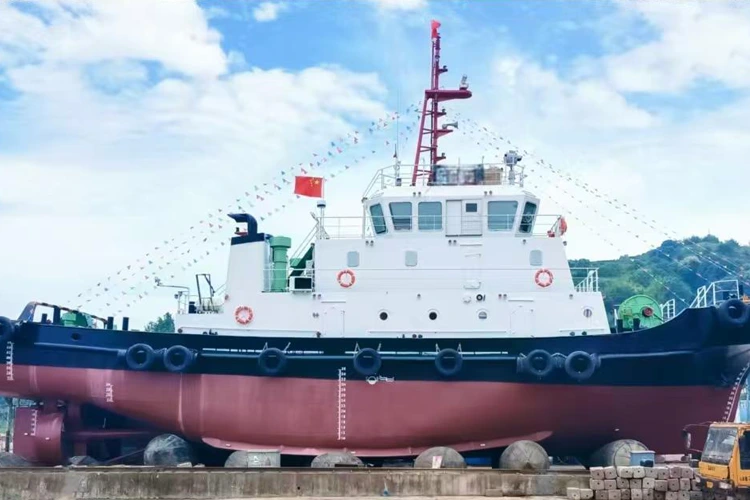
How Does a Controllable Pitch Propeller Tug Work?
A Controllable Pitch Propeller Tug uses an advanced propulsion system that allows operators to adjust the angle of propeller blades while the propeller shaft continues rotating. By changing the blade pitch, the tug can control thrust direction and power output without frequently changing engine speed.
This operating principle provides significant advantages for vessels that frequently perform demanding tasks such as harbor assistance, ship escorting, offshore towing, and close-quarter maneuvering. During these operations, the tug must quickly switch between pulling, stopping, reversing, and maintaining position.
Traditional fixed pitch propellers generally rely on engine RPM changes to adjust propulsion force. A CPP system separates engine operation from thrust control, allowing the engine to maintain a more stable working condition while the propeller adjusts performance according to operational requirements.
| Propulsion Feature | Operational Benefit |
|---|---|
| Adjustable blade pitch | Fast and accurate thrust adjustment |
| Forward and reverse control | Improved maneuvering without reversing engine rotation |
| Stable engine speed operation | Better fuel management under variable loads |
| Precise thrust response | Suitable for towing and harbor operations |
Why Are CPP Systems Important for Tug Operations?
Tugs operate in environments where propulsion response directly affects safety and efficiency. Unlike cargo vessels that may maintain long-distance cruising speeds, tugboats often experience frequent changes in load conditions.
A tug may move from low-speed standby operation to maximum bollard pull within a short period. It may also need to maintain precise positioning near large vessels, terminals, offshore platforms, or restricted waterways.
The adjustable characteristics of a Controllable Pitch Propeller Tug help solve several common operational problems:
- Rapid thrust adjustment: Operators can change propulsion force smoothly during towing and escort missions.
- Improved maneuverability: Fine pitch control helps captains achieve better vessel handling in limited spaces.
- Reduced mechanical stress: Stable engine operation can reduce unnecessary acceleration and deceleration cycles.
- Flexible working conditions: One propulsion system can support multiple operating modes.
Key Components Behind Reliable CPP Tug Performance
A high-performance CPP tug depends on the coordination of multiple mechanical and control systems. Every component must work together to deliver consistent thrust and long-term reliability.
1. Propeller Hub and Adjustable Blades
The propeller hub contains the mechanism responsible for changing blade angles. The blade movement must remain accurate and stable even under heavy towing loads.
2. Hydraulic Pitch Control System
The hydraulic system provides the force required to adjust blade pitch. Reliable hydraulic components ensure smooth response and prevent performance problems caused by delayed pitch movement.
3. Propulsion Control System
Modern CPP tugs use integrated control systems to connect bridge commands with propulsion response. This allows operators to achieve accurate thrust management during complex operations.
4. Hull and Propulsion Matching
A CPP system cannot achieve optimal results without proper matching between hull design, engine power, propeller diameter, and operating requirements. Professional shipbuilding experience is essential during the design stage.
| Component | Main Function | Customer Concern |
|---|---|---|
| CPP Propeller | Controls thrust through blade adjustment | Efficiency and durability |
| Hydraulic Unit | Provides pitch adjustment power | Stable operation |
| Control System | Transfers operator commands | Fast response |
| Hull Integration | Optimizes overall performance | Fuel consumption and safety |
How to Improve Efficiency and Reduce Operating Costs?
For tug operators, fuel consumption and maintenance costs are two major concerns. A properly designed Controllable Pitch Propeller Tug can help improve operational economics by adapting propulsion output to actual working conditions.
When a tug operates at different speeds and loads throughout the day, fixed propulsion settings may cause inefficient power usage. CPP technology allows the vessel to adjust thrust according to demand instead of operating under a single propulsion condition.
Important Factors Affecting CPP Tug Efficiency
- Accurate propeller design according to vessel mission requirements
- Proper engine and propeller matching
- High-quality hydraulic and control components
- Regular inspection and maintenance planning
- Optimization based on actual operating environment
For ship owners planning long-term operations, selecting the correct propulsion configuration during vessel construction is often more valuable than making modifications after delivery.
Common Challenges When Selecting a CPP Tug
Choosing a suitable tug requires more than selecting a propulsion system. Buyers need to consider operating environment, towing requirements, vessel size, maintenance capability, and future service conditions.
| Common Issue | Recommended Consideration |
|---|---|
| Insufficient towing performance | Evaluate bollard pull requirements before design |
| High fuel consumption | Match engine power and propeller characteristics |
| Frequent maintenance needs | Select reliable components and construction standards |
| Poor maneuverability | Consider propulsion configuration based on working environment |
Working with an experienced shipbuilder helps reduce design risks because propulsion, hull structure, equipment selection, and operational requirements can be evaluated together.
How Shandong Haiding Shipbuilding Co., Ltd. Supports Tug Projects
Shandong Haiding Shipbuilding Co., Ltd. focuses on providing professional vessel construction solutions with attention to practical operating requirements. For customers developing tug projects, the company combines shipbuilding experience with engineering considerations to create vessels suitable for different marine applications.
From initial vessel planning to production and delivery, each project requires careful coordination of hull design, propulsion arrangement, equipment installation, and performance requirements. A Controllable Pitch Propeller Tug project needs precise integration between the propulsion system and the overall vessel structure.
Project Support Includes:
- Customized tug design based on working conditions
- Propulsion system integration and engineering coordination
- Quality-focused ship construction management
- Support for different towing and marine operation requirements
- Professional communication throughout the project process
With practical shipbuilding capabilities and customer-oriented engineering services, Shandong Haiding Shipbuilding Co., Ltd. works with global partners to develop dependable tug solutions for modern marine operations.
Frequently Asked Questions
What is a Controllable Pitch Propeller Tug?
A Controllable Pitch Propeller Tug is a tugboat equipped with a propulsion system that can adjust propeller blade angles during operation. This allows the vessel to control thrust output more precisely for towing, maneuvering, and offshore tasks.
Why do tugboats use controllable pitch propellers?
Tugboats often experience rapidly changing operating conditions. CPP systems provide flexible thrust control, allowing operators to respond quickly during towing, escorting, and harbor operations.
Does a CPP tug save fuel?
A properly designed CPP tug can improve fuel efficiency by allowing propulsion output to better match operating conditions. Actual fuel savings depend on vessel design, operation patterns, and maintenance practices.
What should buyers consider before ordering a CPP tug?
Buyers should evaluate towing requirements, vessel size, operating environment, propulsion configuration, maintenance support, and shipbuilder experience before starting a project.
Need a Reliable Controllable Pitch Propeller Tug Solution?
Choosing the right tug design requires professional engineering support and careful consideration of real operating conditions. Shandong Haiding Shipbuilding Co., Ltd. provides customized shipbuilding solutions to help customers develop efficient and reliable marine vessels.
Contact us today to discuss your tug project requirements and explore a suitable propulsion solution for your next vessel.