

How Are Marine Airbags Designed for Different Ship Sizes
2026-01-14
Launching a vessel into the water is a critical engineering challenge. For decades, SunKai has been at the forefront of providing innovative solutions, with Ship Launching Safety Airbags being a cornerstone technology. A common question we encounter is: how are these robust systems specifically engineered to handle vessels of vastly different dimensions and weights? The design process is a precise science, tailoring each airbag's specifications to the unique demands of the project.
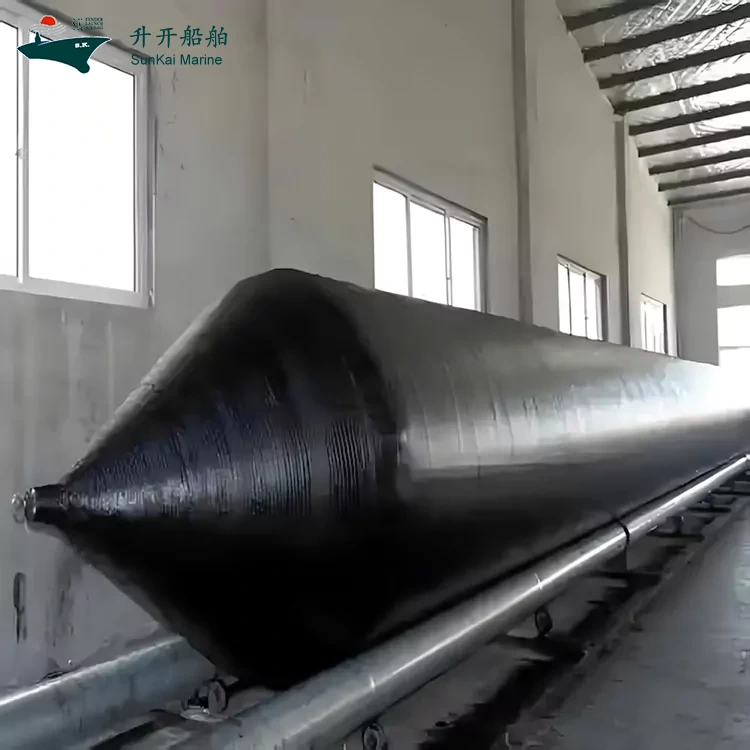
The core principle is distributing the ship's massive load safely and evenly. Designers at SunKai consider a matrix of factors, with the primary ones being:
-
Vessel Displacement (Weight): The total weight determines the total buoyancy and pressure capacity required.
-
Vessel Dimensions: Length, breadth, and hull curvature dictate the size, quantity, and arrangement of airbags.
-
Launching Way Gradient: The slope of the shipyard influences the rolling resistance and stability calculations.
-
Environmental Conditions: Tidal range and ground surface roughness are factored into the safety coefficients.
For a clear comparison, here is how SunKai's approach varies:
| Vessel Size Category | Key Design Considerations | Typical SunKai Configuration |
|---|---|---|
| Small Boats & Barges (< 1,000 DWT) | Focus on cost-effectiveness and ease of handling. Lower pressure requirements. | A smaller number of shorter length, smaller diameter airbags (e.g., Φ1.0m x 10m). Simpler layout. |
| Medium Cargo Vessels (1,000 - 10,000 DWT) | Balancing high load capacity with operational flexibility. Standardized yet robust designs. | Multiple layers or rows of medium-diameter airbags (e.g., Φ1.5m - Φ1.8m). Reinforced rubber carcass and high-strength cord layers. |
| Large Vessels & Ship Modules (> 10,000 DWT) | Maximum strength, precise load distribution, and exceptional safety margins. Custom engineering is essential. | A synchronized system of large-diameter (Φ2.0m+), extra-long airbags with high ply counts. Complex staggered layout plans to support the full hull length. |
Ship Launching Safety Airbags FAQ
What is the maximum weight a marine airbag can launch?
No single airbag has a universal limit. The launch capacity is achieved by using a system of multiple Ship Launching Safety Airbags in parallel. SunKai has engineered systems capable of launching vessel modules exceeding 10,000 tons. The total capacity is calculated based on the number of airbags, their individual working pressure, diameter, and contact length with the vessel.
How do you determine the number of airbags needed for a project?
The number is derived from a detailed engineering calculation. It primarily depends on the vessel's total launch weight and the selected airbag's rated effective lift force per unit. A critical safety factor is applied. SunKai's technical team uses proprietary software to model the launch, ensuring the configuration provides stable, even support throughout the entire launch way.
Can the same airbags be reused for different ship projects?
Yes, reusability is a key economic advantage. SunKai Ship Launching Safety Airbags are built for durability. However, their redeployment depends on a thorough inspection and whether their specifications (size, pressure rating) match the requirements of the new project. A detailed assessment is always conducted before reuse to guarantee integrity and safety.
Designing the right airbag system is fundamental to a safe, efficient, and cost-effective launch. It requires deep technical expertise and a proven track record. SunKai combines advanced materials science with rigorous engineering to deliver reliable solutions tailored for every scale, from small workboats to monumental offshore structures. For a detailed consultation on your specific project requirements, contact us today to speak with our engineering team.