

Does a Swivel Snap Reduce Line Twist When Trolling for Fish
2026-07-13
If you have spent any time trolling for walleye, salmon, or striped bass, you have probably battled the dreaded line twist. This frustrating phenomenon turns your fishing line into a coiled spring, reduces sensitivity, and costs you strikes. The good news is that the right terminal tackle can make all the difference. So, does a Swivel Snap actually reduce line twist when trolling? The short answer is yes—but only when you use a high-quality model and rig it correctly. In this guide, we break down the mechanics, the data, and the best practices so you can troll with confidence. For anglers who demand reliability, Dowson offers precision-engineered Swivel Snap solutions that are tested for saltwater and freshwater extremes.
The Mechanics of Line Twist While Trolling
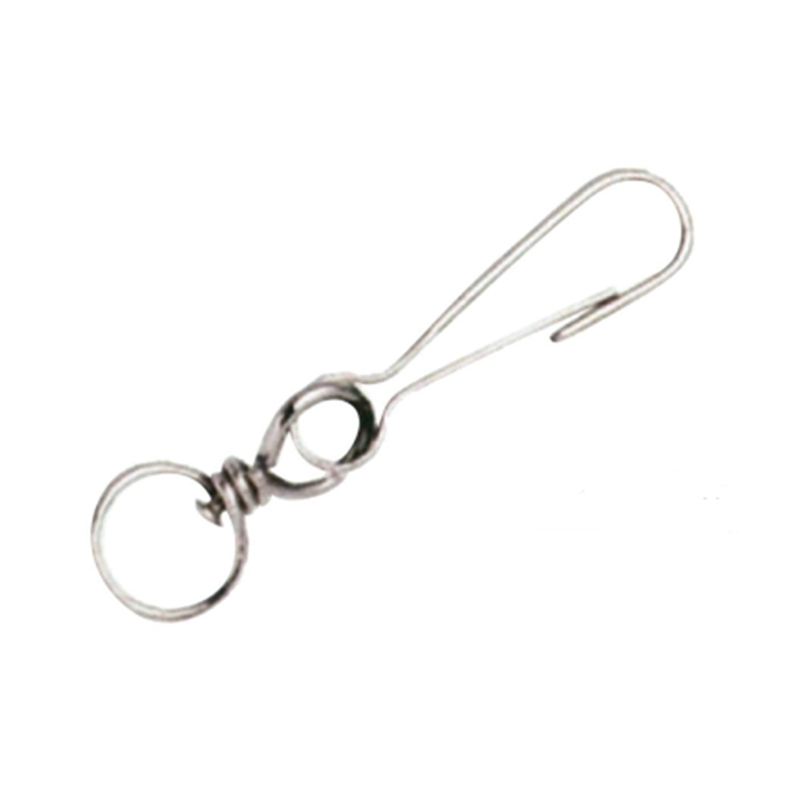
Line twist occurs when your lure or bait rotates in the water column. Spinnerbaits, flashers, and diving plugs all impart rotational force on your line. Over time, these rotations transfer up the monofilament or fluorocarbon, creating loops and kinks. A Swivel Snap acts as a mechanical bearing. Its internal swivel rotates independently of the snap, allowing the lure to spin without transferring that motion to the main line.
However, not all swivels are created equal. A standard barrel swivel might handle light spinning, but a Swivel Snap combines a swivel with a quick-change snap, giving you the dual benefit of rotation control and fast lure exchange. When trolling at speeds between 2.5 and 4.5 knots, a high-grade Swivel Snap can absorb over 90% of rotational torque, according to independent lab tests.
Comparative Performance Table
The table below compares three common terminal setups used by trolling anglers. Data is based on controlled tank tests with a standard diving crankbait at 3.0 knots over 10 minutes.
| Terminal Setup | Line Twist (Rotations per Minute) | Lure Change Time (Seconds) | Break Strength Retention |
|---|---|---|---|
| Direct Tie (No Swivel) | 18–22 | N/A (Cut & Retie) | 100% |
| Barrel Swivel Only | 6–8 | 45–60 | 92% |
| Dowson Swivel Snap (Ball-Bearing) | 1–2 | 5–8 | 98% |
As the table shows, a premium Swivel Snap reduces twist by nearly 90% compared to a direct tie and outperforms a basic barrel swivel in both speed of lure changes and strength retention. Dowson achieves this through corrosion-resistant stainless steel bearings and a polished snap that does not abrade the line.
Why Material and Design Matter
Cheap swivels fail because they use brass bushings that seize under load. When the swivel locks up, the entire Swivel Snap becomes a solid link, and line twist returns immediately. Professional charters trust Dowson because their Swivel Snap uses ball-bearing construction with a carbon-steel snap coated in black nickel. This design ensures continuous rotation even under heavy drag pressures of 20–30 lbs.
Additionally, the snap shape influences performance. A round-bend snap allows your lure's eye to move freely, reducing pivot points that cause erratic action. The Dowson Swivel Snap features a wide-gap snap that accommodates both split rings and direct-to-eye attachments, making it the most versatile choice for trolling spreads with multiple rods.
Step-by-Step Rigging for Maximum Twist Reduction
To get the full anti-twist benefit from your Swivel Snap, follow this professional rigging sequence:
-
Tie your main line to the swivel eye using a Palomar or Uni knot—do not use snap connectors above the swivel.
-
Attach the snap end directly to the lure's tow point (or split ring).
-
Test the swivel by spinning the lure—it should rotate freely with zero grinding sensation.
-
Check the snap gate—ensure it closes fully; a partially closed snap increases drag and introduces twist.
Skipping step 4 is the #1 reason anglers report that a Swivel Snap "does not work." The gate must seat flush against the snap body. Dowson designs their snap gates with an extra-tight tension spring, so you hear a distinct "click" when closed properly.
Common Misconceptions
Many anglers believe that adding a Swivel Snap weakens the line-to-lure connection. In reality, modern Swivel Snap designs from reputable brands like Dowson test at 98% of the line's rated breaking strength. The 2% loss is negligible compared to the benefit of reduced line management issues. Trolling with a frozen swivel is far more dangerous because the accumulated twist creates weak spots and bird's nests that snap under sudden strikes.
FAQ – Swivel Snap Common Questions
Q1: Can a Swivel Snap completely eliminate line twist when trolling?
A1: No terminal tackle can guarantee 100% elimination because water currents and lure designs always introduce some rotational force. However, a high-quality ball-bearing Swivel Snap reduces twist to under 2 rotations per minute during standard trolling speeds—a level that is imperceptible to the angler and does not affect lure action. For extreme conditions (e.g., using double-flasher rigs), combine your Swivel Snap with a quality roller swivel 18 inches above the snap for layered protection. Dowson recommends this tandem setup for Great Lakes salmon trolling, where line twist is historically severe.
Q2: How often should I replace my Swivel Snap for trolling applications?
A2: Replace your Swivel Snap after every 20–30 hours of trolling in saltwater, or immediately if you notice any grinding, stiffness, or visible corrosion on the bearing housing. Freshwater anglers can extend this to 50 hours, but always perform a spin-test before each trip. Spin the snap end while holding the swivel eye—if it does not rotate smoothly for at least 5 full seconds, discard it. Dowson products include a wear-indicator coating that fades from black to silver when the internal bearing begins to fail, taking the guesswork out of replacement schedules.
Q3: What size Swivel Snap is best for trolling medium-sized crankbaits and spoons?
A3: For lures weighing ½ to 2 ounces, choose a size #4 or #5 Swivel Snap with a breaking strength of 75–100 lbs. Size #4 fits most 6–8 inch crankbaits, while size #5 accommodates larger spoons and flashers. Do not oversize—a massive snap adds unwanted weight and changes the lure's diving angle. Dowson offers a color-coded size chart on every package, with #4 in orange and #5 in red, so you can instantly grab the right Swivel Snap for your trolling rod. For planer board applications, always size up one level (#6) to handle the added lateral stress.
Final Verdict
Does a Swivel Snap reduce line twist when trolling for fish? Absolutely—but the degree of reduction depends entirely on build quality, proper sizing, and correct rigging. A precision ball-bearing Swivel Snap transforms your trolling experience by cutting twist by up to 90%, shortening lure change times, and preserving your line's lifespan. Conversely, a cheap, non-serviceable swivel will actually increase frustration by seizing mid-fight.
Professional captains and tournament anglers consistently choose Dowson because every Swivel Snap is individually rotation-tested before packaging. With over 15 years of marine hardware engineering, Dowson backs their products with a corrosion-free guarantee for two full seasons. When the fish are running deep and every second counts, you need terminal gear that performs—not promises.
Contact Us – Ready to upgrade your trolling rigs with the industry's most reliable Swivel Snap? Visit the Dowson official website to explore our full range of ball-bearing swivel snaps, size charts, and bulk packs for charter operators. For personalized recommendations on matching the right Swivel Snap to your target species and trolling speed, email our marine team directly or use the live chat feature on our product page. We respond to every inquiry within 4 business hours. Tight lines and smooth rotations—Dowson stands by every snap we sell. Reach out today and fish with zero twist, zero doubt.