

Can Underwater Lifting Marine Airbags Reduce Environmental Impact in Marine Salvage
2026-11-10
Marine salvage operations often face a fundamental tension: recovering sunken vessels, cargo, and equipment is essential for safety and navigation, yet conventional lifting methods can disturb seabed habitats, generate significant noise, and introduce hydraulic contamination risks. Underwater Lifting Marine Airbags from SunKai offer a compelling alternative, using controlled buoyancy rather than mechanical force to raise loads with a markedly lighter environmental footprint. This post examines how these systems work, where their environmental advantages are most pronounced, and what operators should consider before deployment.
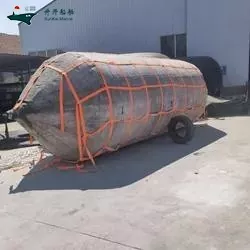
How Buoyancy-Based Lifting Compares to Conventional Methods
Underwater Lifting Marine Airbags displace water by inflating with compressed air, generating lift proportional to the volume displaced. Unlike crane barges or winch systems, they require no heavy surface infrastructure and exert no concentrated point loads on the seabed.
| Environmental Factor | Conventional Lifting | SunKai Underwater Lifting Marine Airbags |
|---|---|---|
| Seabed disturbance | Anchoring and spud legs can scar habitats | Minimal contact; soft, distributed footprint |
| Underwater noise | Engine, winch, and chain noise | Near-silent inflation and ascent |
| Contamination risk | Hydraulic fluid and fuel spill potential | Pneumatic operation; no hydraulic circuits |
| Turbidity | Propeller wash and anchor scour | Low; controlled, slow ascent |
| Energy use | Continuous surface machinery | Intermittent compressor use |
Key Environmental Benefits in Practice
-
Reduced seabed scarring. Because lift is generated in the water column, Underwater Lifting Marine Airbags avoid the anchor patterns and spud-leg penetration typical of crane barges.
-
Lower acoustic disturbance. Pneumatic inflation produces far less noise than winch and engine operations, benefiting marine mammals and fish.
-
Smaller surface footprint. SunKai systems can be deployed from modest vessels, cutting fuel consumption and emissions.
-
Contamination avoidance. With no hydraulic systems in the water, the risk of fluid release during lifting is effectively removed.
-
Controlled ascent. Regulated venting allows slow, predictable lift, limiting sediment resuspension and turbidity plumes.
Operational Considerations
Environmental benefit depends on proper planning. Operators should model lift capacity against load weight and depth, account for air expansion during ascent, and use certified equipment. SunKai recommends site-specific environmental assessment and adherence to local permitting requirements before any salvage lift.
Frequently Asked Questions
Q: Do Underwater Lifting Marine Airbags disturb sediment during salvage lifts?
A: Disturbance is generally low because lift is generated by buoyancy rather than seabed contact; controlled venting and slow ascent further limit sediment resuspension and turbidity plumes.
Q: Are Underwater Lifting Marine Airbags quieter than crane-based salvage?
A: Yes. Pneumatic inflation and passive ascent produce far less acoustic output than winches, engines, and chain systems, reducing disturbance to marine mammals and fish.
Q: Can Underwater Lifting Marine Airbags eliminate spill risk entirely?
A: They remove in-water hydraulic circuits, significantly reducing contamination risk, though surface compressor fuel handling and general vessel operations still require standard spill precautions.
Conclusion
Used with proper planning and certified equipment, Underwater Lifting Marine Airbags can materially reduce seabed disturbance, underwater noise, and contamination risk in marine salvage. SunKai supplies robust, application-matched buoyancy systems for salvage and recovery projects worldwide.
Contact us today to discuss your salvage project and request a tailored Underwater Lifting Marine Airbag specification from SunKai.