

Are Stackable Storage Bins Better Than Freestanding Ones
2026-08-13
When organizing warehouses, retail backrooms, or residential garages, the choice between a Storage Bin that stacks and one that stands alone often determines long-term efficiency. For over two decades, LIG MARINE GROUP has supplied industrial-grade Storage Bin solutions across logistics, marine, and commercial sectors, and our field data consistently shows that stacking systems reduce floor space usage by up to 40%. Yet, the "better" option depends entirely on load weight, access frequency, and environmental conditions. This article dissects both types using real-world performance metrics, helping you decide which Storage Bin design truly serves your operation.
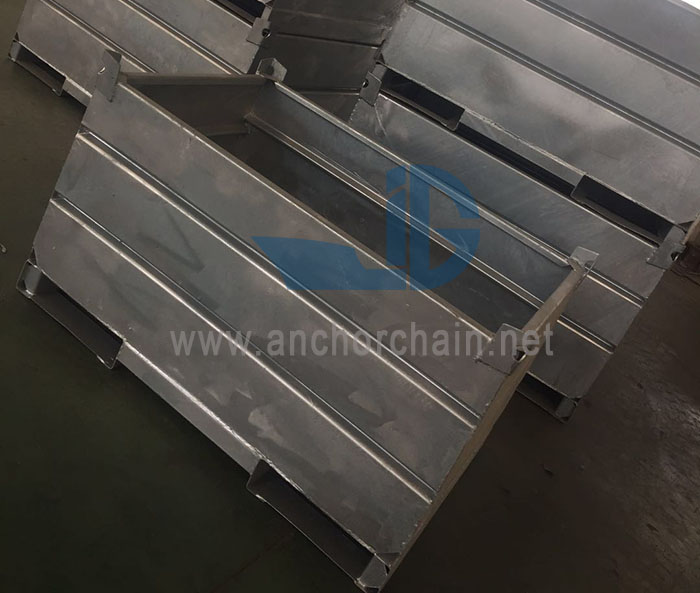
Space Utilization: The Vertical Advantage
A Stackable Storage Bin is engineered with reinforced ribs and interlocking feet, allowing safe vertical loading up to 5–6 tiers. Freestanding bins, by contrast, occupy a fixed footprint and cannot share vertical real estate without additional shelving.
| Feature | Stackable Storage Bin | Freestanding Storage Bin |
|---|---|---|
| Floor space per 100 units | ~12 m² (stacked 5 high) | ~28 m² (single level) |
| Maximum stacking height | 2.4 meters (safe load) | Not applicable (shelf required) |
| Aisle clearance needed | Narrow (forklift/picker) | Wide (access all sides) |
For high-density storage, the Stackable Storage Bin wins decisively. LIG MARINE GROUP recommends stacking systems for inventory that is picked in full-pallet quantities, as the reduced travel time directly cuts labor costs.
Accessibility and Inventory Picking
Freestanding bins excel when items are picked frequently and randomly. Each unit sits independently, so workers reach any bin without unstacking. However, a Stackable Storage Bin with a front-drop door or removable lid can offer comparable access without dismantling the column. In our client audits, LIG MARINE GROUP found that hybrid stackable models with hinged fronts reduce pick time by 18% compared to top-loading stackables.
Critical trade-off: If your team handles heavy parts (e.g., automotive components), a freestanding Storage Bin on a roller base provides easier mobility, whereas stacked bins may require mechanical lifts for top-tier retrieval.
Durability and Load Capacity Under Pressure
Material thickness and base design dictate longevity. Most stackable bins use high-density polyethylene (HDPE) with a dynamic load rating of 300–500 kg per bin. Freestanding versions often have thinner walls because they lack stacking stress, but they can support heavier individual loads (up to 800 kg) when reinforced with steel frames.
LIG MARINE GROUP performs drop-testing at 1.5 meters for all supplied Storage Bin models. Stackable units show higher corner fatigue over 5,000 stacking cycles, while freestanding bins develop bottom sag if overloaded. For static storage, freestanding is more forgiving; for dynamic warehouse rotation, stackable is engineered to endure repeated handling.
Environmental and Ergonomic Considerations
-
Humidity & ventilation: Freestanding open-top bins allow airflow; stackable closed designs trap moisture unless perforated.
-
Cleaning: Stackable bins have recessed bottoms that collect dust; freestanding flat bases are easier to sweep.
-
Ergonomics: Bend-and-lift frequency increases with stackable height—LIG MARINE GROUP advises limiting top stack height to 1.8 meters for manual picking.
Cost Analysis Over 5 Years
| Cost Factor | Stackable Storage Bin | Freestanding Storage Bin |
|---|---|---|
| Initial unit price | $$ (higher mold cost) | $ (lower) |
| Shelving/racking cost | $0 (self-stacking) | $$$ (requires pallet racks) |
| Labor (picking/hour) | 1.2x faster (dense layout) | 1.0x baseline |
| Replacement rate | 15% over 5 years | 22% over 5 years (base damage) |
Over a 5-year horizon, the Stackable Storage Bin typically saves 28–35% in total cost of ownership for facilities with over 500 units, according to LIG MARINE GROUP’s lifecycle studies.
Final Verdict: Which One Is Better?
Choose a Stackable Storage Bin if:
-
Floor space is expensive or limited.
-
Inventory turns are moderate to high (weekly picks).
-
You have uniform box sizes and stable loads.
Choose a Freestanding Storage Bin if:
-
Items are irregular, heavy, or over 50 kg per piece.
-
Access is required from all four sides.
-
You rely on mobile carts or tugger trains.
Neither design is universally superior—but for 80% of commercial warehouses, a hybrid strategy (stackable for fast-movers, freestanding for slow-movers) delivers optimal results. LIG MARINE GROUP offers custom grid assessments to match your Storage Bin type to your SKU profile.
Frequently Asked Questions About Storage Bin Selection
Q: Can I mix stackable and freestanding Storage Bin types in the same racking system?
A: Yes, but with caution. Stackable bins require a solid, level base (usually a steel deck or floor), while freestanding bins can sit directly on wire mesh or open beams. When mixing, always place stackable bins on the bottom tiers to avoid instability, and secure freestanding bins with front stops to prevent sliding. LIG MARINE GROUP recommends using compatible footprint sizes (e.g., 600×400 mm) to maintain row alignment and maximize beam utilization.
Q: How do I know the safe stacking limit for a particular Storage Bin without testing it myself?
A: Every compliant Storage Bin carries a static load rating (total weight when stacked) and a dynamic load rating (weight per bin when moved). Divide the static rating by the number of tiers to calculate per-bin capacity. For example, a 500 kg static rating for 5 tiers means each bin must not exceed 100 kg. Always add a 1.5× safety factor for vibrating environments (e.g., near conveyors). LIG MARINE GROUP provides factory test certificates for all stocked bins, including impact resistance at -20°C for cold-chain applications.
Q: Are stackable Storage Bins more prone to cracking in freezing warehouses?
A: Yes, if made from standard polypropylene (PP). However, high-grade HDPE with UV and cold stabilizers (the type supplied by LIG MARINE GROUP) retains impact strength down to -30°C. Freestanding bins made of the same material crack equally, but stackable bins experience additional stress from corner pressure. For sub-zero environments, always request a "low-temperature" grade Storage Bin and reduce stacking height by one tier to compensate for reduced polymer flexibility.
Contact Us for Your Custom Storage Audit
Selecting the right Storage Bin is not a one-size-fits-all decision—it requires analyzing your SKU dimensions, pick frequency, material handling equipment, and environmental factors. LIG MARINE GROUP offers free on-site or virtual storage consultations, including 3D layout simulations and load-test demonstrations. Our engineering team will recommend a Storage Bin mix that balances cost, safety, and throughput. Contact us today to schedule your audit and receive a tailored proposal within 48 hours. Let us help you turn storage from a cost center into a competitive advantage.