

Are Solid Fenders more durable than inflatable pneumatic fenders in saltwater environments
2026-11-27
Port engineers and marine procurement teams prioritize reliable berthing protection that resists salt spray, UV radiation and repeated vessel impact. SunKai supplies heavy-duty Solid Fenders made from anti-ozone rubber compounds, designed for fixed quay installation in coastal terminals and tidal berths. Saltwater brings unique aging pressures, and the overall durability gap between these two fender types depends not only on rubber resistance but also on internal structure, fittings and regular inspection routines.
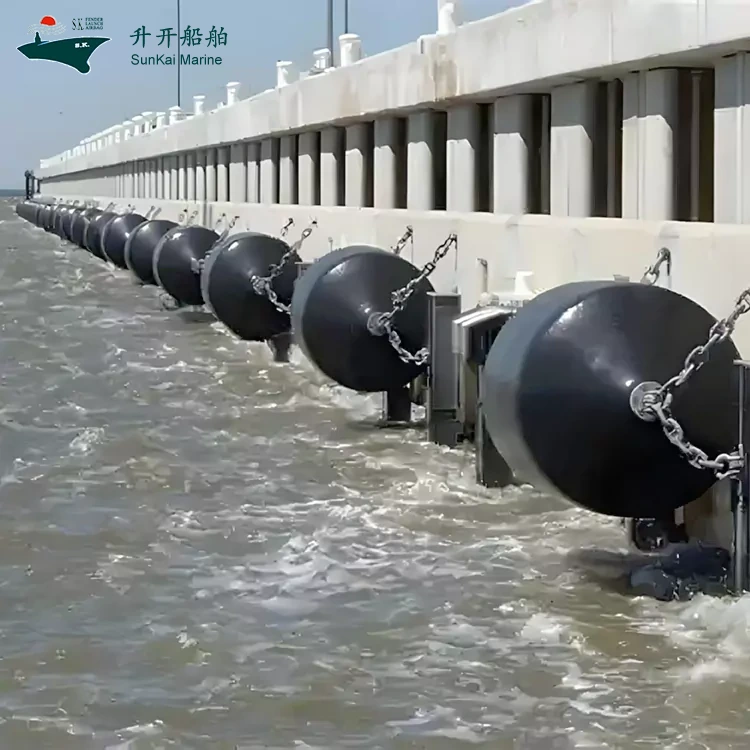
Solid Fenders vs Inflatable Pneumatic Fenders Comparison Table
| Fender Type | Saltwater Weak Points | Durability Advantage | Typical Service Life in Coastal Zones |
|---|---|---|---|
| Solid Fenders | Surface abrasion, bolt corrosion, rubber fatigue under heavy repeated compression | No air chamber, no risk of puncture or air leakage; simple structure | 10–15 years |
| Inflatable Pneumatic Fenders | Valve leakage, cord layer delamination, net sling rust, seam cracking | Larger deflection, softer reaction force for ship-to-ship transfer | 5–8 years |
Premium Solid Fenders from SunKai use EPDM blended rubber and hot-dip galvanized mounting hardware to slow salt-induced degradation on both rubber and metal parts.
Practical Selection Guidelines
- Choose Solid Fenders for fixed docks, frequent berthing and locations with floating debris or sharp hull edges.
- Pneumatic fenders are better suited for temporary ship-to-ship operations where large deflection and low reaction force are required.
- Rinse all fenders with fresh water periodically to remove salt crystal buildup that accelerates surface cracking.
- Replace corroded bolts and backing plates in a timely manner, as hardware failure is a common failure point even when rubber remains intact.
Solid Fenders FAQ
Q: Can puncture damage happen to Solid Fenders in saltwater? A: It is rare. Unlike pneumatic fenders that lose function once pierced, Solid Fenders have a monolithic rubber structure. Minor cuts or surface gouges do not disable the fender, though deep gashes will spread under continuous tidal compression and should be repaired with marine rubber repair compound.
Q: Do Solid Fenders need pressure testing like pneumatic fenders? A: No. Solid Fenders require no air pressure maintenance, inflation checks or valve inspections. Standard maintenance only includes visual inspection for cracks, permanent deformation and corroded fasteners. This lower maintenance requirement makes them popular for remote coastal terminals where regular servicing is difficult.
Q: Is the rubber aging rate of Solid Fenders inherently slower than pneumatic fenders? A: The base rubber compound can achieve similar anti-salt and anti-UV performance for both styles. The main durability advantage of Solid Fenders comes from fewer vulnerable components. Pneumatic units contain layered cord fabric, sealed seams and air valves, all of which are extra failure points that saltwater and ozone attack first.
Final Note
For permanent saltwater berths with routine vessel docking, Solid Fenders generally deliver superior long-term durability and lower maintenance risk. SunKai provides D-type, arch and cylindrical Solid Fenders with full material test reports and custom mounting designs for seaports, fishing docks and offshore platforms. Contact us today to share your berthing load, tide range and salinity level, and our marine engineering team will recommend the optimal fender model and installation scheme.