

Stainless Steel Carriage Bolt Factory: How Quality Bolts Are Made
2026-10-13
Stainless steel carriage bolts may look identical on the shelf, but the ones that survive salt spray, heavy loads, and years of vibration all share a common origin: a factory that sweats the details. At Wanluo, quality doesn't happen by accident—it's built into every stage, from selecting raw stainless wire to the final thread inspection. Here's a look inside the process that turns ordinary steel into fasteners you can trust when failure isn't an option.
Stainless steel arrives as coils, and that matters more than you think
The coiled form isn't just a shipping convenience—it reshapes how fabricators think about material flow. A single coil can carry several tons of stainless, wound tight enough to fit through a standard door yet unspooling into hundreds of meters of continuous strip. That uninterrupted length means fewer stops, fewer welds, and far less handling at the start of a production run. When you slit a coil to width in-house, you're not just saving money on custom blanks; you're giving the shop floor the ability to react in hours rather than wait days for a supplier to deliver pre-cut sheets.
There's also a hidden geometry advantage. Coils let you nest parts along the curve, which often reveals a better yield than flat sheet layouts—especially for circular or irregular components. Think tank heads, flanges, or architectural cladding with curved profiles. A fabricator who only buys sheets may never see those gains because the material arrives already constrained by a rectangular mindset. With a coil, the starting shape is fluid, and that flexibility changes what's possible on the cutting table without adding extra machinery.
On the logistics side, coils compress a lot of value into a small footprint. They stack efficiently in a warehouse, reduce packaging waste compared to individually wrapped sheets, and minimize damage from fork tines or edge dings during transit. But the real edge comes from continuity: a single coil fed into a laser or stamping line can run unattended for shifts, turning what would be a stop-and-go batch job into a steady rhythm. That's the kind of operational difference that doesn't show up on a spec sheet, yet quietly determines whether a shop stays competitive on tight margins.
Cold heading doesn't cut corners; it pounds the head into shape
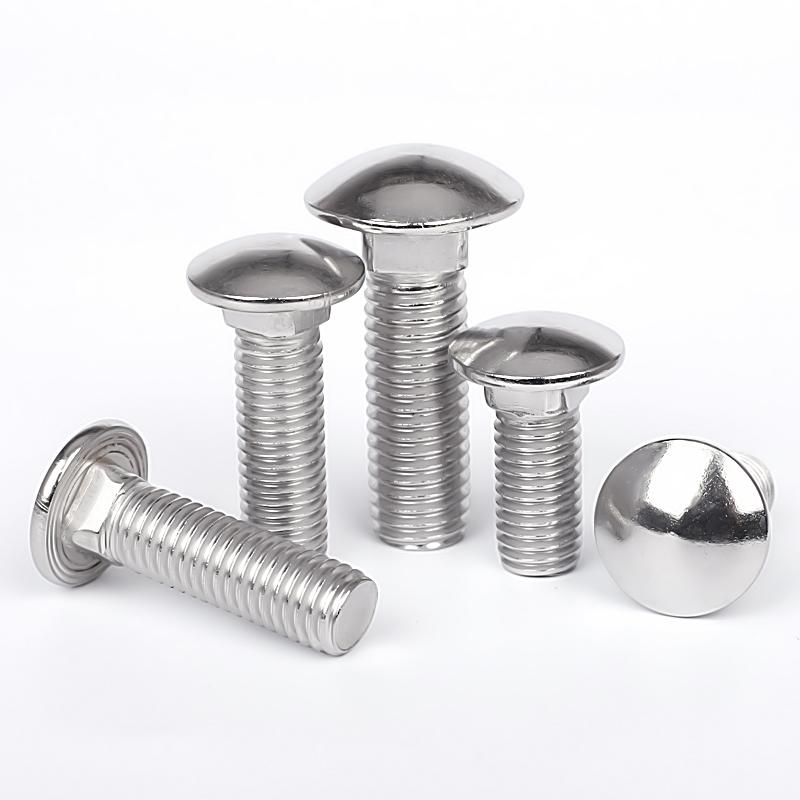
A slug of wire enters the die, and a punch hits it hard enough to make steel flow like cold clay. That is the core of cold heading. Instead of carving away excess metal, the material gets upset, extruded, or trapped between dies until it takes the shape of a bolt head, a rivet shoulder, or a complex collar. The grain doesn't break at the surface; it bends and follows the new contours.
Because nothing is cut away, the finished head keeps the full cross-section of the original wire, with tighter dimensional control and a surface that needs little secondary finishing. There is no pile of chips, no interrupted grain, no weak plane waiting to fail under torque. The hammering action also work-hardens the top layers just enough to add stiffness without turning the part brittle.
That is why cold heading often beats machining on fasteners and small structural parts. It forces the metal into the final geometry in a fraction of a second, so the process is both cleaner and faster than any cutting route. The trick is in tool design: every die angle, punch radius, and knockout sleeve has to be dialed in for that one specific shape. Get it right, and the part comes out stronger than the raw wire it started from.
Thread rolling leaves a surface finish machining can't match
Thread rolling isn't just about forming threads—it transforms the metal surface itself. The rolling dies press and burnish the peaks and valleys of the machined blank into a smooth, continuous grain flow. Unlike cutting, which tears through the material, rolling compresses and realigns the surface fibers, creating a finish that can be up to three times smoother than a typical turned thread. The result is a bright, almost polished appearance that feels slick to the touch and resists flaking, pitting, or micro-fractures that often plague cut threads.
What truly sets rolled threads apart is the way the surface hardness and fatigue strength improve along with the finish. The cold working effect hardens the thread crests and roots, so the very act of forming leaves behind a denser, more durable surface layer. Machining, no matter how fine the feed or sharp the insert, simply cannot replicate this work-hardened skin. Even a ground thread, while dimensionally accurate, lacks the beneficial residual compressive stress that rolling imparts, making rolled threads the preferred choice in high-vibration or high-cycle applications like engine studs, wheel bolts, and aerospace fasteners.
From a practical standpoint, this superior finish also reduces the need for secondary polishing or coating. A cut thread often requires deburring, buffing, or even a separate surface treatment to prevent galling or corrosion. Rolled threads, by contrast, come off the dies ready to assemble—cleaner, smoother, and less prone to friction-related seizing. The process essentially combines forming and finishing into one step, which is why manufacturers who care about both aesthetics and performance keep coming back to thread rolling over conventional machining.
Heat treating happens before the bolt looks finished
Many people assume that a bolt gets its final look first and then goes through heat treatment, but the reality is quite different. Heat treating is performed while the fastener is still in a rough, unfinished state. At this stage, threads may not yet be rolled, the head might lack its final markings, and there is no protective coating. The bolt appears dull and somewhat crude, nothing like the precise component you would find in a hardware store.
During the heat treatment process, the bolt is heated to a critical temperature and then quenched, which alters its internal structure to increase strength and hardness. This intense heating leaves behind surface scale and discoloration that would be unacceptable on a finished product. Consequently, after heat treating, the bolt must undergo cleaning and further machining to achieve the correct dimensions and a clean surface. It is only after these subsequent steps that the bolt begins to resemble the familiar item used in construction and machinery.
The timing of heat treatment is not arbitrary; it is carefully planned to prevent damage to the final appearance. If heat treating were done after applying coatings or precise threading, the extreme temperatures would ruin those features. Therefore, the bolt is intentionally left visually incomplete before heat treatment, ensuring that the final steps of threading, plating, and quality inspection can be performed on a component that already possesses the required mechanical properties. This sequence is essential for producing a fastener that looks good and performs reliably.
Passivation builds the corrosion resistance you can't see
The real shield against corrosion on stainless steel isn't a coating you can feel or even detect with the naked eye. It's a transparent oxide layer just a few atoms thick, formed when chromium in the alloy reacts with oxygen. This invisible film clings to the surface so tightly that it blocks water, salt, and oxygen from reaching the iron underneath. Without it, the metal would start rusting within hours in a damp environment.
What makes this passive layer remarkable is its ability to heal itself. Scratch a piece of passivated stainless steel, and the exposed chromium instantly reacts with air to rebuild the oxide barrier. No paint, no plating, no maintenance crew needed. That's why components in marine hardware, food processing equipment, and surgical instruments stay corrosion-free for decades while looking completely bare and unprotected.
Industrial passivation treatments speed up and refine this natural process. By removing free iron and surface contaminants with mild acids, the treatment allows the chromium oxide layer to form uniformly across the entire surface, including microscopic crevices. The part comes out looking exactly the same as it went in, but its resistance to pitting and stress corrosion cracking jumps dramatically. It's one of the few engineering upgrades you can hold in your hand and never see.
Gauges and sorting trays do the final talking
You can tune a machine all morning, but the pieces won't lie. Walk past any bench after a long run and the real story sits in the sorting trays — a few tenths here, a hair over there. Gauges just make it official. They're the quiet referees that settle arguments before they start.
I've seen operators argue about a setup for half an hour, then drop a part into a go/no-go gauge and watch the whole debate collapse. The tray doesn't care about your opinion. It shows the drift, the burr, the taper. If the gauge says it's out, it's out. No amount of tapping the dial or re-zeroing changes that.
That's why the best machinists treat the gauge and tray as their last set of eyes. Not as a final check to pass, but as a mirror for the process. When every part lands in the same slot, same orientation, same sound — then you know the setup is honest. Until then, keep sorting. The metal always talks back.
FAQ
Incoming stainless steel wire or rod is checked for grade conformity, surface defects, and diameter tolerance. Some shops use handheld XRF analyzers to confirm alloy composition, and only lots that pass visual and dimensional checks are released to the cold heading machines.
Cold heading presses cut the wire into slugs, then strike them in progressive dies. The first blow upsets the head, the second forms the dome, and a trimming or pinching operation shapes the square neck under the head. No heat or filler metal is involved.
Rolling displaces the steel instead of removing it, which gives a denser grain structure at the thread roots and flanks. That increases fatigue resistance and surface hardness, and it also avoids the tiny tears and stress risers that machined threads can leave on stainless alloys.
Manufacturers often apply anti-seize coatings, wax-based lubricants, or passivation treatments that remove free iron from the surface and thicken the protective chromium oxide layer. Some use molybdenum disulfide dry films on threads. Proper rolling finish and controlled thread tolerance also reduce friction.
Samples go through salt spray testing, usually ASTM B117, for hundreds of hours, and the factory checks for red rust or pitting. Additional checks may include X-ray fluorescence for alloy verification, microhardness testing, and torque-tension tests to make sure the protective surface was not damaged during forming.
It usually comes down to process control: sorting raw material by heat lot, frequent in-process dimensional audits, using carbide dies that are replaced on a schedule instead of waiting for wear, and final sorting with camera-based inspection that catches surface folds, cracked heads, or incomplete square necks.
Most 304 and 316 stainless carriage bolts are not hardened by heat treatment the way carbon steel bolts are. They are solution annealed to remove work hardening and restore corrosion resistance, then passivated. Some martensitic grades may be hardened, but common A2 and A4 grades rely on cold work for strength.
They are usually packed in sealed, moisture-resistant containers with desiccant if needed, and handled with non-ferrous or plastic-coated tools to avoid carbon steel contamination. Labels often include heat numbers and lot codes so the factory can trace any field issue back to the raw material and production shift.
Conclusion
A stainless steel carriage bolt starts long before anyone sees a finished fastener. The raw stainless arrives as coils rather than cut bars, and that choice shapes everything downstream. Coils feed the cold heading machines without interruption, reduce scrap, and preserve the grain structure of the metal. Cold heading itself does not shave away material to form the square shoulder and rounded head; it pounds the blank at room temperature until the metal flows into the die. That hammering keeps the internal grain lines intact, which makes the head less likely to shear under load. After the head is formed, thread rolling presses the threads into the shank. Because no metal is cut away, the surface of the rolled threads comes out denser and smoother than anything a machining pass could achieve, and the threads resist fatigue cracking far better.
The bolt still looks unfinished at this point, but heat treating happens before any final appearance work. Controlled heating and quenching set the mechanical properties while the shape is still simple, avoiding distortion later. After that, passivation builds the corrosion resistance that no one can see: a thin, passive chromium-oxide layer forms on the surface, sealing the stainless steel against moisture and chlorides. Finally, gauges and sorting trays do the last round of quality control. Automated optical sorters and precision gauges check head dimensions, square neck geometry, and thread pitch, kicking out any bolt that drifts outside tolerance. What remains is a batch of carriage bolts that look uniform but, more importantly, carry the hidden markers of a well-run factory.
Contact Us
Contact Person: Shane
Email: [email protected]
Tel/WhatsApp: 8613357785029
Website: https://www.wanluohardware.com