

Milled Parts Manufacturer Delivers High-Precision Custom Components
2026-10-23
Precision machining often gets treated as a buzzword until a batch of milled parts doesn't fit. Then the gap between promise and reality becomes impossible to ignore. Whether you're prototyping a complex bracket or scaling up production of custom enclosures, the quality of your milled components sets the pace for everything downstream. BOYIKUN focuses on delivering high-precision custom parts without the usual trial-and-error delays. But what actually separates a dependable milled parts manufacturer from the rest? A few details make all the difference—and they're worth understanding before you place your next order.
Achieving Micron-Level Accuracy on Every Run
Micron-level accuracy is not a static specification; it is a condition that must hold run after run, across shifts, temperatures, and material batches. Thermal expansion in ball screws, micro-backlash in drive couplings, and even subtle variations in bearing preload can push a well-calibrated system out of tolerance by several microns within hours. Achieving repeatable precision means treating each cycle as a fresh test of the machine's mechanical loop, not as a continuation of the last good part.
The foundation is a metrology-first motion architecture. Linear encoders read actual stage position rather than inferred motor rotation, so lost steps or belt stretch are corrected before they become dimensional errors. Paired with temperature-stable ceramics or Invar-like alloys in critical structural elements, this removes much of the drift that plagues aluminum-only designs. Real-time compensation then handles the residuals: dynamic models adjust for velocity-dependent following error, while periodic probing of a reference artifact re-zeroes offsets without interrupting production flow.
On the floor, the result is less about a single impressive gauge reading and more about the absence of outliers. Parts measured at 8 a.m. and 4 p.m. land in the same process window; tool changes do not require lengthy re-qualification; and automated inspection stops flagging false positives. That consistency is what lets micron-level tolerances move from a capability study into daily throughput.
Custom Geometries Without the Custom Price Tag
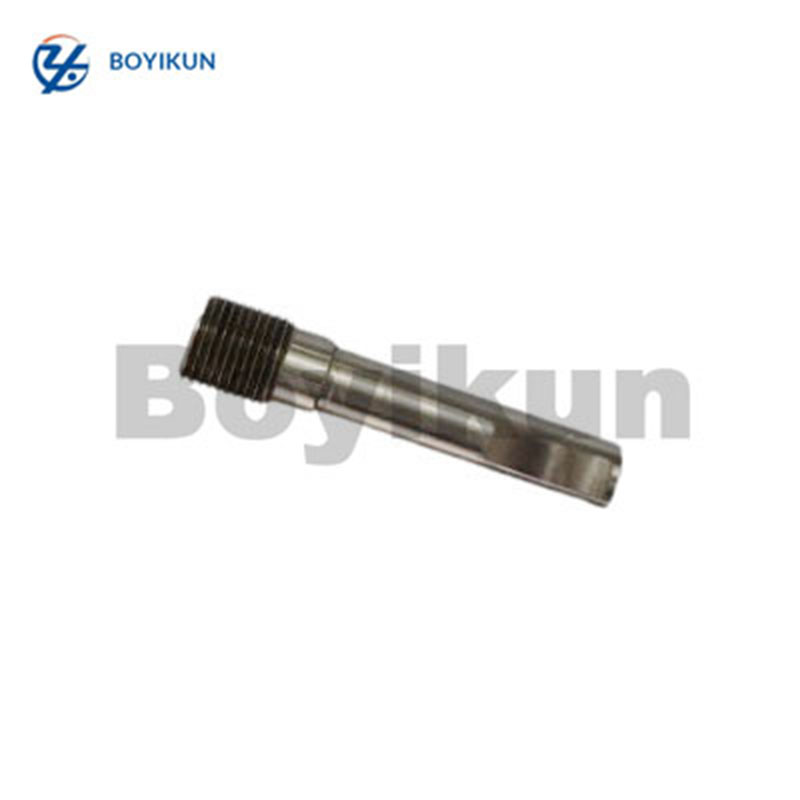
The usual route to non-rectangular forms is a thick stack of change orders. Here, the geometry is handled in the cutting file rather than on the shop floor, so sloped returns, compound miters, and curved rails don’t trigger a custom surcharge. A parallelogram panel and a standard rectangle come from the same material, the same equipment, and the same labor budget—only the coordinates change.
That makes it practical to mix angles across a single run. You might pair a canted fascia with a radiused bench or transition from a hexagonal canopy to a straight trellis without pausing for a quote revision. Adjustable nodes and water-jet-cut plates absorb the complexity before it reaches the installer.
The result is a project that looks like it was fabricated for a premium, but the invoice stays in line with off-the-shelf options. Shape stops being the upgrade; it becomes part of the standard toolkit.
Material Options From Aluminum to Zirconium
When engineers talk about material options, the spotlight rarely lingers on the quiet workhorses between aluminum and zirconium. Yet that stretch of the periodic table holds some of the most practical, overlooked choices in modern design. Aluminum gives you lightness and corrosion resistance for enclosures and heat sinks, but push past it and you find magnesium alloys shaving off even more weight for handheld devices. Titanium sits a few steps further, offering strength without the bulk, ideal for aerospace brackets and medical implants. Each metal brings a distinct balance of cost, machinability, and environmental tolerance that no single spec sheet captures.
Zirconium at the far end often gets dismissed as exotic, but its nuclear and chemical applications hinge on properties that aluminum can't touch. Between those poles, copper and brass handle thermal and electrical duties with a warmth that feels almost analog. Stainless steels thread through the middle, resisting rust while accepting complex welds. The real trick isn't memorizing a list—it's reading the gaps between standard references. A zirconium part in a corrosive reactor, an aluminum frame in a drone, or a titanium fastener in a racing engine all succeed because someone matched the material to the exact failure mode they feared most.
The range from aluminum to zirconium isn't a linear upgrade path. Sometimes you want the cheap, easy anodizing of aluminum; other times you need zirconium's stubborn refusal to react with hot acids. In between, alloys blur the boundaries: aluminum-lithium for aerospace skins, zirconium-tin for fuel cladding. Experienced designers don't ask which metal is best—they ask which compromise hurts the least under real loads, real temperatures, and real budgets.
In-Process Inspection That Catches Defects Early
Catching a defect at final inspection often means unraveling hours of work. In-process inspection changes that math by placing checks directly on the line, right after cutting, soldering, or assembly steps. Operators use simple go/no-go gauges, visual guides, and quick measurement tools that take seconds, not minutes. When something drifts, the line pauses and the issue is fixed before it propagates into the next station.
The real value shows up in reduced rework and fewer hidden failures. A bracket that is out of tolerance gets caught before it is welded into a larger structure. A wire harness with a loose terminal never reaches final assembly. These small stops feel like interruptions, but they save the floor from sorting entire batches later. Teams also log what they find, so repeat issues trigger a deeper look at tool wear, material variation, or unclear work instructions.
Over time, this shifts quality from a gate at the end to a habit along the way. New operators learn what "good" looks like by checking their own work against a standard, not by waiting for someone else to reject it. The inspection data become a running record of process health, helping supervisors spot trends before they turn into scrap or customer complaints.
Milling Complex Features Others Turn Down
We regularly take on milling jobs that other shops pass on because the geometry gets too tight or the access too limited. Deep internal pockets, thin-wall sections under 0.020 inch, and undercut profiles that force long-reach tooling are common in our queue. The setup is rarely straightforward, but that is exactly where a five-axis machine and a willingness to iterate pay off.
A recent batch of titanium brackets had drafted sidewalls, a 0.008-inch corner radius, and a tolerance band of plus or minus 0.0005 inch on two bores. The previous vendor refused to quote the second operation. We finished the parts in one clamping by sequencing a small lollipop cutter through the necked area and then circle-milling the bores from the same datum. No scrap, no hand blending.
That kind of work demands more than good equipment. It means reading the print for what is not explicitly said, choosing toolpaths that protect the part and the cutter, and being honest with customers about where the risk sits. We would rather quote the difficult feature and deliver it than hide behind a blanket 'no quote.'
Short Lead Times and Long-Lasting Tooling
Getting a project off the ground shouldn't mean waiting weeks for tooling. Our streamlined in-house processes trim lead times down to a fraction of the industry norm, so you can move from design to first article without losing momentum. Whether it's a quick-turn prototype or a full production mold, we've built our scheduling around your deadlines, not the other way around.
But speed means little if the tool wears out after a few thousand cycles. That's why every mold is machined from hardened steels selected for your specific material and volume requirements. Precision heat treating, tight tolerance control, and a rigorous inspection protocol before shipment combine to deliver tools that consistently outlast expectations — often by double or more compared to soft or poorly maintained alternatives.
The real payoff shows up on your bottom line. Shorter lead times get products to market faster, while durable tooling eliminates frequent replacements and unplanned downtime. It's a balance most shops treat as a trade-off; we've made it standard practice.
FAQ
We routinely hold tolerances within ±0.005 mm on critical features. For larger or more flexible geometries, we work with you to define realistic callouts that keep costs down without sacrificing function.
Aluminum alloys like 6061 and 7075, stainless steels, titanium, brass, and engineering plastics such as PEEK and Delrin. If you need something outside that list, we can usually source it or advise on a substitute that machines well.
Yes. We use multi-axis CNC mills, so angled features, deep cavities, and undercuts are well within reach. For tricky internal corners, we'll suggest corner radii that don't require specialty tooling unless the design truly calls for it.
Send over a 3D model and 2D drawings, and we typically return a quote within one business day. If we spot potential issues like thin walls or unnecessary tight tolerances, we'll flag them and propose adjustments before you commit.
Each job gets an in-process inspection at the machine, plus a final check with CMM or optical measurement for critical dimensions. We also provide material certs and a dimensional report if your project requires full traceability.
That's actually where we spend most of our time. We'll machine a small prototype run, refine the process for efficiency, then scale to thousands of parts. The tooling and setup stay consistent, so the parts you approve are what you get in production.
We work with robotics, medical device, aerospace, and industrial automation teams. The common thread is a need for precise, repeatable parts that fit into larger assemblies without rework.
Conclusion
When a milled parts manufacturer claims micron-level accuracy on every run, it usually means they’ve stopped relying on luck and started trusting their process. Here, that trust comes from a combination of in-process inspection and tooling that survives the toughest jobs. Defects get caught while the spindle is still spinning—not after a batch has already gone sideways. That means fewer scrapped parts, fewer surprise delays, and a lot less back-and-forth about tolerances. And because the shop doesn’t shy away from complex features others turn down, engineers can stop simplifying their designs to fit a supplier’s comfort zone.
The real differentiation, though, is balance. You can get custom geometries without a custom price tag: the quoting process doesn’t punish you for needing a pocket with a weird draft angle or a wall thickness just shy of impossible. Material options stretch from everyday aluminum to harder-to-machine zirconium, so thermal, weight, and corrosion requirements don’t force a compromise on the design side. Add short lead times backed by long-lasting tooling, and the result is a supplier that behaves less like a vendor and more like an extension of your own engineering team—minus the overhead.
Contact Us
Contact Person: Xianchen Hu
Email: [email protected]
Tel/WhatsApp: 86-13248645200
Website: https://www.hexnb.com/