

China Powder Storage Silo Solutions for Efficient Bulk Material Handling
2026-10-05
Ask any plant manager who handles cement, fly ash, or fine chemicals: a powder silo is rarely just a steel cylinder. It can be a bottleneck, a dust source, or the quiet reason your material flow stays uneven. That’s why efficient bulk material handling in China now starts long before the conveyor—it starts with smarter silo engineering. Fanchang Machinery has focused on exactly this problem, designing powder storage silo solutions that keep product moving predictably. In this post, we look at what separates a basic storage bin from a system that actually improves your operation.
How Silo Geometry Affects Powder Flow and Discharge Rates
Hopper half-angle and outlet size largely dictate whether solids move as a cohesive arch or a steady stream. In a conical bin with a shallow wall angle, material tends to form a funnel flow pattern: the center empties first while powder near the walls remains stationary, which can lead to erratic discharge and segregation. Steepening the cone past the mass-flow limit forces all the material to slide along the walls, but only if the wall surface is smooth enough relative to the powder's internal friction.
The outlet diameter works in tandem with the hopper slope. A wide opening reduces the likelihood of bridging and can push discharge rates higher, but it also increases the risk of flooding or uncontrolled flow for fine, aeratable powders. Conversely, a narrow outlet may improve dosing precision yet invites ratholing if the geometry fails to maintain active flow channels. Small changes in the transition zone between cylinder and cone—such as a sharp corner versus a smooth radius—also alter stress distributions enough to shift the discharge rate by a noticeable margin.
Wall roughness plays an outsized role once a flow pattern is set. Polished or low-friction liners can compensate for a somewhat shallower hopper angle, while rougher surfaces demand steeper walls to prevent stagnant material from building up. In practice, matching the measured wall friction angle of the powder to the hopper's slope and outlet cross-section yields a discharge that remains consistent without the stop-start behavior common in poorly matched geometries.
Selecting Wear-Resistant Liners for Abrasive Bulk Materials
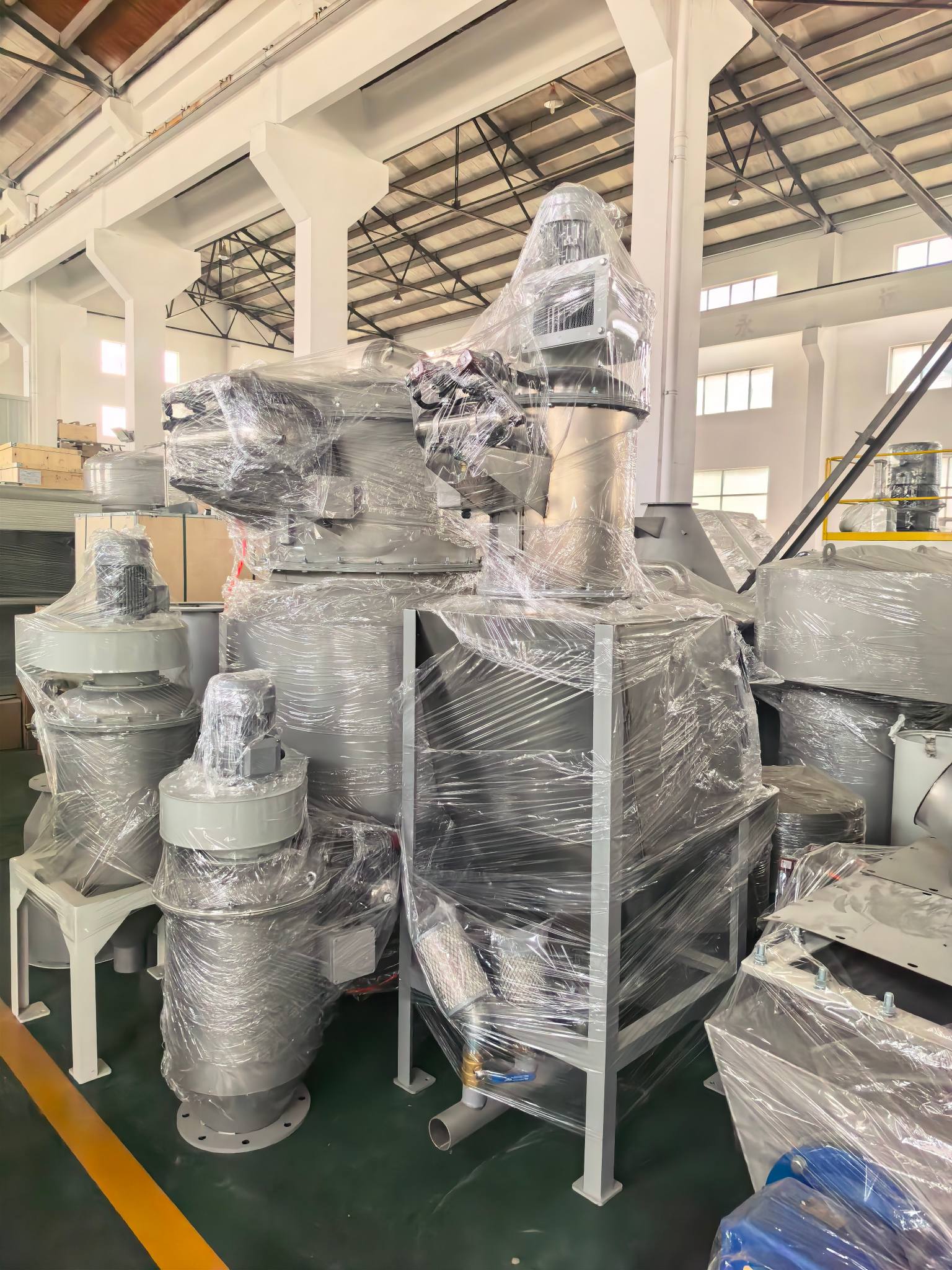
Abrasive bulk materials like sand, crushed ore, and clinker can chew through ordinary steel liners in a matter of months, leading to unscheduled shutdowns and inflated replacement costs. The first step in selecting a wear-resistant liner is to characterize the material flow: consider particle shape, hardness, moisture content, and impact angle. Rounded particles sliding at low velocity may only require a high-hardness steel plate, while sharp, high-velocity particles often demand ceramic or carbide overlays to survive.
Beyond the material itself, the equipment geometry and operating temperature play decisive roles. Chutes with steep drop heights generate severe impact zones where a tough, work-hardening manganese steel or a rubber-ceramic hybrid can absorb energy without cracking. For high-temperature conveyors or kiln feed systems, avoid polymer-based liners and instead look to cast basalt or alumina tiles, which retain strength above 400°C. Always match the liner’s coefficient of friction to the expected flow regime—too smooth and material may accelerate unexpectedly; too rough and fines may stick and build up.
Practical field experience often outweighs laboratory data. Run a small-scale trial with two or three candidate liners installed side by side in the most aggressive section of your handling system. Measure thickness loss weekly, note any chipping or debonding, and compare downtime versus installation ease. A liner that survives twice as long but requires complex substrate preparation or special welding procedures can end up costing more in labor than it saves in material. The best choice is rarely the hardest—it’s the one that balances abrasion resistance, impact toughness, and maintainability for your specific bulk stream.
Why Modular Construction Cuts Installation Time Without Sacrificing Strength
Modular construction works because most of the building happens in a controlled factory, not on a muddy, congested site. Walls, floors, and even whole rooms are assembled as complete units, then shipped and lifted into place. Cranes and crews spend days, not months, fitting pieces together. This parallel workflow — factory production running alongside site prep — dramatically shortens the schedule without asking anyone to rush.
The strength argument often trips people up, but it shouldn't. A module built indoors is engineered to withstand transport and lifting, which means it carries extra internal framing and fastening compared to stick-built sections. When modules are stacked and bolted, the connections are designed to transfer loads just like a traditional frame. In many cases, modular buildings endure higher stress during delivery than they'll ever see in place, so the structural integrity is proven before the first brick is even laid.
On-site, fewer weather delays and less cutting waste also mean fewer weak points from water-logged lumber or improvised fixes. Every joint is made in a dry, jig-aligned environment, then tested. The result is a tighter envelope and a stiffer frame — built in half the time, with no compromise on resilience.
Monitoring Inventory in Real Time with Non-Contact Sensors
Inventory tracking has traditionally relied on barcode scans or manual counts, both of which introduce delays and blind spots. Non-contact sensors flip that model by continuously capturing data about stock levels without ever touching the product. Whether it's a laser time-of-flight sensor measuring the distance to the top of a bin or an ultrasonic transducer detecting the presence of an item on a shelf, these devices feed a live picture of what's actually there. The result is fewer surprises when a picker reaches for an empty slot.
What makes this approach stand out is how it handles the messy, physical reality of a warehouse. Vibration, dust, and uneven lighting don't derail a well-placed capacitive or infrared sensor the way they might interfere with camera-based systems. Because the sensors are non-contact, there's no wear on the inventory itself, and nothing to clean or recalibrate after every shift. Managers see fluctuations as they happen, not after a nightly sync.
Real-time visibility also changes how teams respond to demand spikes. Instead of discovering a shortage during a manual audit, replenishment triggers automatically when a sensor reports that a bin has fallen below a set threshold. For perishable goods or high-turnover components, that can mean the difference between a smooth fulfillment day and a scramble to reorder. The data stream can also reveal usage patterns that static counts miss, helping planners right-size inventory without guesswork.
Preventing Moisture Ingress in High-Humidity Storage Environments
Moisture control in high-humidity storage areas starts with understanding how vapor pressure drives water into seemingly sealed spaces. Rather than relying solely on desiccants, many facilities overlook the role of daily temperature swings. When warm, moist air cools against stored items or walls, condensation forms in places you can't easily see. A practical first step is to map the dew point across different zones, then focus on airflow patterns that trap humid pockets near floors and corners.
Physical barriers need rethinking beyond standard vapor-retardant paints. For instance, unsealed concrete slabs can wick ground moisture upward even when the air feels dry. Applying a penetrating silicate sealer, combined with raised pallets and gap-free wall-to-floor transitions, often outperforms adding more mechanical dehumidification. Equally important is managing door openings: airlocks with rapid-close systems or strip curtains reduce the influx of humid outdoor air far more effectively than signs reminding staff to keep doors shut.
Continuous monitoring with placement strategy matters more than the sensor count. Position humidity loggers near cold surfaces, behind stored goods, and at ceiling level where stratification occurs. Instead of aiming for a fixed relative humidity, track the moisture content of the most sensitive stored material as the primary metric. This shifts the focus from chasing numbers to protecting actual assets, and often reveals that short-term humidity spikes are harmless if the material's equilibrium moisture content stays within safe limits.
Lowering Energy Use Through Smart Aeration and Fluidization
Smart aeration cuts energy by matching oxygen delivery to actual biological demand. Instead of running blowers at a fixed rate, plants use dissolved oxygen or ammonium probes to send signals to variable frequency drives. When loading drops at night, airflow drops too. Some operators also replace coarse bubble diffusers with fine bubble or intermittent pulsing systems, which can lift oxygen transfer efficiency by 20-30 percent without extra power.
Fluidization energy savings come from keeping the bed just above minimum fluidization velocity. Many systems waste air by over-fluidizing to avoid dead zones, but this raises pressure drop and blower load. Adding differential pressure sensors across the bed and tying them to a controller lets the air supply hover near the threshold where solids just begin to move. Periodic short bursts can clear stubborn channels instead of continuous high flow.
One retrofit on a chemical plant's wastewater train replaced fixed-speed blowers with smart units and added bed pressure feedback. Within six weeks, aeration energy use fell about 18 percent while effluent quality held steady. The key was not just new hardware but retuning the control loop every season, since sludge characteristics and particle size distribution shift with temperature and production mix.
FAQ
Many suppliers incorporate fluidization pads, vibration dischargers, and steep cone angles to prevent bridging and rat-holing. The silo geometry and discharge mechanisms are often tailored to the powder's flow properties, which helps keep material moving predictably.
Closed conveying lines, integrated dust collectors, and pressure relief valves maintain a sealed path from delivery to discharge. This setup allows rapid transfer while keeping fine particles contained, so throughput rises without creating a dusty work environment.
Yes. Manufacturers commonly adjust wall thickness, liner material, hopper slope, and aeration points based on bulk density, angle of repose, and moisture content. Some also offer dehumidification or heating jackets for hygroscopic powders.
They are common in cement, fly ash, gypsum, calcium carbonate, starch, flour, plastic resin, and chemical processing. The same core design can be adapted to food-grade or corrosive service with different coatings and seal materials.
Many projects include modular silo panels or bolted sections for easier transport, along with on-site supervision, welding or assembly crews, and commissioning support. Remote monitoring options are also available for ongoing operation.
Bolted silos suit projects needing shorter installation time, easier future relocation, or lower freight volume. Welded silos offer a smoother interior with fewer crevices, which can be preferable for very fine or contamination-sensitive powders.
Regular checks of aeration pads, discharge valves, pressure relief devices, and level sensors help prevent blockages and inaccurate inventory readings. Cleaning schedules should also account for material buildup in corners and on sidewalls.
Conclusion
In China, powder storage silo design has moved beyond simple containment, with engineering teams paying close attention to how silo geometry shapes flow and discharge rates. Steep hopper angles and carefully calculated outlet dimensions prevent ratholing and bridging, especially for cohesive or fine powders. At the same time, lining choices matter: high-alumina ceramic or polymer liners are selected based on abrasiveness of stored bulk materials, extending service life and reducing maintenance. Modular construction has also changed project timelines. Instead of welding every panel on site, pre-engineered sections are assembled rapidly, cutting installation time while maintaining structural integrity through bolted connections and reinforced frames.
Operators now combine non-contact level sensors—radar and guided wave—with inventory software to track material in real time without exposing instruments to dust or buildup. In high-humidity regions, moisture control becomes critical; desiccant vents, sealed joints, and nitrogen blanketing prevent caking and spoilage. Energy efficiency is addressed through smart aeration and fluidization systems that activate air pads only when discharge demands it, avoiding continuous blower operation. These integrated approaches help Chinese silo solutions deliver reliable flow, lower operating costs, and longer equipment life across cement, fly ash, chemical, and food powder applications.
Contact Us
Contact Person: Darye WANG
Email: [email protected]
Tel/WhatsApp: 86-13501017897
Website: https://www.fcntd.com/